Korean beauty products are everywhere. They’re on TikTok, on Amazon, in Target, in subscription boxes, and in the bathroom cabinets of millions of Americans who couldn’t have named a single Korean skincare brand five years ago.
And yet: the products crossed the ocean, but the philosophy didn’t.
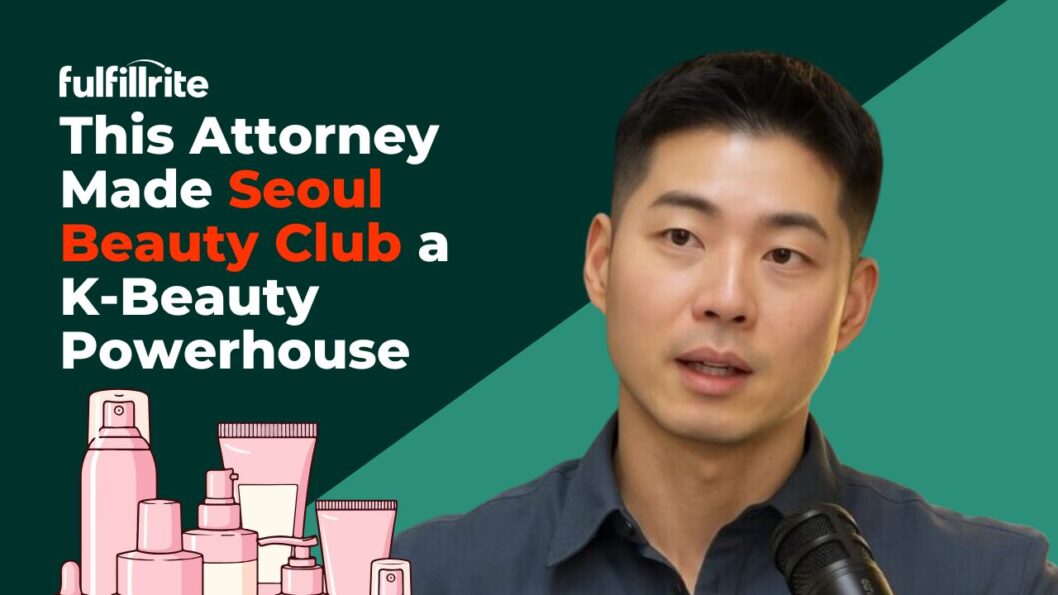
“There were evident signs that Korean beauty was going mainstream in the global world,” says Leo Park, founder and CEO of Seoul Beauty Club. “However, how these products were distributed—mainly TikTok, Amazon, and B2B retail—created a giant gap. People were buying Korean products everywhere because the products are great, but they were also confused and no one was translating the Korean beauty philosophy itself.”
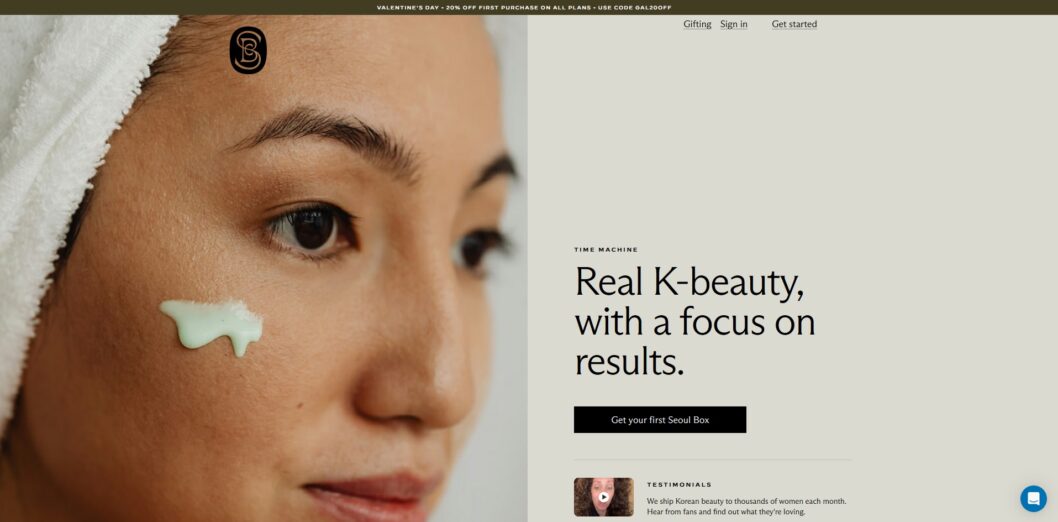
The gap between product availability (stuff being available) and consumer understanding (knowing what to do with it)—is the foundation of Seoul Beauty Club. The company ships curated boxes of full-size Korean beauty products to subscribers, primarily women aged 30 to 60, for $59 per month including free international shipping and tariffs. Each box contains 5 to 8 products worth over $200 at retail.
But the boxes aren’t really the product. The education is.
Since launching, SBC has raised $2 million in pre-seed funding within 100 days, secured $820,000 from the Korean government’s Global TIPS program for beauty personalization R&D, surpassed 300 brand partnerships across Seoul’s indie beauty scene, and achieved several million in annual recurring revenue during beta alone. Their Net Promoter Score sits above 50. And that’s remarkable in the subscription box category, where business owners complain of the industry’s infamous churn.
The company is backed by Hustle Fund, Collaborative Fund Asia, Sazze VC, The Ventures, and Mashup Angels. It operates with dual headquarters in Los Angeles and Seoul.
And it was founded by a corporate attorney who had never worked in beauty.
The Attorney Who Saw Market Changes Coming
Leo Park practiced cross-border law at Kim & Chang, Korea’s largest and most prestigious law firm. He worked on billion-dollar deals between Korea and the US, advising on transactions that moved capital and intellectual property across the Pacific.
“Because I grew up cross-cultural between the US and Korea, I knew how differently Americans perceive beauty versus Koreans,” Leo explains. “The fundamental understanding and philosophy is so different that despite Korean beauty formulation science being objectively world class, it took off faster in Japan and China.”
The implication was clear. Korean beauty wasn’t failing in America because the products were bad. It was slower to take hold because the cultural translation hadn’t happened yet. Japanese and Chinese consumers shared closer cultural frameworks with Korean beauty philosophy. American consumers needed someone to bridge that gap.
Then Leo started seeing the market data accelerate. US imports of Korean cosmetics hit a record high in 2024—roughly $1.7 billion, up over 54% year over year. The United States officially overtook China as Korea’s largest beauty export market.
“I saw signs where the market, for no reason, started growing immensely fast,” Leo recalls. “I knew it was a structural/cultural behavior change versus hype.”
That distinction—structural versus hype—is critical. Hype fades. Structural shifts compound. Leo’s legal training in cross-border transactions gave him the analytical framework to tell the difference. And once he was convinced the shift was real, walking away from law became less risky than staying.
“I have always wanted to go out to the world and create value, but when I realized this, I now had a surging market and a big problem that I could solve,” Leo says. “This made me quit my job to start this business.”
He co-founded Seoul Beauty Club with Allan Grinshtein, an ex-Apple and Meta product designer, and in doing so, paired his cross-border expertise and cultural fluency with Allan’s experience building consumer products at the world’s most design-obsessed companies.
The Demographic Everyone Forgot
Women aged 30 to 60 account for more than half of total skincare spending. That’s the majority of the money in the market. And yet distribution channels specifically serving this demographic remain limited.
How did an entire industry overlook its biggest customer segment?
“The more recent focus on younger demographics has a lot to do with TikTok and viral marketing,” Leo explains. “While adjusting to marketing via social media channels, they have started to chase virality. They make products that would go viral, and heavily invest in viral organic marketing. A lot of the virality on TikTok came from Gen Zs and Gen Alphas for a while.”
The industry optimized for virality, and virality skewed young. That created a feedback loop: brands made products designed to go viral, viral content attracted younger audiences, success metrics rewarded youth-focused campaigns, and the cycle continued. Meanwhile, the people actually spending the most money on skincare were left scrolling past content that wasn’t made for them.
Leo’s insight was that this demographic isn’t unreachable. They’re on social media too. But they respond differently than younger consumers.
“These people are more experienced, educated and they care more about what really works for them, and establishing a trust-based long-term relationship with brands and sellers,” Leo says. “Many brands that have been doing viral marketing approach this demographic using the same strategy—more stimulative messaging, fear-based messaging, and this does not work well with this demographic in establishing long-term trust.”
SBC’s approach inverts the formula.
“We approach them as intelligent adults, and we provide education and clarity to build that long-term trust layer,” Leo says.
Treating customers as intelligent adults rather than targets for fear-based marketing isn’t about messaging alone. It’s an operational philosophy that affects everything from content creation to product curation to customer communication.
Guidance Is the Product
Ask Leo about competitors and he redirects the conversation entirely.
“We are not competing with other boxes,” he says. “We are competing with self-doubt and misinformation. For us, guidance is the product and products are the medium. Our job is to help people decide with confidence and stay consistent.”
That line—”guidance is the product and products are the medium”—is the kind of philosophical statement that many founders make but few operationalize. SBC has built its entire business around it.
The company’s product curation follows a framework Leo describes as “science, story, and results.”
Science means focusing on ingredients and formulations that actually work, rather than what’s trending. “We value product quality and ingredients over the brands’ marketing,” Leo explains.
Story means translating Korean beauty culture for Western consumers. “We translate and tell the story of Korean beauty, brands and the products to our members,” Leo says. “We owe them this actual explanation and storytelling, so they can understand and trust what is recommended to them.”
Results means understanding that members want products that address their specific concerns—barrier repair, fine lines, hydration, firmness. “We do our best to understand them, sometimes beyond their own understanding, and find things from the east that might really make a difference,” Leo says.
This framework drives everything from which of SBC’s 300+ brand partners get included in a given month’s box to how the company communicates about those products to its members.
$200 Worth of Products for $59
Seoul Beauty Club ships boxes containing $200 or more in retail value for $59, including free international shipping and tariffs. The obvious question: how?
“We do not position ourselves as a value play, even though customers often receive significantly more than they expect,” Leo says.
The economics work because the value flows in multiple directions.
“Our economics work because we partner deeply with Korean brands,” Leo explains. “We deliver impactful value to brands by unlocking our creator network in the US to the brands that participate in our box. We also provide them with extensive insights on US customer feedback.”
For Korean brands trying to break into the American market, SBC offers something money can’t easily buy: direct feedback from real American consumers using their products. That data—what worked, what didn’t, what confused people, what delighted them—is enormously valuable for brands iterating on their products and marketing for Western audiences.
The company also keeps overhead lean.
“We are an AI-native organization and we do not over-hire,” Leo says.
Instead of building large teams to handle personalization, curation, and operations, SBC uses AI to augment a smaller team. The result is a cost structure that allows them to absorb expenses (among them, tariffs) that would break a more traditionally staffed operation.
That tariff absorption, by the way, was a deliberate choice with real financial consequences.
“When tariffs were introduced last year, we chose to absorb the cost instead of passing it to customers,” Leo says. “We were early and underfunded, and the tariff was painful for our unit economics, but I think it helped us gain trust from our members.”
$2 Million in 100 Days
Leo raised $2 million in pre-seed funding within 100 days of SBC’s beta launch. The Korean government’s Global TIPS program added another $820,000 for R&D focused on beauty personalization.
For a founder with no beauty industry track record, how did that happen?
“As an attorney, I worked on billion-dollar deals where financial models, growth history and real executive teams exist,” Leo says. “I had none of those when I raised $2 million.”
So what did he have?
“Like every other founder, I told them a story I believe in,” Leo says. “The story is that while the Korean beauty market is growing explosively, nobody seems to be translating and guiding Western consumers who were very much confused. The story was that as a cross-border transaction focused attorney with roots in both worlds, I can solve this problem.”
Leo’s legal background strengthened the fundraising pitch in ways that might not be obvious. Cross-border attorneys understand regulatory complexity, international commerce, and how to structure deals across jurisdictions. Those are exactly the skills needed to build a platform that ships regulated beauty products from Korea to the US while navigating FDA compliance, customs, and tariffs.
“I told my story and built trust with investors,” Leo says.
The investors who backed him—Hustle Fund, Collaborative Fund Asia, Sazze VC, The Ventures, and Mashup Angels—saw what Leo saw: a massive, fast-growing market with an unserved core demographic and a founding team uniquely positioned to bridge the gap.
Reducing Doubt, Not Churn
Subscription boxes have a churn problem. Customers sign up out of curiosity, receive a box or two, and then cancel when the novelty wears off. The industry averages are brutal.
SBC’s NPS above 50 suggests they’ve found a different path. How?
“I think churn is usually driven by doubt,” Leo says. “People leave when they are unsure if something is right for them. Our focus is reducing that uncertainty through education, guidance, and community. When people understand why something works for their skin, and they value the discovery experience, they stay.”
That reframing—from “how do we reduce churn” to “how do we reduce doubt”—changes which levers you pull. Instead of retention gimmicks like cancellation discounts or skip-a-month options, SBC invests in making customers feel confident about what they’re receiving and why.
The community is central to this. SBC maintains a large Facebook community and WhatsApp feedback groups where members share experiences, ask questions, and provide monthly feedback. That feedback directly shapes future curation.
“We learn and adapt based on long-term interactions with the members,” Leo explains. “We use this information, our expertise, and AI to adapt personalization and curation.”
The early growth itself was fueled by education, not paid acquisition.
“Educational content and community,” Leo says when asked about early acquisition channels. “My educational founder videos went viral on social media. We had other organic content focusing on Korean beauty education that also did millions of views.”
The Facebook community became an acquisition engine in its own right. “Thousands of women share knowledge about Korean skincare and refer friends and family to us,” Leo says.
Education creates trust. Trust drives purchases. Purchases generate community. Community drives referrals. The flywheel is self-reinforcing in a way that paid advertising can never be.
Solving Compliance for the Brands
Korean skincare regulations and US FDA requirements don’t align perfectly. Products that are legal and common in Korea may need additional registration, labeling, or documentation to be sold in the United States.
Most subscription boxes leave this problem to the brands. SBC solved it for them.
“We incorporated compliance into our process and solved this problem for the brands,” Leo says. “For the products that are not registered with the FDA, we connect the brands to our partner agency to register and be compliant before they’re able to participate in our box. This protects both customers and the brand long-term.”
This matters strategically. By handling compliance, SBC removes the biggest barrier preventing Korean indie brands from reaching American consumers. Many small Korean beauty brands have incredible products but no expertise in US regulatory requirements. SBC’s compliance infrastructure becomes another reason brands want to partner with the platform, as well as another moat against competitors who expect brands to figure it out themselves.
What Comes Next
Seoul Beauty Club is still young. Founded in 2025, it’s moving fast—relocating logistics from Seoul to the US, scaling its engineering team, and pushing toward monthly break-even in 2026.
Leo’s philosophy on growth versus profitability is clear-eyed.
“As a young startup, our number one goal is growth,” he says. “We’re very close to breaking even monthly, and I can see us streamlining operations to actually hit break-even. This is not our main focus right now though. We care more about providing the best experience to our members.”
The long-term vision extends well beyond subscription boxes.
“We’re building a system that helps people discover and understand Korean beauty products without endless scrolling,” Leo explains. “For brands, we’re building a global launchpad.”
The goal is to reach a point where launching a product on SBC gives Korean brands instant access to comprehensive global feedback—data points to shape product iteration, marketing strategies, and educational content that gains traction in Western markets.
From cross-border attorney to beauty founder. From billion-dollar deals at Kim & Chang to $59 subscription boxes shipping from Seoul. From a legal career built on moving capital across borders to a startup built on moving culture across them.
The products are Korean. The philosophy is Korean. But the translation is Leo Park’s. And for thousands of women who wanted science over hype and guidance over guesswork, that translation was exactly what was missing.
You can explore Seoul Beauty Club’s subscription options at seoulbeautyclub.com.
Key Takeaways
The biggest gap isn’t always in product. Sometimes, it’s in translation.
Korean beauty products were already available everywhere. What was missing was someone translating the philosophy, the science, and the “why” behind the products for Western consumers. Sometimes the business opportunity isn’t building something new—it’s giving better context to something that already exists.
Serve the demographic that spends the most, not the one that scrolls the most.
Women 30 to 60 account for more than half of skincare spending but were overlooked because brands optimized for TikTok virality. Chasing attention metrics instead of spending power left the most valuable customer segment underserved.
Reframe churn as doubt, not disloyalty.
SBC’s NPS above 50 comes from reducing uncertainty through education, guidance, and community—not from retention gimmicks. When customers understand why something works for their skin, they stay. Address the root cause of cancellation, not the symptom.
Absorbing costs to build trust can be a valid strategy, as long as you’re deliberate about it.
SBC absorbed tariff costs despite being early and underfunded. It hurt unit economics but built member trust at a critical growth stage. This only works if it’s a conscious strategic decision with a timeline, not an indefinite subsidy.
Solve your partners’ problems, not just your customers’.
By handling FDA compliance for Korean brands, SBC removed the biggest barrier to partnership. That compliance infrastructure attracts better brand partners, which creates better boxes, which drives better retention. Solving for one side of the marketplace strengthens both sides.
Education scales better than hype.
Leo’s founder videos and educational content went viral and drove early growth. The Facebook community became a referral engine. Education creates trust, trust drives purchases, and purchases generate community. That flywheel is more durable than any paid acquisition channel.