
Here’s something that happens every day in Indian households across the United States, the UK, Canada, and Australia.
You want a specific brand of pickle your mother used to buy. Or a particular Ayurvedic supplement that you know for a fact works. Or maybe the exact spice blend from a company you grew up with in Mumbai or Hyderabad.
So you check the local ethnic grocery store. No dice.
They either don’t carry it, or they want three times what it costs in India.
So you ask your family back home to ship it. And sometimes this works just fine, but it’s also expensive, the customs are a pain, and you feel guilty about making your parents stand in line at the post office.
This was Kiran Kotla’s life for more than a decade after moving to the United States.
“The breaking point was realizing that the problem was NOT logistics,” Kiran says. “It was layers of inefficiency and middlemen driving up prices and limiting availability.”
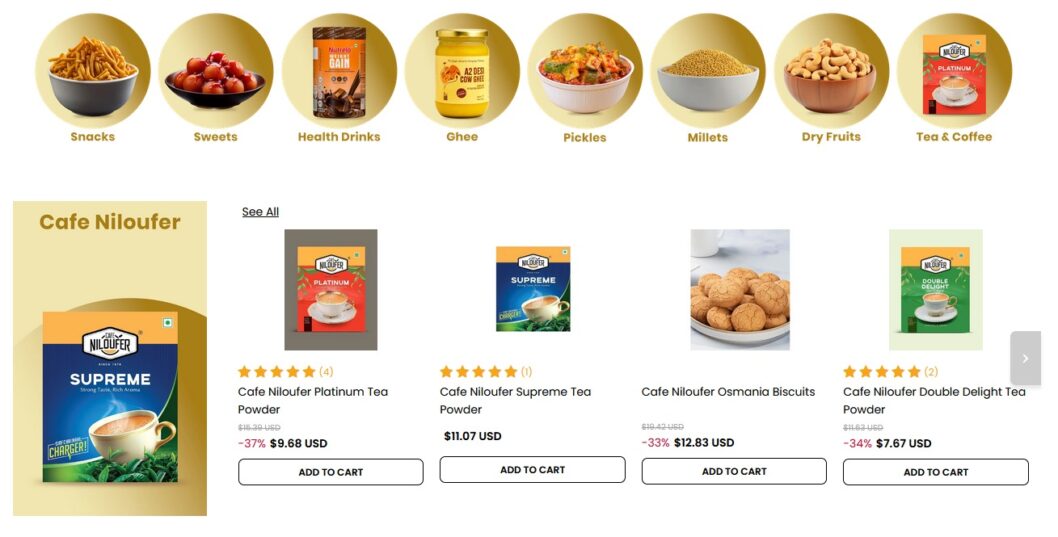
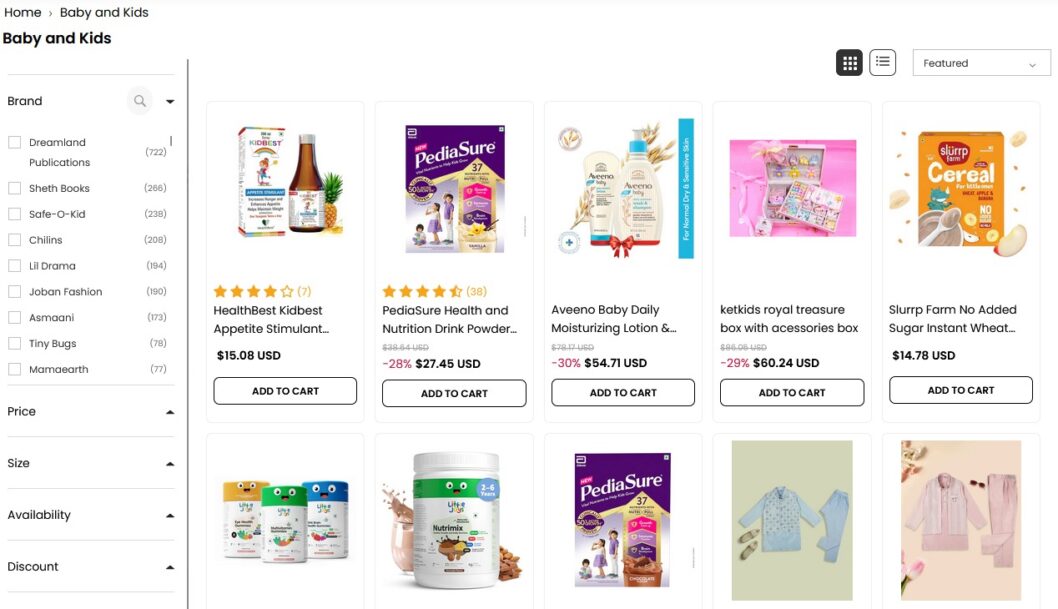
And from that frustration, came Distacart. It’s a marketplace that ships authentic Indian products directly from India to customers in over 40 countries. Since coming out of beta in 2020, the company has processed over a million orders, earned more than 68,000 verified reviews, and built a catalog that spans wellness, food, beauty, fashion, home goods, and spirituality.
And here’s the part that surprised even Kiran: a significant percentage of Distacart’s customers aren’t Indian at all.
“What surprised us later was that this problem was not just limited to the Indian diaspora,” Kiran explains. “A high percentage of non-Indians also shop on our website every day, buying Indian food, wellness, and home products.”
This is the story of how a tech professional turned his frustration into a cross-border business that he calls “the TEMU from India.”

Four Middlemen Between You and Your Pickle
You might wonder: why do Indian products cost so much outside India?
And to answer that, you need to understand the traditional distribution chain. Kiran lays it out “simply” in six stages:
- Manufacturer
- Master distributor
- Regional distributor
- Importer
- Local ethnic retailer
- Customer
That’s four layers between the person who made the product and the person who eats it, wears it, or uses it. “Each layer adds margins and opacity,” Kiran says. “This is where Dista comes in and collapses that chain by sourcing directly from Indian manufacturers and brands, and shipping straight to customers globally. Fewer hands mean better pricing, fresher inventory, and clearer accountability.”
Let’s linger on that “fresher inventory” point for a second. When products pass through four intermediaries across international borders, they sit in warehouses at every stage. So if you, like us, are living by the Jersey Shore, then by the time a spice blend lands on a shelf, months may have passed since manufacturing.
But if you ship direct from India? Then the whole time from production to consumption is compressed. And because orders are fulfilled on demand, the entire economic structure is different. Hence why Kiran was able to build what he was able to build with Distacart.
But then there’s the small matter of, well, collapsing a distribution chain that’s existed for decades. And that requires convincing Indian suppliers to change how they do business.
Winning Trust with Suppliers
“When we started, many suppliers were used to operating with bulk distributor orders, and were skeptical about direct-to-consumer exports,” Kiran admits.
And this is hardly surprising. It’s the kind of problem every marketplace faces in its early days. Suppliers have established relationships with distributors, and they come along with large orders, familiar payment terms, and known logistics.
So they ask themselves: why risk that for an unknown platform promising to sell their products one unit at a time to individual customers scattered across 40 countries?
Kiran’s answer was proof of demand.
“We proved a very real demand from customers across the globe, gained their trust with the kind of experience we provided to not just the end customer, but also to the brand by handling international payments and logistics seamlessly,” he says.
The company didn’t just fulfill orders. It handled the parts of international commerce that most Indian manufacturers had never dealt with: cross-border payments, customs documentation, regulatory compliance, and last-mile delivery in foreign countries. For suppliers, Distacart removed the operational burden of going global.
“It did not just end there,” Kiran continues. “We also drove their products into repeat purchases, proving that the customer base spread across the globe is very loyal.”
The turning point came when non-Indian customers started ordering in significant numbers.
“Suppliers realized this was not only about serving the diaspora,” Kiran says. “The market potential is much higher than they expected it to be. It was about expanding Indian products into mainstream global markets.”
And it’s exactly that shift that changed the way supplier conversations went. Instead of just serving homesick expat, they were opening mainstream market access. So all of sudden, Distacart wasn’t just a convenient channel. It was a real way for the suppliers to grow their businesses too.

An Underrated Differentiator for Distacart: Compliance
If you find yourself shipping food, wellness products, and Ayurvedic supplements across international borders, you’ll quickly find out just how complicated regulations can be.
But what can you do? Fail to comply? That’s not an option.
Different countries have different rules about which ingredients are permitted. Ayurvedic products can run into FDA scrutiny when imported to the US. A supplement that’s perfectly legal in India might be prohibited in Germany. A food product that clears customs in Canada might get seized in Australia.
Most cross-border sellers handle this reactively. They ship the product, hope for the best, and deal with problems when they arise. Kiran took the opposite approach.
“We treat compliance as a product, not a checklist,” he says.
Every SKU on Distacart is classified, documented, and validated before it ever ships. Labels, declarations, and paperwork are standardized in advance. The goal is to eliminate uncertainty before the package moves.
Or to put it more simply: Kiran wants to be 100% sure that when an order is placed, it can get to the customer. Sounds simple, but this is shockingly hard to do in practice, at scale.
“Many cross-border sellers from India on third-party marketplaces do not handle customs and documentation rigorously,” Kiran explains. “Shipments may leave India, but incomplete or inaccurate paperwork makes the outcome at destination unpredictable. That unpredictability damages a customer’s trust, which is extremely difficult to mend.”
After processing over a million orders, Distacart built something most competitors don’t have. They now have a proprietary compliance database that maps products and ingredients to country-specific regulatory requirements.
“Our technology ensures that only products permitted in a given country are enabled for purchase there,” Kiran says. “If a product or ingredient does not meet FDA guidelines in the US, or similar standards in other markets, it simply cannot be ordered for that destination.”
But the system goes further than simple product-country mapping.
“We have also built AI models that predict compliance outcomes for products we have not handled before or where regulations are ambiguous,” Kiran explains. “The system learns from how shipments are processed in each country. Over time, it has become more accurate and more predictable. This continuous learning loop allows us to prevent compliance issues rather than reacting to them.”
Three Business Days from India
Cross-border shipping has a reputation problem. People hear “shipped from India” and think “arriving sometime next month, maybe.”
Kiran pushes back on that assumption hard.
“Cross-border shipments through Dista do not take weeks,” he says. “Our fastest shipments quite often reach a customer’s doorstep in less than three business days from India.”
Three business days. From India to doorsteps around the world. That’s faster than USPS Ground from New York to California.
“Recently, Dista built a technology to orchestrate shipping from India to the global markets through localized hubs in major countries,” Kiran explains. “The technology dynamically selects optimal routes and carriers to minimize logistics costs, and reduce total delivery time.”
This orchestration layer does what a human logistics manager would do—evaluate routes, compare carrier performance, factor in customs processing times—but does it automatically for every single order. The system picks the optimal path for each shipment based on destination, package characteristics, and real-time carrier performance data.
Speed isn’t just a nice-to-have in cross-border commerce. It’s a trust builder.
“Speed and predictability are always critical for building trust in cross-border commerce,” Kiran says. “We built trust through transparency, accurate and predictive documentation to clear customs, proactive tracking updates, and owning the shipment end-to-end. When customers see international orders arriving quickly and consistently, confidence builds naturally.”
Bootstrapped with Discipline
International shipping is expensive. And when your entire business model depends on moving physical products across borders, margins are going to be thin by nature. This isn’t software-as-a-service and there are not 80% gross margins to fall back on.
“International shipping is expensive,” Kiran acknowledges. “That leaves margins to be derived from only operational efficiency, and not markups.”
From the beta phase through Distacart’s growth years, every individual shipment had to make economic sense on its own. There was no venture capital cushion to subsidize unprofitable orders in pursuit of growth.
“The business remained bootstrapped until October 2024, which forced an early discipline into the system,” Kiran says. “Even after raising our first pre-seed round, unit economics continue to drive every operational decision for us.”
That sentence is worth reading twice. Even after raising outside capital, the company still operates with the same unit-economics-first discipline that bootstrapping forced on them. Many companies raise their first round and immediately start spending on growth at the expense of profitability. Distacart’s years of bootstrapping created habits that survived the arrival of outside money.
The discipline extends to how they balance supplier margins with customer affordability.
“These efficiency gains allow us to maintain healthy supplier margins while passing savings directly to end customers,” Kiran explains. “Scale and technology make that balance possible.”
The key phrase there is “scale and technology.” Distacart doesn’t squeeze suppliers to lower prices for customers. Instead, it uses consolidated volume to negotiate better shipping rates and uses its logistics orchestration technology to route packages optimally. The savings come from the system, not from someone’s margin.
“Silence Destroys Trust”
When did Kiran realize that customer service would make or break the business?
“Very, very early, especially during and right after the beta phase,” he says.
The reasoning is specific to cross-border commerce. When a customer orders from a domestic retailer and the package is late, it’s annoying. When a customer orders from a marketplace that ships from India—trusting a company they’ve never heard of, paying for products that will cross international borders—and that package goes silent? The anxiety is approximately one million times worse.
“In cross-border commerce, silence destroys trust,” Kiran says. “A shipment delayed without explanation feels worse than a slow but well-communicated one.”
So Distacart invested in round-the-clock customer support before it was operationally efficient to do so. The 24/7 helpline wasn’t a luxury or a marketing bullet point. It was a survival requirement for a business asking first-time customers to trust international orders.
Today, the company has accumulated over 68,000 verified reviews across platforms. That review volume didn’t happen by accident. It happened because the company treated every interaction—especially the ones that went wrong—as a chance to prove reliability.
“As non-Indian customers began ordering, that reliability mattered even more,” Kiran notes.
Non-Indian customers don’t have the cultural familiarity or personal motivation that drives diaspora purchases. They’re buying because they discovered Ayurvedic skincare on TikTok, or because a friend recommended a specific spice brand, or because they’re curious about Indian wellness products.
Their tolerance for a bad experience is much lower. There’s no nostalgic memories of sunny days in Jaipur to fall back on, and to make the waiting worthwhile. One fumbled order and they’re gone forever.
Why Not Just Use Amazon?
Amazon sells Indian products. Local ethnic stores sell Indian products. So why does Distacart exist?
“Selection, authenticity, and predictability,” Kiran says.
Selection means having the largest catalog of authentic Indian products available globally. Not just the mainstream brands that Amazon might carry, but the specific regional brands that a customer from Hyderabad or Chennai grew up with. If a product isn’t listed, customers can request it and Distacart will work to source it.
Authenticity means every product ships directly from India, with rigorous quality control before dispatch.
Predictability is the thread that ties everything together. The compliance database ensures that products clear customs. The logistics operations ensures delivery is fast and accurate. The QC process ensures product quality. The customer service ensures problems get resolved. Each piece reinforces the others.
“Local stores are often expensive and inconsistent in availability,” Kiran observes. “They often don’t carry the brands and products that the diaspora is used to consuming in India.”
And while Amazon has reach, the experience for Indian sellers on that platform is fundamentally different. Sellers manage their own logistics and customs, and compliance isn’t always rigorous. That creates unpredictable customer experiences—exactly the problem Distacart was built to solve.
“Dista owns the experience end-to-end, so customers know exactly what to expect,” Kiran says.

Unpredictability Is the Real Enemy
Ask a cross-border commerce CEO about their biggest operational nightmare and you’d expect to hear about a specific disaster. They might regale you with a tale of a full forty-foot container seized at customs, a shipment of perishables that spoiled in transit, or a carrier that lost a thousand packages.
Kiran’s answer is more fundamental.
“Unpredictability,” he says.
“Customs delays or documentation issues can disrupt a customer’s trust overnight. Also unpredictable tariff regulations and broader geopolitical factors add on to this. Trade tensions, policy shifts, and conflicts between countries can instantly change landed costs and shipping dynamics.”
This is the reality of cross-border commerce that most domestic eCommerce businesses never face. A policy change in Washington or Brussels or Canberra can alter your unit economics overnight. A trade dispute between two countries can make your shipping routes suddenly unviable. A new tariff can turn a profitable product category into a loss leader.
“In cross-border commerce, external factors can alter economics within days,” Kiran says. “That forces us to build systems that are adaptable and resilient.”
The emphasis on systems over heroics is deliberate. You can’t know how geopolitical events are going to shake out, and even tariff policy has proven hard to predict.
What you can control is how quickly your technology adapts when those shifts happen. And that’s where Distacart’s investment in proprietary compliance databases, AI-driven prediction models, and dynamic logistics orchestration pays off.
The TEMU from India
After eight years connecting the Indian diaspora to products from home, where does Distacart go next?
The answer is bigger than most people expect.
“Dista started as a diaspora marketplace, but the opportunity is much larger,” Kiran says. “Our ambition is to become the TEMU from India, building a true factory-to-door global commerce engine which operates with technology and AI as its backbone.”
That means expanding beyond the categories where India has traditional strength—food, wellness, Ayurveda—into western apparel, pharmaceuticals, home decor, and broader consumer categories that don’t have a diaspora barrier.
The timing may be strategic. As global supply chains diversify and US-China trade relations evolve, companies and countries are actively looking for manufacturing alternatives. India is increasingly positioned as a long-term production hub with competitive economics and improving quality.
“Over time, we believe India can supply a broad range of global demand with competitive economics and improving quality,” Kiran says.
The infrastructure Distacart built to ship Ayurvedic supplements and pickle jars—the compliance database, the logistics orchestration, the carrier optimization, the customs documentation systems—turns out to be the same infrastructure you’d need to ship anything from India to anywhere. The technology is category-agnostic even if the initial use case was culturally specific.
“The platforms that connect those factories directly to global consumers in a compliant and predictable way will define the next phase of cross-border commerce,” Kiran says. “That is the future we are building toward.”
You can explore Distacart’s full catalog of Indian products at distacart.com, including wellness, food, and beauty products.
Key Takeaways
Everyone wins when supply chain inefficiencies are smoothed out.
Distacart’s entire business model is built on removing layers of middlemen between Indian manufacturers and global customers. Fewer hands mean better pricing, fresher inventory, and clearer accountability. If your industry has a bloated distribution chain, the opportunity may be in cutting it down rather than competing within it.
Distacart figured out the nuances of compliance, and was able to offer a much better customer experience.
Compliance is usually a cost center. But Kiran saw the opportunity to build a proprietary compliance database and AI prediction model. And that helped him turn an inevitable expense into a competitive advantage.
Bootstrap discipline should survive fundraising.
Distacart operated for years requiring every shipment to make economic sense on its own. That discipline persisted even after raising a pre-seed round. Many startups lose their operational rigor the moment outside money arrives. The best ones don’t.
Build trust before it’s efficient.
Management textbooks might tell you that building out 24/7 customer support before order volume came in was premature. But Kiran knew that in cross-border commerce, customers were trusting Distacart with international orders, which make people anxious. So radio silence was not an option.
Your initial niche may not be your final market.
Distacart started serving the Indian diaspora but discovered that a significant percentage of customers were non-Indian. That insight reshaped the company’s ambitions from diaspora marketplace to global cross-border commerce platform. Pay attention to who’s buying and why. The answer might be bigger than you planned.
Predictability beats speed as a competitive advantage.
Fast shipping matters, but consistent, predictable shipping matters more. Customers will tolerate a seven-day delivery if it’s reliably seven days. They won’t tolerate a delivery that’s “usually five days but sometimes three weeks.” Invest in predictability over speed.