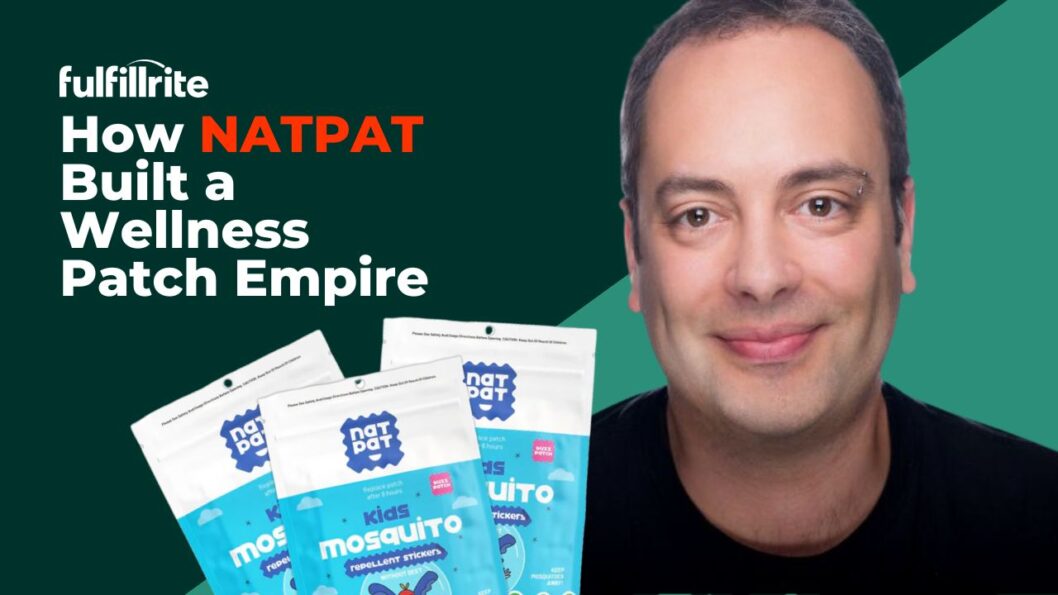
Imagine being on holiday in Paris, working late at night, when your phone lights up with a notification. You glance at the screen and see that Kim Kardashian just posted about your product to her 329 million Instagram followers.
Your first thought: fake account.
Your second thought, after checking: this is real.
That’s exactly what happened to Michael Jankie, co-founder of NATPAT, when the reality star bought BuzzPatch mosquito repellent stickers and shared them on Instagram in September 2022. The company didn’t pay her for the endorsement or send her free products. They had no idea she was even a customer.
“When Kim Kardashian bought BuzzPatch and posted about it, we had no idea until it happened,” Michael recalls. “Suddenly sales spiked, our phones lit up, and people started seeing us as credible.”
Today, NATPAT has sold more than 1.5 million packs of wellness stickers across its product line. The company’s revenues are “well into eight figures” across direct-to-consumer, marketplace, and wholesale channels. Their products are available at Target, Walmart, Amazon, Woolworths, iHerb and in markets across Australia, North America, Europe, the UK, and Singapore.
But NATPAT didn’t start with aspirations of celebrity endorsements or eight-figure revenues. It started in Michael Jankie’s backyard in Australia, watching his kids play and feeling frustrated every time he reached for the chemical spray bottle.
This is the story of how two friends built a wellness patch business on problems they faced as parents. And it’s also the story of how an unexpected Instagram post from one of the world’s most famous women validated everything they’d been building.
When Spraying Your Kids Doesn’t Feel Right
“The idea started in my own backyard in Australia, watching my kids play and realizing how often we were spraying chemicals on them,” Michael explains. “It didn’t feel right. I wanted something safe, simple, and fun that my children would actually enjoy using.”
That frustration—that nagging discomfort every parent feels when doing something they’re not entirely comfortable with—turned into curiosity. And curiosity turned into a question: what if there was a better way?
“That frustration turned into curiosity, and from there the sticker idea was born,” Michael says.
The logic was simple. Kids love stickers. They’ll wear them voluntarily, happily, without complaint. So why not make stickers that do something functional while being fun?
Michael Jankie, Gary Tramer, and Andrei Safonau founded NATPAT (Natural Patch Co.) in April 2020, drawing on their wealth of experience in eCommerce and startups. The timing couldn’t have been worse—or perhaps, in retrospect, better. The pandemic had just begun. Supply chains were chaotic. Consumer behavior was unpredictable.
But families stuck at home were spending more time outdoors in their yards and local parks. Mosquito season was coming. And parents were increasingly conscious about what chemicals they put on their children’s skin.
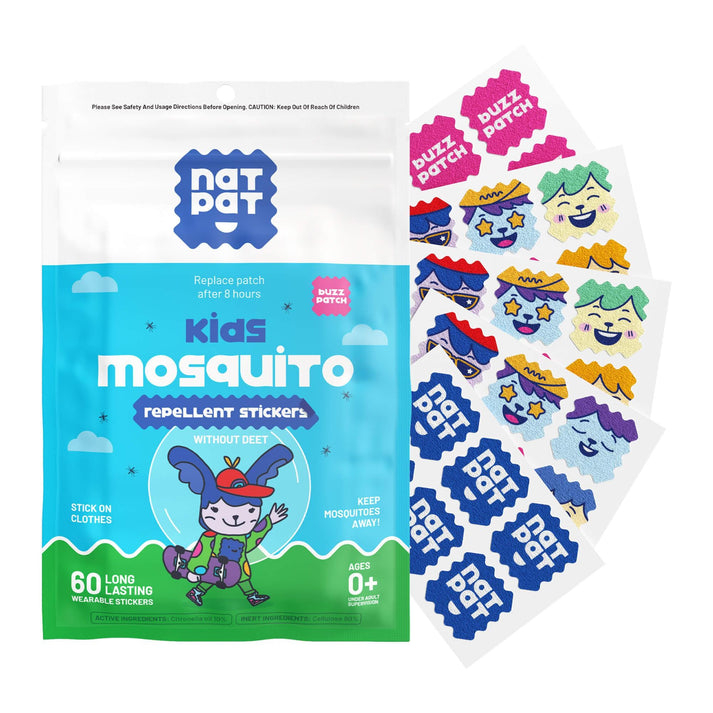
The first BuzzPatch packs were sold in May 2020, just one month after founding. The stickers used natural essential oils—particularly citronella—infused into colorful, kid-friendly patches that could be stuck on clothing rather than applied directly to skin.
No DEET. No harsh chemicals. Just plant-based essential oils that mosquitoes happened to hate, delivered in a format kids wanted to wear.
Building Trust Over Decades
The NATPAT founding story has an unusual element that most startups can’t replicate: Michael Jankie and Gary Tramer have been friends since they were three years old.
“That kind of history builds deep trust,” Michael says.
Think about what that means for a business partnership. It means no need to prove motives and no uncertainty about whether your co-founder will prioritize personal gain over the company’s mission. No awkward early conversations trying to align on values because the values are already aligned after decades of friendship.
“When we started NATPAT, the focus was never on money first,” Michael explains. “It was about creating something safe for our kids. That foundation of honesty and care is what shaped our culture from day one.”
This wasn’t abstract philosophy. It shaped concrete decisions.
“This philosophy shows up in practical ways,” Michael says. “We design for safety first, we keep the company flexible and family-friendly, and we say no to opportunities that don’t align with our values even if they look profitable.”
That last part—saying no to profitable opportunities—is where most businesses reveal whether their stated values are real or just marketing copy. NATPAT takes the hard step of turning down revenue when it would compromise what they’ve built.
“Profit matters, but joy is what makes the business sustainable,” Michael notes.
The Australian roots also matter. The products are formulated and designed in Australia, bringing a specific approach to natural wellness that resonates with parents globally. The company draws on indigenous communities’ centuries-old use of essential oils for insect repellent, combining traditional knowledge with modern delivery mechanisms.
Reaching 329 Million Followers with Zero Warning
Even though their products received high praise and generated expected revenue, the legitimacy of NATPAT as a business was a constant question mark.
Were sales driven by marketing or genuine product quality? Were they building something real or just riding a temporary trend? As inventors and owners, they constantly wondered if the product was actually good enough.
Then came September 2022.
“When Kim Kardashian bought BuzzPatch and posted about it, we had no idea until it happened,” Michael says. He was on holiday in Paris, working at night as entrepreneurs do, when the notification came through. His immediate reaction was skepticism—probably a fake account using Kim’s name.
But it wasn’t fake. Kim Kardashian had genuinely purchased BuzzPatch (the team still doesn’t know from where—their website, a retailer, or Amazon), used it, and decided to share it with her 329 million Instagram followers in an Instagram story.
“Suddenly sales spiked, our phones lit up, and people started seeing us as credible,” Michael recalls.
The NATPAT team quickly assembled online from different parts of the globe to strategize. But the right response was obvious: lean into the moment while staying authentic to what they’d built.
“It was less about celebrity validation and more about realizing the idea had crossed into the mainstream,” Michael explains. “That gave us the confidence to double down.”
The deeper significance wasn’t just the sales spike. It was the answer to that nagging question about product quality versus marketing.
She didn’t receive free product. She wasn’t paid for the endorsement. She bought BuzzPatch because she needed mosquito repellent for her kids, it worked, and she chose to share it.
That organic endorsement—from someone who could have anything for free—validated that NATPAT had built something genuinely good.
The experience also shaped NATPAT’s current marketing approach. While the company has experimented with influencer marketing, they now focus primarily on resharing genuine posts from customers.
Creating Products Around Their Own Problems
How does NATPAT decide which products to develop? The answer reveals why their product line resonates so strongly with parents.
“Every product comes from a problem in our own homes,” Michael explains. “Sleep, focus, allergies—these were not opportunities we spotted in a market report, they were real needs we faced as parents.”
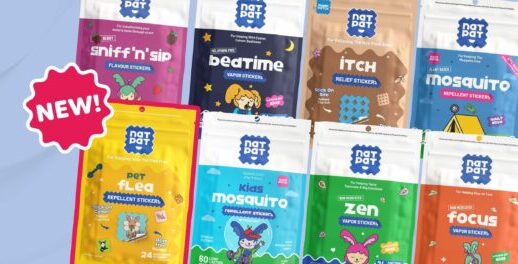
Start with BuzzPatch, the original mosquito repellent sticker. The essential oil blend—citronella combined with other natural oils—creates what NATPAT describes as a “virtual shield” that confuses mosquitoes and hides children from their senses.
Because mosquitoes find humans by sensing the carbon dioxide we exhale, certain essential oils can overpower that CO2 signal, essentially making you invisible to mosquitoes.
But BuzzPatch was just the beginning. Once the technology proved effective, Michael and Gary looked at other problems they faced as parents.
For sleep troubles, they created SleepyPatch with essential oils like mandarin, lavender, sweet marjoram, and vetiver designed to calm the nervous system and promote relaxation.
Focus and concentration issues, they made FocusPatch for school, homework, sports, and activities.
For big emotions and anxiety, they launched ZenPatch for mood calming and emotional regulation.
For congestion from colds or allergies, they introduced StuffyPatch for respiratory relief.
The product development process is consistent: “We look for natural solutions, test them thoroughly, and only bring them to life if our own kids would use them,” Michael says.
The technology behind all NATPAT products is AromaWeave™, a bamboo-based fiber using nanomaterial that releases essential oil molecules consistently—approximately every 30 seconds—rather than dissipating quickly after opening the package. This allows the patches to work for 8-12 hours depending on the product.
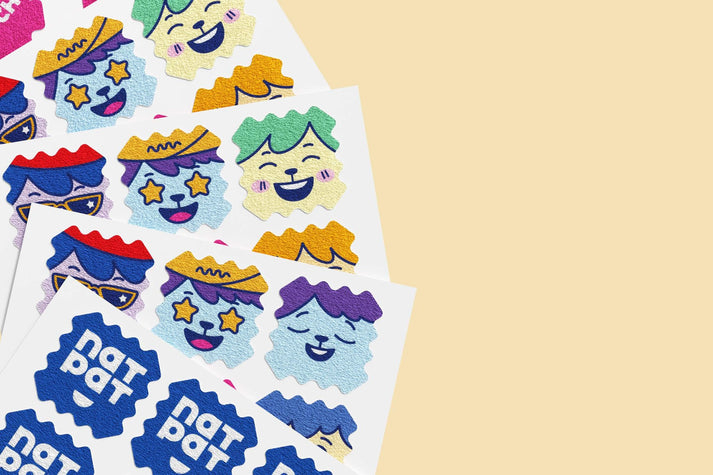
The patches are made with medical-grade non-woven fabric and adhesive safe enough for children’s clothing but strong enough to stay put during active play. The colorful emoji face stickers make them fun for kids to choose and wear.
The parent appeal is equally important: stick them on clothing rather than applying chemicals directly to skin, no messy sprays or creams, DEET-free and plant-based, and kids are more likely to want to wear them.
Making Value-Driven Decisions
Most companies claim to be values-driven. NATPAT’s approach reveals the difference between values as marketing and values as operating principles.
“This philosophy shows up in practical ways,” Michael explains. “We design for safety first, we keep the company flexible and family-friendly, and we say no to opportunities that don’t align with our values even if they look profitable.”
Designing for safety first means using only natural ingredients, testing formulations thoroughly, choosing medical-grade materials, and avoiding harsh chemicals like DEET or synthetic compounds. Every product must pass the test: would Michael and Gary use this on their own children?
Keeping the company family-friendly means understanding that parents work around children’s schedules. It means building flexibility into company culture rather than demanding traditional office hours and presence. It means recognizing that sometimes business decisions need to wait until after bedtime.
Saying no to profitable opportunities is the hardest part. When a partnership or distribution channel offers significant revenue but requires compromising on ingredients, messaging, or brand values, NATPAT walks away.
“Profit matters, but joy is what makes the business sustainable,” Michael emphasizes.
Instead of scaling according to conventional wisdom—raising venture capital, expanding rapidly, maximizing short-term revenue—NATPAT chose to maintain the fun and passion in their work. They collaborate with like-minded partners who share their values rather than pursuing every available opportunity.
Michael credits his support system for enabling this approach: friends, colleagues, other startup founders, and even retired founders who now invest. They provide advice, brainstorm ideas, and think constructively about the business. That community gives NATPAT the confidence to stay true to their mission even when conventional business logic suggests different choices.
Making a Real Difference
Revenue numbers and celebrity endorsements tell one story about NATPAT’s success. But Michael measures success differently.
“A parent once told us their child with autism could not focus in school until they tried our Focus Patch,” Michael shares. “That story hit me hard.”
The realization was profound: “It showed me that what we are building is not just about mosquito bites or sleep, but about genuinely helping families. Those stories are what keep us moving forward.”
The customer testimonials reveal the breadth of impact NATPAT products have on real families:
A mother wrote about her newborn son who loves evening walks: “We have not had a single bug bite since we started using these stickers. The fact that it is chemical-free was a huge selling point for me.”
A parent shared about their daughter with autism: “I needed help for my autistic daughter to get some sleep at night.” After using SleepyPatch: success.
An adult customer wrote: “I can climb into bed, fall asleep, stay asleep (that’s new!) and waken refreshed about 7-8 hours later! I haven’t slept this well in around 20 years!!”
A stay-at-home mom described her high-energy child: “I decided to give these a try. I was so surprised that he actually was calm and played with blocks for over two hours and I got to finally have a break!”
One customer even used ZenPatch for a stressed cat exhibiting behavioral issues: “I thought we’d give these patches a try” and the calming effect worked for the pet.
These aren’t just product reviews. They’re stories about quality of life improvements for families struggling with real challenges.
What Comes Next
From a backyard in Australia to 1.5 million packs sold. From launching during a pandemic to revenues “well into eight figures.” From unknown brand to organic endorsement by Kim Kardashian.
The NATPAT journey demonstrates what happens when founders build products they genuinely need for their own families. When childhood friendships create business partnerships rooted in deep trust. When values drive decisions even at the cost of short-term profits.
Michael and Gary didn’t set out to build a wellness empire. They set out to stop spraying chemicals on their kids. The sticker idea that emerged from that frustration solved a real problem in a format children actually enjoyed.
Then they applied the same problem-first approach to sleep, focus, mood, congestion, and allergies. Every product comes from a problem they faced in their own homes. Every product gets tested on their own kids first.
The accidental celebrity endorsement validated what they’d built, but it didn’t change the fundamental approach. NATPAT still focuses on resharing genuine customer stories rather than paying influencers. They still say no to opportunities that compromise their values. They still measure success by impact on families’ lives rather than just revenue growth.
The lesson for other entrepreneurs isn’t about getting lucky with celebrity attention. It’s about building something so genuinely good that when someone with 329 million followers discovers it organically, they choose to share it without payment or incentive.
You can explore NATPAT’s full product line at natpat.com including BuzzPatch, SleepyPatch, and Wellness Kits.
Key Takeaways
Did you read this piece looking for tips on how to grow your own business? Here are some things that stood out to me.
Build what you’d use yourself.
Every NATPAT product solves a problem Michael and Gary faced with their own kids. When founders are the target customer, product-market fit comes naturally. So make products you’d feel comfortable using yourself.
Organic advocacy beats paid influencers.
Kim Kardashian bought and posted without payment or free product. Now NATPAT focuses on resharing genuine customer posts. Authentic testimonials “are the ones that work and resonate” more than sponsored content.
Problem-first beats market-first.
Sleep, focus, allergies—”not opportunities we spotted in a market report, they were real needs we faced as parents.” Market research identifies gaps but lived experience identifies solutions people truly desire.
Values-driven means saying no to profits (sometimes).
“We say no to opportunities that don’t align with our values even if they look profitable.” Turning down revenue that compromises principles is what makes the difference between value-washing and value-driven.
Launch timing matters less than product quality.
Founded April 2020 during pandemic, first sales May 2020. Terrible timing became irrelevant when the product solved a genuine problem.
Joy makes business sustainable, not just profitable.
“Profit matters, but joy is what makes the business sustainable.” Maintaining fun and passion while scaling preserves founder motivation and company culture long-term.