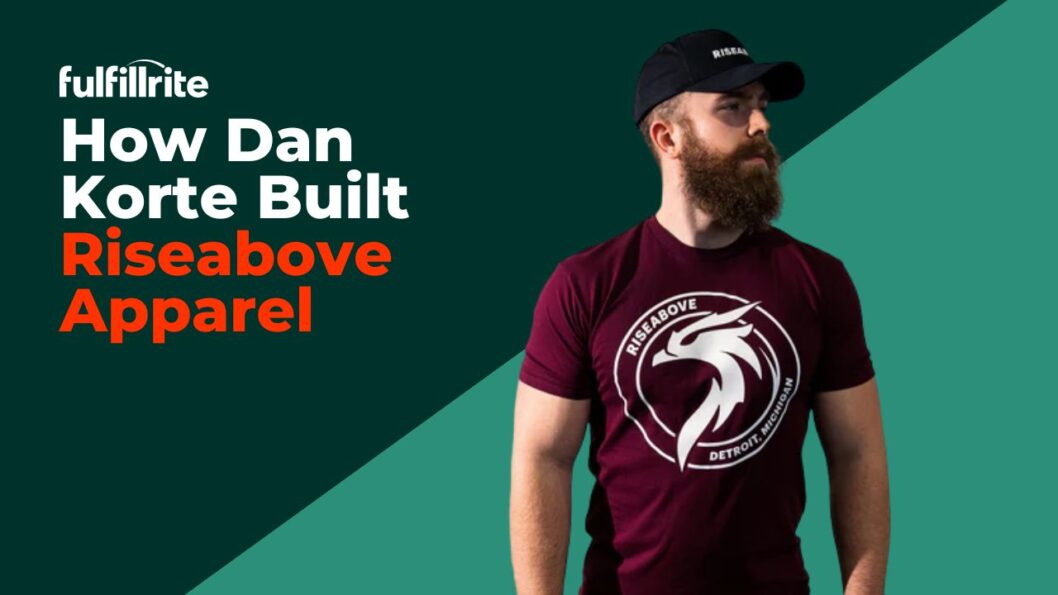
Let’s be honest about eCommerce: it’s brutally hard.
When asked what surprised him most about eCommerce, Dan Korte, founder of Riseabove Apparel said, “honestly, how hard it is. “You picture steady progress and quick wins, but in reality, it’s constant setbacks—delayed shipments, poor quality, inventory issues, unexpected costs. There are so many moments where you question if it’s even worth it.”
“You learn that persistence is the real skill,” says Dan. “You can’t control every challenge, but you can control how you respond. That mindset—refusing to quit even when everything feels uphill—is what’s kept Riseabove moving forward.”
That mindset isn’t just business philosophy for Dan. It’s lived experience.
Dan is a testicular cancer survivor who faced down mortality, then discovered his oncologist was accused of committing fraud. He built Riseabove Apparel for people like him. That is, people who’ve been through hell and found recovery through fitness.
Riseabove isn’t just another athletic apparel company. It’s a community where people wear their scars proudly as reminders that they can overcome whatever life throws at them.
This is the story of how Dan Korte turned tragedy into a mission-driven brand that competes on authenticity, not price. And it’s also a story of why persistence matters more than any marketing strategy.
When Your Oncologist Gets Accused of Fraud
Dan Korte’s journey to founding Riseabove Apparel began with a testicular cancer diagnosis. After treatment and recovery, he felt grateful for a second chance at life.
“Fast forward to 2012, I had the idea to create a non-profit testicular cancer foundation called ‘RISEABOVE,'” Dan explains. “I wanted to give back because I had gotten a second chance at life.”
It was not much longer after that when Dan discovered something that shook him to his core.
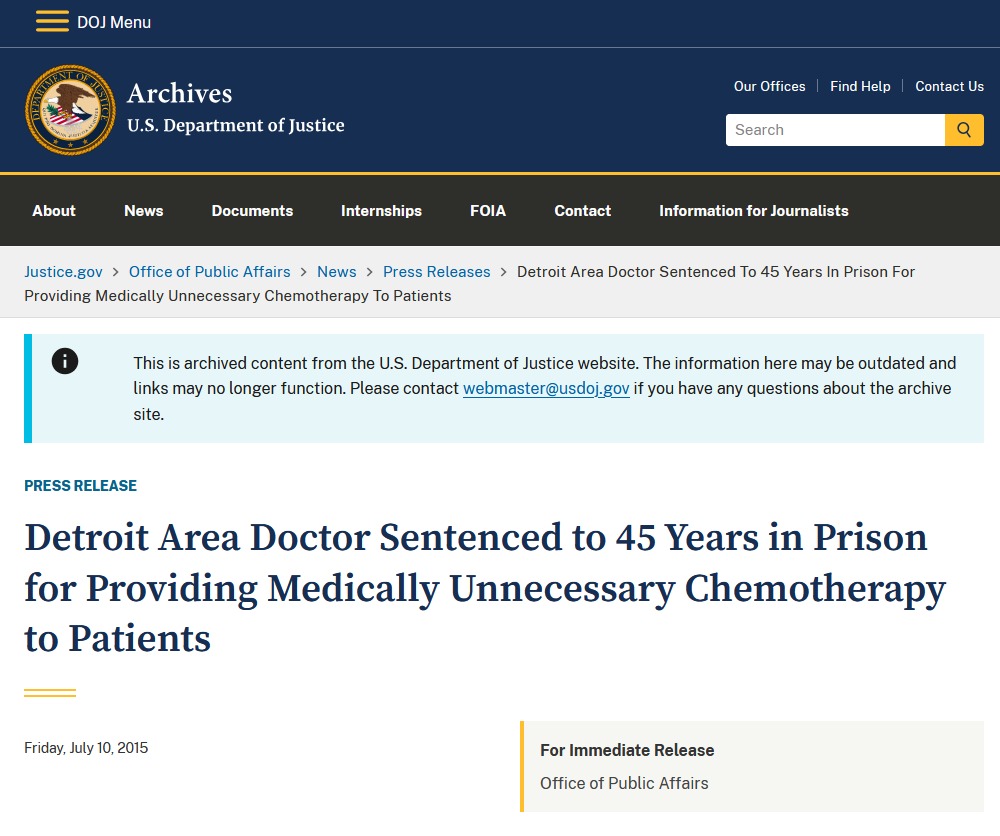
“In 2013, I found out that my hematologist oncologist was accused of prescribing chemotherapy drugs to healthy individuals and submitting many fraudulent claims to Medicare,” he recalls on the Riseabove about page. “This made me question many things in life, but thankfully I was not a victim of this evil.”
Imagine that moment. You’ve survived cancer. You’re grateful to your medical team. Then you learn your oncologist may have been committing fraud on a massive scale. The doubt, the fear, the questioning of everything you thought you knew.
For years, Dan struggled to make sense of it all. “It wasn’t until many years later that I realized that I had to go through these events in order to build RISEABOVE,” he says.
The turning point came in 2017, at a coffee shop.
“I met a woman that would change my life forever,” Dan recalls. “I told her about my idea at a coffee shop that I wanted to create an athletic apparel company around individuals who have gone through tragedies and struggles in life. She immediately related to the idea and pushed me to get it off the ground.”
With her encouragement, Dan started sharing the concept. “I started getting the idea out there with her help and immediately knew we were onto something life changing.”
The mission crystallized into “a community of individuals who have gone through tragedies and struggles in life and found recovery through fitness.”
And the tagline said it all. Wear your scars proudly as reminders that you can overcome life’s struggles through fitness.
From Hardcore Athletes to Weekend Warriors
When Dan launched Riseabove Apparel, he had a clear picture of his customer. Or so he thought.
“Initially, we thought we were designing for hardcore athletes,” Dan admits. But the market had other ideas.
“Over time, we realized our audience includes anyone who embraces an active, resilient mindset—from gym-goers to weekend warriors,” he explains. “That insight reshaped our messaging.”
This realization was crucial. Riseabove isn’t about athletic performance metrics or competing in competitions. It’s about resilience mindset. It’s about showing up to the gym even when depression tells you to stay in bed. It’s about running when anxiety makes your chest tight. It’s about lifting weights as a way to process trauma.
The struggles customers overcome range widely: weight loss, mental health challenges, personal setbacks, cancer, anxiety, postpartum depression, PTSD. The common thread isn’t athletic ability. Rather, it’s the decision to rise above whatever’s holding you back.
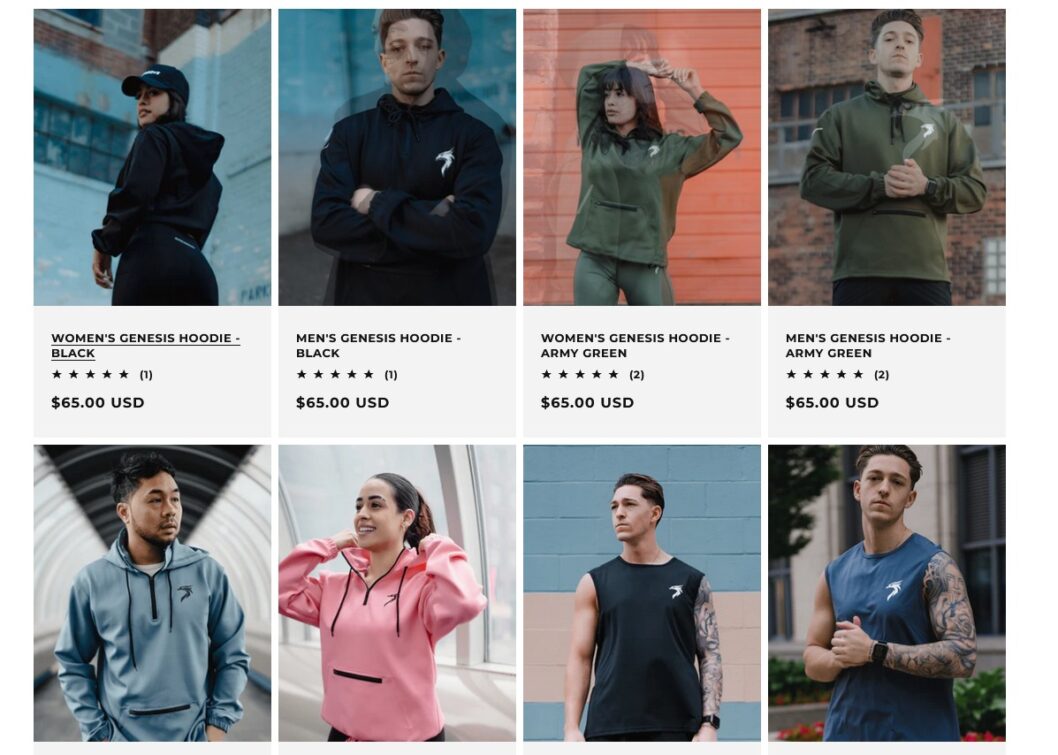
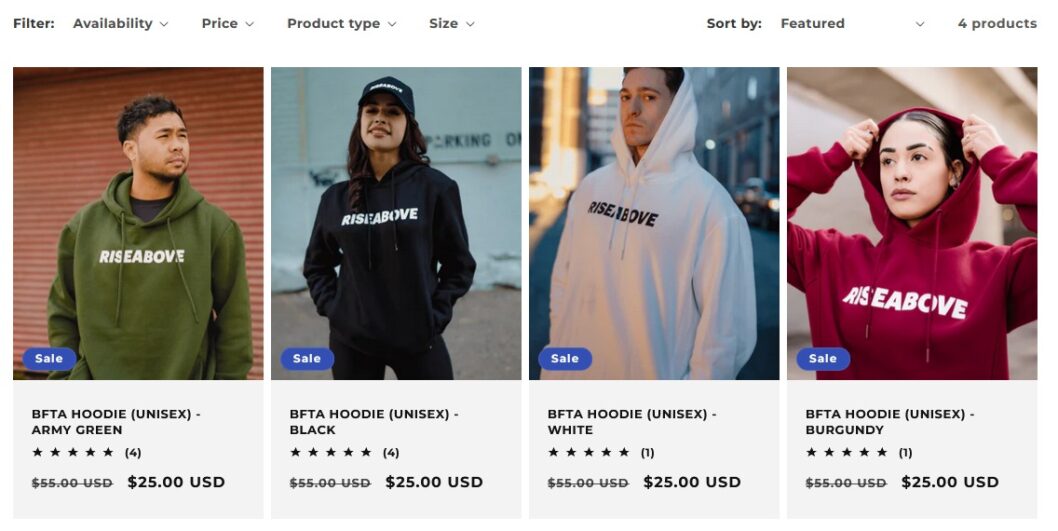
The product line reflects this mentality through its sale of men’s and women’s athletic shirts, tank tops, hoodies (including theGenesis Hoodies collection), performance shorts, biker shorts, leggings, sports bras, and hats. Each piece features symbolism representing transformation. The Phoenix rising from ashes is a recurring motif.
Customer testimonials reveal the emotional connection people have with the brand:
“I have hit rock bottom many times in life,” one customer wrote about their hat. “Wearing this hat is a reminder that I was able to overcome those hardships.”
The product quality backs up the mission. Reviews consistently mention that items are “super soft and comfy,” “high quality,” and “fits great after I washed it.” But quality is table stakes. What keeps customers coming back is the reminder every time they put on Riseabove gear: they’ve overcome before, and they can overcome again.
The Products Are the How, But the Mission Is the Why
How do you balance selling products with telling mission-driven stories? For Dan, this is the beating heart and soul of the brand.
“Our mission—empowering people to rise above limits—drives everything,” Dan says. “We try to show it through real stories of athletes, everyday grinders, and our own journey as a small business. The products are the vehicle, but the mission is the why.”
This philosophy shapes everything about how Riseabove operates. The brand doesn’t lead with fabric specs or performance features. It leads with stories of people who’ve been knocked down and gotten back up.
When it comes to customer reviews and testimonials, Dan maintains authenticity by refusing to cherry-pick only glowing feedback.
“We spotlight honest, detailed feedback—including constructive comments,” he says. Showing real feedback, including criticism, builds trust in a way that perfectly curated five-star reviews never can.
The competitive advantage is clear: “Our storytelling is what sets us apart from the competition,” Dan notes. Any brand can source athletic wear from manufacturers. What they can’t replicate is Dan’s lived experience, authentic mission, and community of people who genuinely relate to the struggle.
Don’t Try to Be the Cheapest
Big athletic brands can undercut small companies on price all day long. So how does Riseabove compete?
“We don’t try to be the cheapest; we focus on being the best value,” Dan explains. “Customers appreciate authenticity more than deep discounts.”
This distinction—cheapest versus best value—is of tremendous importance. The Genesis Hoodies, for example, retail for $65. That’s not bargain-basement pricing. But customers aren’t just buying a hoodie. They’re buying:
- Ultra-soft, durable fabric blends that provide comfort and flexibility
- Quarter zip designs with high neck protection against cold
- Secure zip pouches for essentials
- Adjustable drawstring waists for customizable fits
- Symbolic details celebrating strength and renewal
- Membership in a community of people who understand struggle
Most importantly, they’re buying a reminder every time they put it on: I can rise above this.
The email strategy reinforces this value-over-discount approach. “A new customer receives a warm welcome flow focused on story and value, not discounts,” Dan says. New customers don’t get bombarded with 20% off codes. They get the story, mission, and—vitally—breathing room to make decisions they feel good about. The kind that don’t end up as buyer’s remorse.
Dan explains, “quality over frequency keeps open rates high.”
The result is customers who buy because of the mission stick around longer than customers who buy because of a discount code. When your next purchase decision is driven by “does this brand represent my values?” rather than “what’s on sale today?”, you’ve built something sustainable.
Focusing on Repeat Purchase Rate, Not Vanity Metrics
What metrics does Dan actually watch? Not the vanity metrics most eCommerce brands obsess over.
“Repeat purchase rate, customer lifetime value, and engagement on community posts,” Dan says. That’s it. Three metrics that matter.
Why repeat purchase rate? Because it indicates mission resonance, not just product satisfaction. Someone might buy once because they like the design. They buy again because they connect with what Riseabove represents.
This focus on repeat purchases shapes customer acquisition strategy.
“We reverse-engineer it from our average order value and repeat purchase rate,” Dan explains. “If we know our average customer buys again within a few months, we’re comfortable spending a bit more upfront.”
The logic is sound: if lifetime value is $200 and you know customers typically make three purchases, you can afford to spend more acquiring them than if you’re hoping for a single $65 sale.
Engagement on community posts matters because it measures connection to the mission, not just transaction completion. Someone commenting on a post about overcoming anxiety or sharing their own cancer recovery story signals deep brand affinity.
These metrics also drive product decisions.
“We look at both data and community feedback,” Dan says. “If a product isn’t performing after several months and we can’t clearly identify why, we sunset it to make room for stronger performers.”
“On the flip side, when we see repeat customers or organic social buzz around a particular design, we reinvest—often improving materials or expanding colorways.”
Authenticity Beats Reach
Influencer marketing or paid ads: which channel is the better investment? Dan has a clear answer based on his experience with Riseabove.
“For us, micro-influencers—especially those who genuinely live the Riseabove lifestyle—outperform larger partnerships in terms of engagement and authenticity,” Dan says.
The key word here, of course, is genuinely. Riseabove doesn’t pay fitness influencers with millions of followers to post once. They work with people who relate to the mission of overcoming struggles through fitness. People whose audiences trust them because they share real struggles, not just perfect gym photos.
When it comes to tracking ad effectiveness, they do so in a way that acknowledges recent privacy changes that make conversion tracking harder. Namely, “we’ve leaned more heavily into first-party data: building our email list, optimizing post-purchase surveys, and using tools that help model attribution,” Dan explains.
When the Facebook pixel became unreliable thanks to Apple’s privacy changes, Riseabove had to change their processes. After all, it’s not like they could simply keep throwing money at ads and hoping the platform’s attribution was accurate.
They had to build owned data assets. That means things like email lists they control, post-purchase surveys that capture how customers found them, attribution modeling tools that fill the gaps iOS privacy protections created.
It’s more work than relying on Facebook’s black box. But it’s also more sustainable and gives Riseabove insight into customer journeys rather than algorithmic guesses.
Cash Flow Healthy, Customer Satisfaction First
How does a small apparel brand manage inventory without tying up all their capital or missing sales from stockouts?
“We stay lean,” Dan says. “Smaller runs keep cash flow healthy and allow us to test new designs quickly. If something sells out fast, that’s a good problem—and a signal to scale.”
This approach prioritizes learning over maximizing every potential sale. Yes, selling out means leaving some money on the table. But it also means Riseabove can test new designs without committing $50,000 to inventory that might not sell.
When something does sell out quickly, that’s data. Reorder larger quantities. Maybe expand colorways. The sellout validated the design.
Returns policy reveals Dan’s priorities even more clearly.
“We make it frictionless,” he says. “Our policy is simple: if you’re not happy, we’ll make it right—fast. We prioritize customer satisfaction over short-term margin.”
Think about the math. Charging a $10 restocking fee might save $10 today. But if that frustrates a customer who would have made three more $65 purchases, you just traded $10 for $195.
For a mission-driven brand, this matters even more. You can’t build community by nickel-and-diming people on returns. Trust is everything when customers are buying into values, not just products.
Email segmentation follows the same customer-first logic. Emails are not sent with overwhelming frequency. Customers are not bombarded with daily promotions. There’s simply thoughtful communication that respects people’s inboxes while building connection to the mission.
Constant Setbacks and the Refusal to Quit
What surprised Dan most about building an eCommerce brand was the unglamorous reality behind the Instagram posts. The sheer difficulty of sticking to it.
“That mindset—refusing to quit even when everything feels uphill—is what’s kept Riseabove moving forward,” Dan says.
There’s a meta-lesson here. Riseabove’s mission is helping people overcome struggles through fitness. Building Riseabove required Dan to overcome constant struggles through persistence. The founder embodies what he sells.
When Dan wears Riseabove gear, he’s wearing his entrepreneurial scars proudly—delayed shipments, quality issues, cash flow problems—as reminders that he overcame them. Just like his customers wear their scars from cancer, anxiety, weight loss journeys, or whatever battles they’ve fought.
The brand isn’t just marketing messaging. It’s lived experience at every level.
Final Thoughts
From testicular cancer survivor to apparel founder. From a coffee shop conversation to a community of people overcoming struggles through fitness. From questioning whether it’s worth it to building something that genuinely helps people.
Dan Korte didn’t set out to build just another athletic wear brand. He set out to create something that represented his own journey—surviving cancer, discovering his oncologist’s fraud, getting a second chance, and choosing to use that second chance to help others.
Riseabove Apparel competes on mission, not price. On authenticity, not discounts. On community, not scale. The metrics that matter—repeat purchase rate, lifetime value, community engagement—reveal whether the mission resonates, not just whether products sell.
The challenges are real, be they inventory issues, quality problems, or simply moments of doubt. But the response is what defines Riseabove: refusing to quit even when everything feels uphill.
Explore the full Riseabove collection atriseabove.org, including theGenesis Hoodies Collection symbolizing transformation and fresh beginnings.
Key Takeaways
Did you read this piece looking for tips on how to grow your own business? Here are some things that stood out to me.
Mission-driven positioning makes higher prices more acceptable to customers.
Riseabove doesn’t compete on price because customers buy the mission. “We focus on being the best value. Customers appreciate authenticity more than deep discounts.” Community belonging justifies premium over commodity athletic wear.
Repeat purchase rate shows if customers connect with your mission.
Dan watches repeat purchases and lifetime value, not just first-order metrics. Customers returning signal mission connection, not just product satisfaction. Calculate CAC from LTV, not arbitrary benchmarks.
Micro-influencers beat macro when mission matters.
“Those who genuinely live the Riseabove lifestyle outperform larger partnerships in terms of engagement and authenticity.” Reach means nothing if the audience doesn’t relate to the core message.
Lean inventory makes it possible to do fast testing.
Smaller production runs make it easier to keep cash in the bank and quickly iterate on designs. Dan says the market will give you data, and that “if something sells out fast, that’s a good problem—and a signal to scale.”
Frictionless returns build lifetime value.
“If you’re not happy, we’ll make it right—fast. We prioritize customer satisfaction over short-term margin.” Return fees save $20 today but cost $500 lifetime value.
Email segmentation prevents overwhelm.
New customers get “warm welcome flow focused on story and value, not discounts” with breathing room before broader campaigns. Frequency kills engagement faster than irrelevance.
iOS tracking changes pushed Dan to start collecting first-party data.
There’s no substitute for owning your own data. Dan’s approach, which is a good one, was to start “building our email list, optimizing post-purchase surveys, and using tools that help model attribution.”
Persistence is the actual skill.
“You picture steady progress and quick wins, but in reality, it’s constant setbacks.” The skill isn’t avoiding challenges—it’s “refusing to quit even when everything feels uphill.”