
A Crash Course in Board Game Manufacturing (Interview w/Tyler Lipchen at Panda Game Manufacturing)
You want to make a board game.
But how do you…make a board game?
I’m not talking about play-testing or art or any of that. I’m talking about manufacturing.
How do you work with a manufacturer to turn that beautiful idea in your head or on some index cards covered in Sharpie into a real, marketable board game product?
That’s where Panda Game Manufacturing comes in. They’re one of the most famous board game manufacturers out there. Asmodee’s used them, as has Stonemaier, Z-Man, GMT, Leder Games, and a bunch of other huge publishers.
So that’s why I’ve brought on Tyler Lipchen, Senior Project Manager and Prepress Specialist at Panda.
Transcript
About this Interview
This transcript was generated with AI and may contain occasional minor errors.
Brandon Rollins: You want to make a board game, but how do you make a board game? I’m not talking about playtesting or art or any of that. I’m talking about manufacturing. How do you work with a manufacturer to turn that beautiful idea in your head or on some index cards covered in sharpie into a real marketable board game product?
That’s where Panda Game Manufacturing comes in. They’re one of the most famous board game manufacturers out there. Asmodee’s used them, as has Stonemaier, Z Man, GMT, Leader Games, and a whole bunch of other huge publishers. So that’s why I’ve brought on Tyler Lipchin, Senior Project Manager and Pre Press Specialist at Panda.
Brandon Rollins: Now it’s funny, I had pitched the idea of an interview with the topic of a crash course in manufacturing board games when I was working with Panda on this. Turns out they had a slideshow already made, ready to go, that was almost a word for word match on what I was looking for. I couldn’t ask for any better, so they’re going to do that slideshow today.
Now we’re going to cut to that in just a minute, but real quick. My name is Brandon. This video is brought to you by Fulfillrite. We ship orders for e commerce and crowdfunding. Link below for more details, and quotes are always free. Now, one last quick note, I edited this one with a light touch because we just want to keep it simple and lo fi and honest, just like two professionals on a Zoom call, but this time with screen sharing.
So, alright, let’s cut to the interview. So, yeah, thank you again for coming on. I really appreciate it. Yeah, no worries. Yeah, I, I love, um, that you just happened to have exactly the kind of thing that we wanted to cover anyway, just sitting around in your Google Drive ready to go. I couldn’t have asked for better.
Tyler Lipchen: Yeah, we get, we get asked the question a lot. So yeah, we’ve definitely come prepared.
Brandon Rollins: Yeah, you’re ready for it. I like that. Um, we can jump into this thing whenever you’re ready.
Intro to Panda Game Manufacturing
Tyler Lipchen: Yeah, sounds good. Sounds good. So this is our crash course in, in, in tabletop game manufacturing. Um, this is an introduction to, um, to, uh, Panda’s process in particular, but this process will be very, very similar for any mass production, um, uh, uh, supplier.
The 1st part of it will kind of go through the whole process, but some parts of it will be more geared towards like a print on demand. But the majority of this presentation will be for a full mass production facility. My name is Tyler. I’m from Panda. As you know, I am a senior project manager and pre press specialist.
Um, so I kind of handle projects from the consultation, quoting phase all the way through to, I do run pre press checks and design verification. Um, and then I actually manage a project all the way through to completion, even help with some shipping as well. So, um, that’s who I am. Uh, but let’s get into the production process.
Cause that’s why you’re all here. So. There we go.
The Manufacturing Process
Tyler Lipchen: So this is a typical manufacturing process. So, um, you will reach out, uh, at the beginning of your journey, whether you’re in the middle of a game design, or you’re planning a crowdfunding campaign, or you’re a publisher who has a product that you’ve kind of gotten past alpha testing.
So like you’ve been playtesting it, you have a good idea of the specifications of how many cards you need, how big your board has to be. Um, you have a A working prototype, um, that that could be a mass production game eventually, right? That’s kind of when you want to reach out for quotes with manufacturers because otherwise it too much is in flux and you make it an estimate that’s not really accurate.
So, um, uh, the 1st part of the process is reaching out for a quote, and I believe you should reach out for a quote once you have a working prototype. And then you just match specs to reach out for a quote. You can do it through. There are some online estimator tools. Panda has an estimator tool on our website, so you can use that to start.
If you want just a rough estimate or you can reach out to us directly for a quote, at that point you’ll be put in touch with the project manager like myself, um, who will review your specifications. Um, there are ways you can input specifications into our website. Um, or if you have like an Excel document or something, you can also work with your project manager to fill out your specs that way.
Um, someone like me and myself, again, a project manager, will review your specifications. Uh, we’ll look out for, for, um, things that don’t quite match, like maybe your, you know, the components don’t fit inside your box, or maybe you’ve kind of asked for something that’s a little bit kind of, um, uh, whether we can do it or not.
Uh, we’ll kind of look for any kind of hedge cases, anything, any tweaks we can make. Um, and also during that initial stage, we might make some, uh, suggestions. Uh, certain materials, uh, more obvious, some like cost saving suggestions. Um, if you want, um, there’s also a bit of consultation for crowdfunding, which we’ll talk about kind of at the end of the presentation where there, there’s a little bit of extra, uh, consultation that goes along with that.
Um, but generally speaking. You’ll speak to one of us or you’ll send in your specs and we’ll provide a quote. Now once you’re happy with the quote and you want to sign the quote and you’ve solidified your quantities, um, then we go into the next stage which is called design verification, um, which will be checking your files.
After that we go into pre production. Uh, which will be, uh, kind of digital printed a sample of your game and any samples of any source components, which are non printed components, then mass production, then assembly, and then shipping. And that is kind of the whole process from start to finish. I want to go through each of those, uh, points, uh, in detail, and then we’ll give you some, some tips and tricks, uh, and some more information on crowdfunding in particular at the end of the
Brandon Rollins: presentation as well.
Now, I do have a brief question about the manufacturing, the, um, Manufacturing process more broadly. And that is, I I’m seeing more and more people are doing this kind of, um, design for manufacturing kind of process where they get really smart about it. And they figure out what is actually feasible in terms of costs before they get too hung up on any idea.
Now, it sounds like your online pricing calculator can already help people with that to some extent, but do you have additional resources that can help people in that scenario?
Tyler Lipchen: Yeah, yeah, for sure. No, it’s a really good idea to, um, you know, as you’re as you’re building a tabletop game is to consider manufacturing.
We actually have a presentation called game design with manufacturing in mind that goes through it in detail. Um, but because you’re building a product and because it has to, you know, um. Take up a physical space is actual physical thing, uh, knowing a lot more about, um, kind of your, your, your, your limitations and your opportunities with certain components, uh, is only going to help your design, uh, and earlier, earlier you think about that, the better is going to be in your final product.
Um, so if you go to the Panda website, panda. gm. com and go to tools. Uh, there are a lot of tools there that can help you out. We have a graphic design guidebook, um, and a component guidebook and a crowd funding guidebook, plus templates, a template generator, and, and all sorts of, of, um, of tools that can help you out throughout that process as well.
Um, also just flipping through the website in general, like we go through each component on the website itself. Just reading through those, uh, and get familiar with them, uh, will make a big difference in your game design.
Brandon Rollins: Yeah, that, that sounds good. And I can’t recommend enough that people just get involved early in trying to cut off costs before they, uh, Commit really hard to something because if you get the costs under control early, it makes everything else easier.
And as a note for you and me, um, any of those resources you just mentioned, if you just send me the links after the, after we do this recording, I’ll drop those down in the comments. Anybody who’s watching this can, can go to the landing pages or any other resources you may want to link
Tyler Lipchen: them to. Yeah. Yeah.
It sounds perfect. Sounds good. There’s a slide at the very end that talks about tools as well. So we’re kind of jumping ahead of ourselves here, but I figured it’s a good question. It’s all good. I’m kind of jumping all over the place already, but that’s okay. Uh, like I said, you got lots of questions. Um, you know, a lot of your, your clients, people you work with have questions that you’re kind of, um, you’re, you’re kind of their avatar right now.
Aren’t you kind of speaking for them? So, um, so that’s fine. Yeah. We can jump around a little bit if we have to. Okay. Awesome.
Quoting
Tyler Lipchen: So let’s go through the first bit, which was quoting, which I kind of already talked mostly about. Um, but again, we have an estimator tool online. Some of the manufacturing may also have estimator tools.
Um, you can request a formal quote, I think you’ll have a consultation with, with your project manager. Um, go to the components, um, again, offer suggestions. And then of course there’s crowdfunding. Uh, we do have a crowdfunding package. We will talk about, uh, later on in the presentation as well. Um, but for that, we will have offered crowdfunding advice, how to particularly look at manufacturing.
Um, For crowdfunding project, uh, planning, stretch goals and add ons, and also talk about prototypes and review copies as well, which is very important for crowdfunding. So I’ll talk about that a bit at the end, but during this quoting process, that is something you will be talking about as you’re quoting your project for sure.
Design Verification
Tyler Lipchen: Um, next up, after you sign the quote, as I said, we go into design verification, and this is pre press. At this point, you will be assigned a dedicated pre press specialist. Again, I’m a dual role. I do project management and pre press, but if your project manager isn’t a dual role, you’ll be assigned a specific pre press specialist.
You’ll upload your files to our website. We have a custom built FTP, uh, for all of your files. Uh, we’ll check your files, provide a pre press report, which will say, um, kind of where there are issues. Um, any suggestions we have, uh, if there’s an issue that we, that you need to correct, we’ll provide information on how to correct it with screenshots and the whole lot.
So, um, we’ll send that report back to you. You’ll amend the files and re upload the files to us. We’ll check them again. And we’ll kind of go back and forth until I’m happy with your files. Once I’m happy with them, I will send them to our factory. Uh, they will do another final check and then create digital proofs for you.
Once you approve the digital proofs, that kind of finishes the design verification phase, and then we go into pre production.
Brandon Rollins: Do you guys tend to have a lot of back and forth on the, um, on the prepress
Tyler Lipchen: part? Yep, absolutely. Okay. For sure.
Brandon Rollins: And that’s… Complicated to account for in Kickstarter,
Tyler Lipchen: right? Yes, absolutely.
That’s one of the, probably one of the longest, um, it can be one of the longest phases in the whole production process, uh, cause it really depends on your files, um, how, how long it takes. It could take two weeks. It could take two years. Who knows? Depends on your files. But the advantage, um, you know, of working, working with Panda, working with someone like myself, is that you have a pre press specialist on call, um, who will talk you through everything, right?
They’ll talk you through how to set up your files if you need to. They’ll provide, again, they’ll provide feedback on your files to help you out. Um, And that, and that’s really important because again, it can be challenging, especially if you’re doing it all yourself. Like if you have a graphic designer who is used to tabletop games, um, it’s a little bit easier because they, you know, they kind know what they’re doing, you know, and they, they speak the lingo, right?
Um, but if you doing it yourself, which a lot of time creators are, uh, it helps to have a dedicated pre-press specialist to help talk you through these things and help check your files as you go. So. Um, don’t be too daunt. Like, don’t be too, you know, uh, you know, scared of it. It’s not like it’s going to, like, delay your project for years and years, so to speak.
Um, but it is something that you will likely need some extra support for, particularly on your first project. Uh, you will find it’s, it’s a steep learning curve, but once you do that first project. Um, the, the, you know, the reprints are very, very simple compared to a first time project. And even like a new project with an existing client, um, I find is just so much easier because like you’ve been through the process, you’ve read the design guidebook, you’ve had a pre print support, you know, what, what can be fixed.
You don’t make the same issues, you know, don’t make the same mistakes twice usually. Um, so it gets the first time. Budget extra time for sure, but after that, like it gets a lot easier to become second nature and you start to set up your files properly when you start a new game design, like, you know what card sizes you want, you have templates for the bleed and the margins, you know what to look out for, you can start to like, you know, as as an art director, help brief your artists on what you want and work within the restrictions of the components of the media.
And that makes a big difference to you’ll definitely find it. Artists and graphic designers who are, uh, industry veterans, um, their work is, is phenomenal. Um, you know, their files are, are perfect when they come in for design verification. Like it just goes right through prepress. It’s very smooth, but they work within the constraints that are inherent in the actual product and the actual processes.
Um, but they still make it look good. Right. Like, you know, they have, they have to adhere to bleed on tokens and cards, but they, they, they know those margins and bleed so well to actually use them third vantage, which is part of design. Like that’s part of game design, right? Like restrictions breed creativity, don’t they?
Like that’s, that’s inherent. Um, so same thing goes with the, with the pre press files. And again, using a graph designer who’s, who’s experienced, um, is definitely worth looking into.
Brandon Rollins: I think something just to point out for somebody who’s like, and it’s like, it’s YouTube, we get quite a general audience, but like, if you’ve never done a board game file before, or like any kind of printed marketing or media or whatever, um, that bleed is basically, you have to, um, Assume that whatever you make printed is going to have the edges cut off, so you just have to make sure that all of the critical stuff fits within a certain safe zone, and the rest is you bleed in your trim, and that’s what that’s called.
There’s neat diagrams for this, I might pop that up on
Tyler Lipchen: screen too. Yeah. And then the templates that you get through the template generator, uh, on our website does have the margin lines and the bleed lines, and it has a legend to explain what they are and things like that as well. So it’s pretty, pretty, you know, once you get the hang of it, it’s, it’s, uh, it gets a lot easier.
Like I said, just a bit of a learning curve. Awesome.
Pre-Production
Tyler Lipchen: So, uh, going through, uh, after design verification, after the digital proofs are approved, we go into pre production. So, um, at this point, uh, it says here, this is the final quality control checkpoint before mass production. Uh, we will produce a full pre production copy of your game.
That’s called the PPC for short. And that is, uh, it’s a digitally printed version of your game, so it’s used, uh, printed using a digital printer, not the offset printers that we use for mass production. Um, but it will be using the same materials and finishes as your final game. Um, the, uh, anything that’s going to be cut is going to be, uh, trimmed with a plotter as opposed to die cuts.
Um, this is very complicated. We may opt for DICUS, depending on your project manager will determine what’s best. Um, but it’s going to be a physical version of your game. Okay, kind of like, you know, kind of like a prototype you’d get at a print on demand service. Um, and this is going to be shipped to you, and then your project manager and you are going to have a, have a call.
You’re going to hop in a video call, you’re going to review the game, review the PPC, you’re going to play the game a few times with it. You have a video call with your project manager to go through any issues that you have. Now, at this point, If you have any issues, it’s fine. It can be fixed. If you find a typo in your rule book, we just go back to design verification, upload a new rule book, we check it, digital proofs are fine, approved, off we go.
Um, so at this point you can make changes if you need to. Um, after this point is when we go into mass production where it can be a lot more costly, but this is kind of like your last checkpoint before we go, we go on to mass production. Uh, during this stage, you’ll also be getting samples of any non printed components, which I call source components in this case, but, um, That would be things like dice, uh, wood, you know, wood, meeples, wood, cubes, plastic cubes, um, custom plastic minis, um, metal.
Uh, those all have kind of their own, their own process. Uh, but it’s very similar to, you know, basic print that we’ve talked about so far, like you’ll upload your files for like, it’s a three, five, we will check it, we will provide feedback, you know, re re sculpting feedback, but it’s a 3d mini or, or metal or something like that.
Um, you know, we will be some of the modifications we can do ourselves when it comes to plastic minis or metal. Um, We might revert back to you. We’ll show you what has to be done because it’s too big of a change or something like that, but we’ll, we’ll optimize your design files for, for the manufacturing process, right?
It’s like, we’ll check wood. If, um, if some parts are too thin and we’re very breakable, we’ll offer feedback, say, Oh, you know, we should pick them up the legs on this, this wooden meeple, um, or, you know, the details on this plastic mini aren’t going to show us, we should deepen these here or we should move, you know, the arm is right here and we move it to like this angle here.
Then the molds will open easier. You know, things like that is the kind of advice that we’ll offer. I said, some things we can fix ourselves for you. Um, some things we might be too much of a change that we want to, um, we want you to, to be the one to change it, uh, to make sure that it’s exactly how you want it.
Uh, well, any of these changes that we do make, we’ll always show you in advance, whether it be through a digital files or email or through a video call to make sure you approve any change that we do make as well. For any source components. Um, but once you approve those samples and the PPC, then we move on to mass production.
Yeah. And do you have any questions or comments about pre production? No, you’re good. Okay. Yeah.
Mass Production
Tyler Lipchen: So then mass production. Um, at this point, all the paper, the printed components will be printed and die cut. Um, any of the non printed components will be produced. Uh, and we will make one mass production copy, that’s MPC for short.
Uh, and that’ll be assembled and sent to you. That, the MPC is, for all intents and purposes, a retail version of your game. Uh, everything will be die cut, everything will be assembled into the box. Um, you’ll have a plastic tray, for example, and it’ll be assembled into the tray. And then we’ll be shrink wrapped and sent to you.
The only difference between the mass production copy and the final, final, final retail copies are that while we send the MPC to you for you to check, we will be acclimatizing all of your components in our factory to avoid like warping and any kind of damage from moisture. So while we send the NPC to you, um, we’ll have another video call.
Uh, you’ll unbox it. I always recommend you videotape your unboxing for your NPCs because the way that it was assembled in that box will be how it’s assembled for final. Um, at this point, again, you can’t really, well, you can change something, but it’d be costly. If you need to have you find a type or at this point or something like that, you’d have to reprint all your rule books if that was the case.
Uh, but we have so many checkpoints beforehand that, that rarely ever happens. There’s an issue at that point. Um, but one thing we can change is the way things are assembled in the box, because nothing’s been assembled yet. We’ve just produced everything. So that’s why I say, always videotape your, your MPC unboxing, just so you remember how it was packaged and it’s how you want it to be packaged.
Um, so yeah, we have a call. We go through the MPC, everything is approved. We go into final assembly.
Brandon Rollins: Yeah. Are you able to do like runs of say 15, 20, 30, if you wanted to send out copies to
Tyler Lipchen: reviewers? I will talk about that when we get to the crowdfunding section. Yeah, don’t worry. We’ll talk about that in a minute.
Assembly & Shipping
So after mass production, this is the mass production, like, you know, 1500 2000 units. We’re talking, um, after that, we go into assembly as where we actually assemble everything into the boxes. For your instructions and then your shrink draft, um, the packing, the cartons, cartons go on the pallets. Uh, and then when they wait your shipping plan, this point, they can go into a shipping container, um, that they’re being transported by ocean.
Uh, they could be packing the cartons to go on airplanes. It all depends on what your shipping plan is, uh, during the mass production process, um, that’s usually. You know, quite a lengthy time where there’s not a lot for, for me and you to do. Um, so during that time, we tend to talk about shipping, make sure your shipping plan is in place, talk to FulfillRight, make sure everything’s in, uh, all your ducks are lined up so that when the games do ship, um, everything is in order from there.
So, um, that Kind of concludes the entire production process from start to finish.
Timelines & Invoicing
Tyler Lipchen: For timelines is a quick summary, uh, design verification. The time that takes against variable files, uh, you know, for a first time client, first project planned about four weeks, um, could be a lot less, could be a lot more. It really depends on your files.
Um, Uh, pre production, uh, but before we start pre production, that’s when your first deposit invoices due, again, this could change depending on which manufacturer is, uh, who your manufacturer is or your relationship with the manufacturer, but typically speaking, the deposit invoices due before any, any kind of samples are made, um, pre production two to four weeks depends on the, on the game, depends on the components, um, some components might take longer for pre production, like again, custom metal, custom plastics will normally take longer than that.
Yeah. But dice and wood are quite quick, and so is print for pre production. Mass production, 8 12 weeks, again, totally depends on the type of components, how many different types of components you have, and your overall order quantity, right? As you can imagine, you know, making 2, 000 games is different from making 20, 000 games.
So mass production can vary. Also depends on the time of year. Um, you know, if it, if it, your mass production goes over a Chinese New Year, for example, our factories close, all Chinese factories are closed over Chinese New Year. That might add three or four weeks to your production process because of the time of year when you went into production.
After that final assembly, again, two to four weeks, um, could be a little bit longer cause it depends on the complexity of the assembly. And of course, the order. Once again, assembling 2000 games, uh, it doesn’t take as long as assembling 20, 000 games, assembling a legacy game that has, you know, certain components and certain compartments that are sealed that are in certain parts of the box.
That takes a lot longer to assemble than just some shrink wrapped cards in a tuck box, right? So, um, again, these are all kind of just overall general. You know, kind of like a pandemic style game where you’ve got a bit of print, a bit of, you know, a bit of plastic, that kind of thing all put together. But it can definitely vary.
And then, of course, shipping in the pre COVID world, ocean shipping, four to six weeks to the Western US, six to eight weeks to Eastern USA or Europe, air shipping, one to two, one to three weeks, land shipping, one to three weeks. That’s usually local to China will be anything that’s going to be a land ship for us.
Again, if you’re working with a European manufacturer, like in Poland or Germany, You know, land shipping can be anywhere in Europe, so it’s a bit different there. But, um, that’s kind of the general guidelines. Um, you know, shipping times as of the, this recording are actually, you know, pretty good. Um, so if that’s, that’s actually pretty accurate at this, at this point in time, but it can, tomorrow it can change.
So don’t just check out the date stamp when this is posted. Uh, don’t quote me on that. Um, so that’s the whole production process. Do you have any questions before I move on from there? I’m with you so
Brandon Rollins: far. I, I mean, this is like, this is, this is thorough. You guys have clearly refined this over time to, you know, kind of, um, anticipate the questions.
Tyler Lipchen: Anyways, one thing I should mention, I didn’t mention it before, is that the final invoice, we said the deposit invoice is due typically before pre production, uh, the final invoice is due before the game ship. So um, again, that’s something that you would talk with your project manager throughout the mass production, you’ll be preparing the final invoice, perhaps if Panda’s handling some of your shipping for you, that would put on your final invoice as well as we discuss your shipping plans and things like that.
General Tips
Tyler Lipchen: Awesome. Moving on. Uh, so general tips, like I said before, every first project is a learning curve. Um, so build in buffer time to begin with, right? You have to learn how to do a lot of these things as well. Um, keep usability and user experience in mind at all times. Uh, things like choosing the right colors to, you know, to avoid any challenges for people who are colorblind.
Um, choosing the right components for the job. Uh, we also do a presentation on, um, you know, UX and UI and, and, you know, game design with manufacturing in mind. Um, there’s a lot of information, um, that you can find online about this as well, but always keep the overall experience in mind, you know, like your, the way your, your tray is laid out, like, you know, think about how it’s going to be stored, how it’s going to be used, uh, throughout the entire process, because once again, game design is product design, as I said before.
Um, any game specific requirements, um, you should mention during quoting and consultation. So, um. Some games are straightforward like it’s it’s a card game. It’s me in a box. There’s a board in the scoring track, whatever. If it’s like a legacy game and you want things assembled a certain way or cards in a certain order, that’s something that’s a bit more unique.
So just be sure to mention that during our consultations. We’ll normally ask for like the elevator pitch of the game and ask how it plays that helps a lot with. What advice we can give, um, all of us are gamers at Panda. We’re all project managers are gamers. So we, we understand, we understand the lingo.
Um, if you have like a, uh, if you’re at a convention, like let us play your game, right? Like let us play tests with you. Um, if you have a mod on, uh, on online, uh, like tabletopia or TTS or something, let us play it. It helps a ton when we’re consulting you on the game and gives us a lot more context as to what you’re going for.
So. I think that’s kind of very unique for your game. Please mention it to us early. Um, think about stretch goals and fulfillment early, uh, which we talked about before and I’ll talk about again later, um, and consider table presence. Um, do more with less, right? I mean, your table presence is going to sell your game board.
Games are viral by nature. Yeah, there are solo games. Yes. But most games are multiplayer. In order to play them with somebody, you have to actually bring them to your table and show them to them. And if your game is very photogenic, uh, you know, games go viral very easily on Instagram and Facebook and social media.
Right? So consider your table presence at all times, right? That’s going to help your game overall, especially if you’re crowdfunding or trying to build up an audience at conventions.
Your Project
Tyler Lipchen: So, some tips and tricks. Cost savings. Materials and options. Um, that’s obvious cost savings, what kind of cardstocks you choose and what kind of grayboard you’re going to choose.
As you mentioned before, design with cost in mind. It’s always going to help. Um, use components, uh, in multiple ways if you can. Right. There are certain ways you can, um, you know, you can use cards to, to keep score like bonanza, right? The back of the card is how you keep your points, your scores, right? Um, think about multiple functions for, for certain components, maximize your printing sheets, right?
Um, cards print on a big giant sheet. Uh, your standard poker size car, 63 by 88 millimeter cards, uh, print 54 cards per sheet. Well, there’s 54 cards in a card deck. So, if you print 55 cards, you’re going to have to do two full sheets of, um, use two sheets. So, use 54 cards, right? Um, or, you know, max yourself out if you can.
Um, if you have, you know, 50 cards in your game, well, you kind of have four extra cards to be maybe rules reference cards or something, right? Or, or maybe they’re an advertisement for your next game or something like that, right? Um, so just use that to your advantage. Optimize your punchboard dialines as well.
Um, with Panda, we make everything bespoke. Uh, so we make your dialines bespoke, um, for your punchboards. So, utilize them. Maximize them. Maximize the space. Get the most out of it. Um, use custom shapes, right? Like double, triple encode your information. So instead of having just… Uh, you know, a coin that has a one and a coin that has a five, you can make the five bigger.
You can make it, uh, you know, a Pentagon instead of, um, instead of a circle, right? Like you can change the shape, change the sizes to help that accessibility as well for no extra cost for manufacturing, at least with us. Um, and then of course, minimize the box size. Um, that’s, that hint is particularly for crowdfunding.
Um, if you want a big shot, like a, a good shelf presence for retail, you might want a bigger box than what’s needed. Uh, but generally speaking, most people want the smallest box size possible. Cause it’s going to save you a lot on shipping. Yeah. Ocean shipping is dependent on volume. So the smaller your box, the better it’s going to be for you overall.
That’s
Brandon Rollins: a good tip for order fulfillment as well. The smaller the box, the more likely it is to get a price break on literally any kind of shipping, especially if you can get into the like the smallest possible flat rate box
Tyler Lipchen: by USPS. I was going to say flat rates make a big difference, don’t they?
Brandon Rollins: Oh yeah, for sure.
Enormous difference.
Tyler Lipchen: Yeah, absolutely. Um, awesome. Time save, uh, time save, sorry, those are cost savings. Talk about some things that can save you on production time. First of all, follow our design guidebook, which I’ll talk about later. That’s in our tools section on our, on our webpage. Um, plan your shipping strategy in advance.
Again, this, this helps a lot with any kind of delays. Um, start sampling as early as possible. You know, um, come talk to us early as possible. Start consulting. You know, you can find. A lot of times during, just during a consultation on video, we can, uh, you know, uh, find a lot of challenges, uh, that you’re going to, that you’re going to run into a lot of kind of roadblocks along the way, um, you know, kind of pinpoint where, where, where in the production process, your delays might happen, um, just by having a chat with one of us, we’ve seen it before, usually.
Use early design verification. I’m going to talk about this when we get to crowdfunding, but early design verification is basically, um, that design verification, that pre press process, doing that way in advance of, um, actual production, which we’ll talk about in a second. And of course, utilize prototype services, which will also help a lot.
So, um, I’ll get to those when we talk about crowdfunding.
Sustainable Components
Tyler Lipchen: One thing to consider as well, uh, with manufacturing is using sustainable components. Um, we can make your games FSC certified. Um, so if that’s important to you, please chat to us. Um, sometimes there’s an extra cost involved behind the material, sometimes not.
Um, we can replace shrink wrap with alternatives. We have like paper bands for cards. We have paper wrap or wafer stickers for boxes, things like that. Um, you can use a varnish instead of a laminate on your game boards and boxes. Um, you use a plastic, laminate is like a plastic sheet that goes over top of the print to protect it.
Very, um, very standard for boxes and game boards, but a varnish will, uh, will make your games a lot more recyclable. Um, you can replace plastic inserts with either molded paper trays, like pulp trays, um, or cardboard inserts. Um, and there’s going to be plenty more tips to come as we go along. Uh, we’re constantly trying to find ways to reduce, um, you know, disposable plastics, one use plastics, things like that.
So, um, okay. Keep following our website and our social media. We’ll, we’ll be constantly announcing any advances we have.
Brandon Rollins: It’s getting more cost efficient all the time too.
Tyler Lipchen: It is. Yes. It’s going more standard, right? The more standard becomes the more cost efficient it becomes. It becomes, um, cool. I mean, just one second.
Crowdfunding Tips
Tyler Lipchen: Okay. So the moment we’ve been talking about. For the half the presentation is crowdfunding tips. Um, so on our website, again, PandaGM. com slash tools, there is a crowdfunding guidebook. Um, they just, if you’re new to crowdfunding and new to the tabletop space in regards to crowdfunding, read this through.
It’s a quick read. Um, it’s just a great introduction to like how crowdfunding works with a tabletop space. It’s a little bit different. Um, the expectations with tabletop games as opposed to other projects. Um, also ask your project manager about the crowdfunding package that we offer. So, um, let’s talk about that briefly.
So we’re talking about prototypes. We talked a bit about early design verification So panda has a crowdfunding package, which is a suite of services Um that is geared specifically towards crowdfunding projects So this includes a crowdfunding consultation where we’ll have a call with you talk about your project.
We will talk about Finding your MVP, your minimum viable product, which is going to be. The version of your game that is like the bare minimum that you’ll be happy with that will be your funding will be based around. It doesn’t mean like replace all the plastic means with cardboard standees, right? It’s whatever version of your game is the version that you as a creator are going to be happy with on the market.
That could involve a whole lot of plastic means it could not, right? It depends on your project. And then also going through all of the stretch goals for that offering suggestions for stretch goals and kind of component upgrades, um, talking through the best. Um, materials and finishes, uh, for your game in particular.
Talking about add ons, uh, if you have like a deluxe game, a retail game that’s being produced at the same time, we’ll talk about how we can kind of separate the components and how we work assembly for that kind of thing. We’ll also offer suggestions on, um, you know, marketing, um, and fulfillment, uh, and shipping and things like that as well.
Um, along with that crowdfunding, uh, the consultations, we will also, um, talk about prototypes. So what will happen is we will do, uh, we can do prototypes for your, uh, for your campaign, which you’d use for, um, demos, review copies, uh, convention, you know, convention presence, taking photographs and videos, how to play videos and things like that.
Um, it will be digitally printed like your PPC. Um, the cutting, uh, will be, could be, um, die cut or plotted, depends on, on your game. And then any non printed components, um, we can also do prototypes for, uh, with the exception of. Plastic minis talk to your project manager, we may or may not be able to do plastic mini, it depends on your project.
But things like dice, things like wood, you know, simple plastics like cubes and things like that we can do for prototypes. And the advantage with working with us for prototypes is that everything will be bespoke. So if you have custom meats, we can do those for you, for prototypes. If you have custom dice, we can do those for you, for prototypes, which will make a, a massive splash on for when you go to reviewers and, uh, and, and try to show off your products.
I mean, there’ll still be a prototype, right? You know, the reviewers will still say this is a prototype. Things are substitute change, but is going to be a very good, very good prototype, um, to show off. Um, the quality, the quality is, I mean, sometimes I’m amazed by how good it is at the moment. It’s only getting better as well.
Um, so part of the, part of the package will be prototypes and with that will come early design verification because of course, in order to print your files, I’m going to have to check your files anyways, right? So I will go through the design verification process. Um, we’ll upload the files, we pre press checks with digital proofs, all of that, and then do the, the prototype.
And what that will help you out as well, not only do you get review copies and things like that, um, but, uh, when it comes to actually produce the game for mass production, we will have gone through the design verification process already. Okay. So some things may change, right? Like you may, the rule book might change.
Maybe you added some cards because there’s a stretch goal. So you have to upload a few extra files, but like 80 to 90 percent of the design verification process has been done already at this point, because you did it for prototypes. Um, you’ll still get a PPC because that’s for quality control, but because you’ve already seen the prototypes, which are very, very similar process, again, that pre production phase goes by a lot faster, right?
So if you haven’t changed like the dice at all, for example, like we can go, we can go to mass production if you approve those samples because we, because we make them all bespoke anyways. Um, it just saves you a lot on your production process, a lot of time. Your production process. So, um, that is, that’s the massive advantage of going through, um, you’re going through manufacturer, your, your final manufacturer, um, with, uh, with all your crowdfunding needs as well in advance.
So save you a lot of time, um, can save you a lot of costs in some cases in the beginning as well, because you have to pay for prototypes anyways, these days, right? Uh, it’s for your crowdfunding project. So, um, that is kind of our crowdfunding package and services that we can also offer things that we can help you with punch board layouts with packaging design, um, you know, plastic trade design to some degree, um, uh, you know, things like that.
We can, we can help you, you know, arrange your dial lines on your punch boards. And if you have anything. Dual layer boards. We can, we can help you with as well as part of that package. So, um, you know, really help hold your hand, especially if you’re new to, to tabletop games and crowdfunding. Um, it’s really nice to have a project manager and prepress specialist as part of your team, uh, to go through that process with you and help you out.
So. So that’s what we can help with crowdfunding. Um, and then a couple of tips for crowdfunding is talk to your project manager about your delivery timeline, because, uh, again, first time projects are going to take a lot of extra time when you go into production. It might cross over a Chinese new year.
For example, if you want your games out for Essin or Christmas, you got to really work back from those timelines. And you seem to have a lot less time than you think. If you think like, Oh yeah, I’m going to launch the campaign now. Then six months again, we’ll be arriving in stores. Well, I mean, ocean shipping might take eight weeks.
Well, design verification takes this many weeks and pre production, you know, this, you know, let us know your timelines in advance when you work backwards with a, with a realistic, you know, conservative timeline for you, for your project, because it was your first time creator. You don’t want, you want to be very upfront and transparent and honest with your backers.
Um, so. You know, knowing it, getting all the information in advance is going to help you a lot, um, to become, uh, a reliable creator who will go on to, you know, if you want to build a company out of this, where you want to build a publishing company, you want to gain that trust from your backers right away.
Um, so, you know, you use, use, use us, use your team. And as we’re here, we’re part of your team. So I’ll, you know, use us. Yeah, no questions here,
Brandon Rollins: but I, but I will say that yes, it is tremendously hard to make a board game and absolutely like reach out to a manufacturer early, like to get this help, not only with the manufacturing, but also with just figuring out the timeline in a fulfillment center relatively early too, because like.
In terms of two vendors to reach out to early, those are probably the two that if you get everything right and listen to the advice you get early, it will save you probably the most time and money and set you on track for that second, third, fourth product launch much, much easier.
Tyler Lipchen: For sure. For sure. Yeah.
You’ve got the relationship with the partners as well, right? Which helps. I would say there are kind of four pillars to your crowdfunding project. The like, uh, um, you know, four partners you want to, you want to have, um, the last one will be fulfillment, obviously shipping fulfillment. Second, last one will be your manufacturer.
So I’m going to make the game. Uh, then before that, you’re going to have to partner with a crowdfunding platform and a pledge manager, right? Would it be Kickstarter, backer kit, game found? Um, That’s a very important part of the process. Obviously, it’s going to determine how you structure everything. And then before that, before you even launch a campaign is marketing, you know, that’s becoming more and more necessary for successful project.
So working with, um, you know, some, some of the crowdfunding platforms offer marketing services like backer kit does working with a, with a, a program like launch boom, for example, um, you know, to get that marketing in advance. If you get those four, if you understand those four pillars, right, the marketing.
The crowdfunding platform, uh, the manufacturing and the fulfillment, um, then that’s, that’s success right there, right? You, you hit those four things and you’re good. Um, so, uh, yeah, do, do, do your homework plan in advance and don’t be afraid to ask questions. Don’t be afraid to reach out. That’s what we’re here for, right?
That’s, that’s literally what we do. So, um, don’t be afraid. Um, Yeah, and there we go. My last point is a great design will go unnoticed without great marketing. So use marketing, uh, not just like professional marketing, you know, paid marketing, but just in general, like go to conventions, uh, you know, go to protospiels, go playtest your game out in public, um, you know, uh, post on board game geek, uh, go on social media, join design groups, um, participate in rules, uh, exchanges, join the online playtesting community as well.
Um, you know, yeah. Give, give and receive, right? Like playtest someone’s game, have them playtest yours, just be as involved as you can in the board game community. It’s still, it’s a growing industry. It’s become bigger and bigger every year, but it’s still a very intimate industry. People know each other, you know, by name and by face, right?
So get involved in the community as early as possible. Um, and, uh, and just give as much as you can, because whatever you give, you’ll, you’ll get back as well, right? Like, I mean, don’t just do it for the sake of getting back, but, The more you contribute to the community, the more we all build a community together, um, which is, that’s why we’re literally having this, this, this
Brandon Rollins: conversation, this video right now is literally
Tyler Lipchen: that, right?
Like, um, yeah, just give whatever you can to the community because it only helps it grow. Right. Um, and there’s, we’ve seen so much so far in the last, you know, 15, 20 years, especially of this hobby. Uh, and there’s still so much more to see. You know, there’s, whoever’s watching this right now, like, I can’t wait to see your creation when it hits Kickstarter, right, or hits back for kids.
So, um, so yeah, uh, don’t, don’t be afraid, you know, uh, to get out there, show your game, talk to people, talk to partners, uh, get involved.
Tools
So last time we talked about tools, this is the page I promised. Uh, there’s a link right there, panagem. com slash tools. There’s template generators for custom dice and for any print components.
Uh, our guidebooks, the design guidebook that talks about, um, how to set your files for print. Um, so definitely read this and if you’re not doing your own files, send this to your graphic designer. Um, and any, any graphic designer who is like well versed in this. Book will be like your best friend when it comes to the production process for, for board games.
Um, the component guidebook talks about any non printed components. And of course, there’s also the crowdfunding guidebook as well. Um, so you’ll find all that on the tools page. Uh, and then the, uh, we got other resources as well. We have some badges and box markings. And then for the CE logo or the choking hazard logo as well, which by the way, if you need to save to test your game, please talk to your project manager well in advance.
That’s a conversation to have very early on. Um, there’s also some tools for the Adobe suite. There’s a pre flight profile. You can check your own files for certain for some of the big, um, the big mistakes we normally see for pre press. Uh, and there’s an export profile as well that will help export your files into a printable PDF that is, um.
Uh, that is in the, the, the color profile that we use for print. So, uh, visit the tools page, explore it. There’s a lot of good stuff on there. Read through all the guidebooks, um, and do yourself a big favor. And
Brandon Rollins: link is down there in the description for anybody who wants to access those resources.
Tyler Lipchen: Perfect.
Um, and yeah, any questions or information, uh, more information on our website, follow us on social media. You can always reach out on social media as well. Um, our helloappendagm. com inbox is, uh, manned by people. Not by robots. So if you have any general inquiries, just email there. If you want to get put in touch with the project manager again, just email us there.
If you want to, we’ll set you up with somebody in your time zone, preferably in your time zone or close to it. Um, and hopefully in your native language. We, um, we have. Project managers all over the world. Um, I sound like I’m from America, but I’m actually Canadian and I live in the UK. Go figure. We have project managers in Germany and Portugal and France, the UK.
Uh, and then of course, all across America as well. So you guys will find somebody in your time zone or close to it. That can help you out.
Brandon Rollins: Yeah, and, and anybody who’s got a question down below, I’ve asked all mine for, um, for the day and honestly, like you, you have already like front loaded a lot of the questions and answered those in the slides, but anybody who’s got questions, leave them down below in the comments, um, we’ll try and answer as many of them as we can as the fulfillment center has folks who’ve worked in board games.
So honestly, if we get stuck, we’ll just reach out to Panda and like, get a response to your comment as well. Thank you for watching this interview. I appreciate it, and I know that Tyler at Panda does, too. Details on both our companies are in the description. And just in case you missed the name earlier, my name is Brandon, here on behalf of FulfillRite.
If you need help shipping your orders, go to Fulfillrite.com and request a quote. We’ve shipped for thousands of crowdfunding campaigns before, and we’re happy to help you ship yours, too. The quote doesn’t cost a thing, so if nothing else, you get some good information about pricing. Link in the description.
If you enjoyed this video, please take a moment to like and subscribe. Don’t forget to slap some postage on that bell so we can express ship new videos to you as soon as they drop. And last but not least, if you have any questions, leave a comment below. I will personally answer as many as I can. Thanks for watching.
Maybe you’re thinking about running a crowdfunding campaign – where do you start? There are a hundred websites and guides which count down the steps to successful crowdfunding, but what about the abstracts, such as building community and engaging with them?
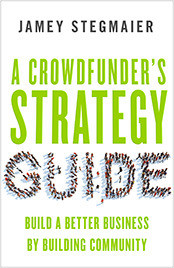
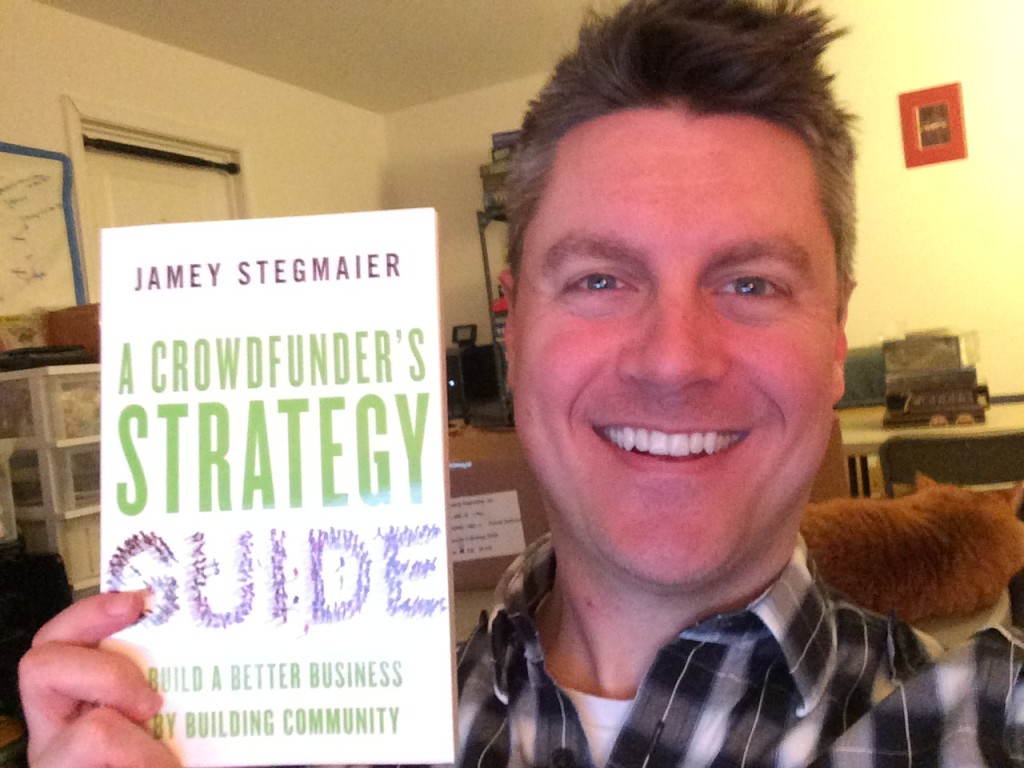
We sat down with veteran crowdfunder Jamey Stegmaier, head of Stonemaier Games and author of A Crowdfunder’s Strategy Guide: Build a Better Business by Building Community, to talk a little bit about his new book, social strategies and approaches and how communication – and community – is king.
Historical Note: Since this interview, Stonemaier Games has gone on to publish popular games including Scythe and Wingspan. Jamey’s Kickstarter Lessons blog continues to receive a lot of traffic even in 2024 and his book is considered a staple in the crowdfunding world.
Who is Jamey Stegmaier?
Q: Thank you for taking the time to chat about your book and answer some questions. Can you tell us a little bit about yourself?
Sure! My name is Jamey Stegmaier, and I’m the co-founder and president of Stonemaier Games. We make strategy games like Viticulture, Euphoria, and Between Two Cities. I also write a blog about crowdfunding—I’ve used Kickstarter to fund the first print run of all of our productions—at www.kickstarterlessons.com, and I wrote a book to help other creators called A Crowdfunder’s Strategy Guide: Build a Better Business by Building Community.
Q: So, how did this book come about?
 My crowdfunding blog—which I’ve written since funding Viticulture on Kickstarter in 2012—focused on tabletop game projects for a while, and most creators in that space are aware of it. But there are so many other things that people can create via crowdfunding! I was contacted by an agent who saw the potential for a book to reach a much wider audience and help more people than the blog, so I decided to write such a book.
Really, I just want to help other creators—those who are actively creating and those who want to create something, but need a little nudge. Also, I think the core principle in the book of putting other people first (which has a hugely positive impact on the long-term business) is a message worth sharing.
Historical Note: As of October 2024, Crowdfunder’s Strategy Guide holds an average score of 4.23 out of 5 on Goodreads.
Book vs. Blog Writing
Q: How did writing a non-fiction book differ from writing your blogs? Was it difficult to merge the two? It must have been pretty tricky running Stonemaier Games and writing the book at the same time.
It was different. While I try to write the blog in an accessible way, it’s very mechanical and step by step. I wanted the book to read more like a story. So at first I focused on my story, and over time I added more and more stories from other creators. I still borrowed a lot of my lessons learned for the book, though—they’re just expressed in a different way. And yes, it was tough to write the book and run the company at the same time! I can’t imagine doing that right now.
Q: Your book is very comprehensive in the way that you present crowdfunding product categories in a general approach and not focused on your niche, which is games. In respect to games, do you think their increased popularity is a natural evolution or has crowdfunding played a bigger part?
I think crowdfunding has had a significant hand in the booming board game industry. It’s put games in front of millions of people who didn’t realize how popular games are. I think popularity gives us permission to do something we’ve always wanted to do, and most people like to play games (in some form—not necessarily board games). A Kickstarter page clearly conveys popularity—or lack thereof—to people who otherwise have no idea how a product sells.
What does it mean that the “crowd is the new gatekeeper?”
Q: “The crowd is the new gatekeeper.” Cultivating a community and keeping them active and engaged is a key point throughout the book and in fact, is possibly more important than the campaign itself. What would be the 3 most important avenues to pursue when just starting to build a community?
Exactly, you summed that up really well. Let’s see, 3 most important avenues:
- Have a platform. Whether it’s a blog, podcast, YouTube channel, Facebook page, and/or e-newsletter, start a platform and create some sort of content there at least once a week. This gives people a place to stay in touch with you after they discover you, and it might be the way many people discover you for the first time. Also, if people show up at your platform and engage with you, make sure you’re part of that conversation too. No one likes talking to a brick wall.
- Hang out where such communities already exist. Whether it’s online or in the real world, there are tons of communities for pretty much everything. Find the communities that are connected to the thing you’re trying to make and become a part of them.
- Be generous. The best way to attract people to you is to be generous with your time, talent, information, and money. Conversely, the best way to turn off people is to be purely self-serving and self-promotional.
Historical Note: In 2015, the games category on Kickstarter raised a total of $84.6 million. As of October 4, 2024, a total of $2.42 billion has been raised since 2009.
The importance of building a community
Q: You talk about one mistake you made with the Viticulture campaign was not building an active community within the board game category. Who DID you communicate with, who were you targeting?
That’s very true. In the board game space, there’s an amazing website called BoardGameGeek. I love board games, and I should have been involved on that site for a long time. But I wasn’t. However, those with whom I did communicate were bloggers, and that made a big difference on my first campaign.
Q: “People don’t buy what you do, they buy why you do it” – Simon Sinek. What are some signs of campaigns that are transparently not in it for the right reasons, insincere? Is this perception something that could be turned around?
This is a tricky question. I know the answer, but I don’t want to assume that the creators are purely in it for the “wrong” reasons. Basically, if your pledge levels aren’t compellingly and fairly priced, that’s a little bit of a red flag to me. Every creator has the right to make a profit, but there’s a fine line between profit and greed. So it’s not really about perception in this case—it’s about pricing.
Early bird rewards
Q: Early-bird rewards: Your outlook regarding early-bird rewards is that it creates a winners/losers situation, but couldn’t it also portray that sense of urgency/building momentum also present in a campaign? Several recent highly successful runs offered them, such as the Baubax Travel Jacket and Nebia Showerhead.
Sure, plenty of successful campaigns have implemented strategies. That doesn’t make those strategies good, though. 🙂
Here’s the deal: A crowdfunding campaign is an early-bird reward. It’s a condensed amount of time during which a backer gets the best version of the thing at the best price. Imagine if there’s a campaign for an awesome thing that you really want, and you discover it the day after the campaign ends. It sucks, but the campaign was live for 30 days, and you missed it. So maybe you go to their website and pre-order the product at an extra expense.
But imagine that you discover a campaign while it’s still live on Kickstarter, and it’s only the second day, but you already missed the best price? That really sucks. You’re just as much a part of the success of the project as someone who discovered it a few hours earlier, but you’re already paying more for it than they are. As a creator, I would never treat my backers that way.
Instead of treating some backers better than others, I’d rather compel people to back the project on day one by creating something awesome, presenting it in an awesome way, and building a crowd in advance so we have a big launch day.
Historical Note: To this day, the use of early bird rewards is hotly debated. You can see a counterargument in this article by LaunchBoom.
Crowd psychology and using feedback
Q: In the book, an anecdote is presented about lines to get into a restaurant. One has no line, the other one a line around the block; which do you judge as being more popular? In that respect, can the sense of urgency also translate into the image of popularity?
I think this goes back to what I was saying about crowdfunding being a way to show non-gamers that a lot of people are actually buying and playing games. If you discover a project that’s raised $200,000 from 5,000 people, it’s going to catch your eye a lot more than a project that is 7% funded with 52 people. As for urgency, I think the limited timeframe of a project plays a role in inspiring people to support a project right away instead of waiting.
Q: When involving the backer community in open discussion about feedback, changing features, etc., do you feel it’s necessary to deliberately plan for changes to your product along the way, working a buffer into the budget?
Absolutely. Building a buffer into your budget is never a bad thing, because you’ll almost always need it. As for the involving the backer community in the design process—thus building a strong, loyal fan base and a better product along the way—I think the key is to launch the project with a 95% finished product, and leverage the crowd to complete that final 5%. Just make sure you know what that 5% is, because once the crowd starts to pick away at the 95%, you’re in trouble. 🙂
Building an audience
Q: You talk about the importance of blogging to build your community and connect with like-minded fans. What if the campaign creator simply doesn’t have that gift of gab? As a writer, do you have any tips for someone to get started?
If a campaign creator isn’t interested in creating content of any kind, crowdfunding is going to be really rough on them! I’d say this: We all have our preferred way to communicate. Figure out what that is and connect it to online content creation: blog, Facebook page, podcast, or YouTube channel. Once you figure out which one is best for you, the key is to create something. Don’t wait until you have a brilliant idea or inspiration or until you buy all sorts of equipment and domain names and graphic design and all that. Just turn on your microphone or webcam or free WordPress blog and create something. The biggest barrier is that first step.
Q: There is a great moment, which you talk about in the book, the moment when you find out and announce that after all your hard work, Viticulture is indeed happening. Hope you don’t mind if we share.
Sure! That was one of the best days of my life.
Final Thoughts
Q: What do you hope will be the key takeaway for your readers and what 3 words of advice would you give someone starting from scratch?
The key takeaway from my book and my experiences is that you are your own gatekeeper. That’s 5 words! If you have a burning desire to create something, the tools and platforms are now available for you to do so as long as you take the first step to actually start creating. Good luck!
Visit Jamey at Kickstarter Lessons and follow him on twitter at @jameystegmaier
- Have a platform
- Hang out where such communities already exist (whether it is in person or online)
- Be generous (with your time, talent, information, and money)
This was originally published on October 13, 2015. Edits are limited to formatting and the addition of links and historical notes as well as the addition of links.
Launching your brand is exciting, but the journey to attracting customers can be daunting. Luckily, social media allows you to connect with your target audience and build a loyal following of potential purchasers all at once. But how do you navigate the vast world of social media effectively? Fear not, fellow entrepreneur! This guide will equip you with the key strategies to turn your social media presence into a customer-generating machine.
But first, let’s define what CPG, or consumer packaged goods, means. CPG brands are the everyday items you find at the grocery store, pharmacy, or big box store that you use up (consume) and then need to buy again. Think about all the things you consume every day that come in packages! Here are some examples of we’re talking about:
- Food and beverage: Cereal, milk, soda, chips, yogurt, frozen meals (like our clients Simek’s & Chung’s Gourmet Foods), bottled water (like our client Flow Water), ready-to-drink coffee, tea, etc.
- Personal care: Soap, beauty products (like our client Folk Potions), shampoo, toothpaste, deodorant, makeup, razors, etc.
- Household & pet products: Laundry detergent, cleaning wipes, pet food, dish soap, etc.
- Supplements & over-the-counter medicines: Pain relievers, allergy medication, cough syrup, Melatonin, tinctures (like our mushroom tincture client Rainbo), etc.
Basically, if it’s something you use regularly, gets used up over time, and comes in a container, it’s likely a CPG product.
Now that we’ve gotten all that out of the way let’s get into how you can use social media to scale your business!
Know your brand, audience, & craft your message
It all starts with understanding your ideal customer. Research their demographics, interests, and online behavior. Develop buyer personas to truly grasp their needs and aspirations. This knowledge fuels authentic content creation and helps you build that know, like, and trust with your ideal customer.
Before we start working with a new brand, we ask them identifying questions on things like who their brand is at its core, their tone & voice, how they want to be perceived, etc. We also identify their core customer using collected data from their previous purchasers, as well as customer surveys.
If you are a new brand without customers, you can use tools like Reddit, Instagram, and Amazon’s reviews section to help define your potential customers. To do this, first, identify the competitors in your category, then dive into each of your competitors through the above channels to see how their communities speak, who they are, what they’re saying, etc. Take note, as this is a great starting point to know who your ideal customer is and how to speak to them. Down the line, you’ll be able to better define this person as you gain more of your own customer data as your brand scales, and be sure to continue to revisit & iterate on your brand’s ideal avatars as your brand grows!
Pick the right platform, and play to its strengths
Not all platforms are created equal. Choose the social platforms your company will play on based on your audience and product. Does your customer mainly hang out on YouTube? Does your brand voice use long-form or short-form content? Research platform-specific best practices and content formats to maximize your impact.
Depending on your brand’s size, start with a few of these channels (the top channels your customer hangs out; FYI, you can’t go wrong with being active on Instagram no matter your brand) and then expand as you nail each channel and have the time to commit to ongoing, quality content for each.
Content is queen

Content is queen, and it’s the best way to properly connect to your core customer. Don’t focus on perfection, instead, focus on being genuine, relatable, and entertaining, as this will show your brand’s true authenticity on a smaller budget. Showcase your product in action, share user testimonials, and offer valuable tips related to its use. Remember, storytelling is key – weave narratives that connect emotionally with your audience whenever possible.
Brands that kill it at storytelling on social media are Diaspora, A Dozen Cousins, Omsom, and Force of Nature.
(P.S. If you need more inspo for storytelling on social media, be sure and join our free newsletter for top social trends delivered to your inbox each week!)
Build a community, not just followers
Social media is about two-way interaction. Respond to comments, answer questions promptly, and engage in genuine conversations on your posts, DMs, and even strangers’ posts that have nothing to do with you. Posting content is only half the battle, jumping into your comment section, as well as other people’s content, is just as important. Encourage your customers to share user-generated content and their testimonials and share them by highlighting them on your stories or feed! Building a community fosters loyalty and turns followers into brand advocates.
Capitalize on influencers that share your audience:

Partnering with micro-influencers relevant to your niche is a great way to boost brand awareness and credibility among their engaged audience. Choose influencers who genuinely align with your brand values and engage in authentic collaborations (avoid serial promoters at all costs, especially if their engagement is low on those sponsored posts). We recommend starting off the relationship by engaging with an influencer’s content before working up to a DM gauging if they’d like to work with you! Taking these steps to actually form a relationship will go a long way for your brand. Most influencers, even micro-influencers, will request to be paid, but that doesn’t mean you can’t negotiate rates or even start by sending them free products to see what they think before you engage in a paid partnership. If they truly love your product, they’ll be more likely to be flexible with their rates.
Paid ads can be the boost your brand needs
If you’re looking to increase brand awareness and engagement on social media, you might want to consider allocating a budget to boosting posts. You can boost your top-performing social posts to reach a larger audience, boost collabs or giveaways to try and generate a low cost per follow, or boost a bit more targeted audiences to support a local event or launch. This is a great way to get that first touch point on potential new customers in a fairly cost-effective way.
In addition to boosts, you can also invest in social ads via direct response. So, if you’re launching in a new retail location, you can direct people to click on your ads link to find their nearest store. Or, if you’re a D2C brand, you can direct people to go to your website to buy.
Start small, target your ads carefully based on demographics and interests, and track your campaign performance. Remember, paid advertising is a tool, not a magic wand – use it wisely and optimize your approach for better results.
Consistency & cadence
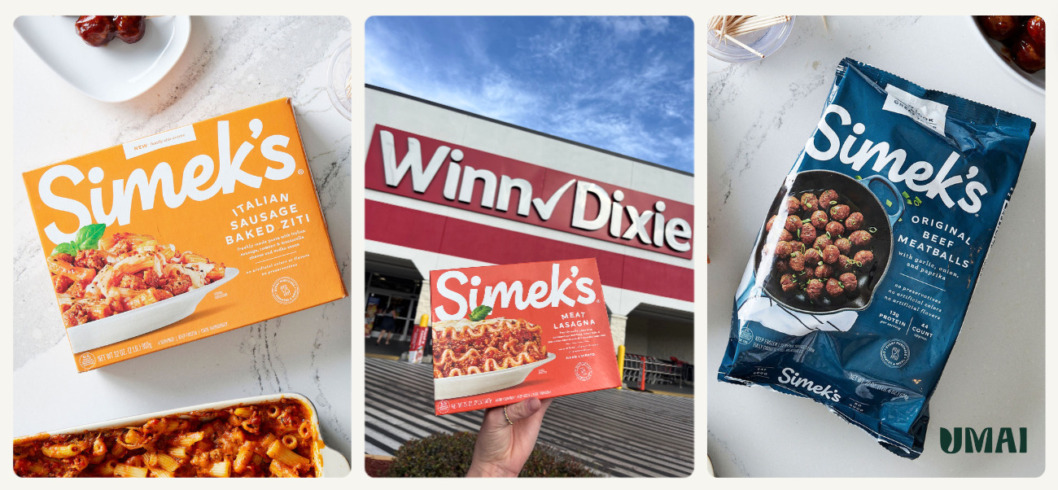
Building a successful social media presence takes time and dedication. Post regularly, stay consistent, and experiment with different strategies. When we speak to early-stage brands and brands with small but mighty teams, who need to wear all the hats, one of our biggest pieces of advice is for them to get real with themselves on what they can commit to with their marketing. Even if that’s one post a week – great! It’s much better to set a cadence and produce consistent content vs. sharing haphazardly. Rome wasn’t built in a day, and neither is a thriving social media community.
Bonus tip: Track industry trends, stay updated on platform changes and adapt your strategy accordingly. The social media landscape is dynamic, so continuous learning is crucial. If you’re looking for resources to stay up to date with social trends and get daily inspo, join our free Facebook group here!
By implementing these strategies, you can transform your social media presence from a blank page to a vibrant hub that attracts customers and fuels your brand’s success. Remember: authenticity, engagement, and valuable content are your key ingredients. And if you’re looking for an agency to bring your brand to life on social, book a call with us here. We’d love to help you conquer your #socialmediagoals!
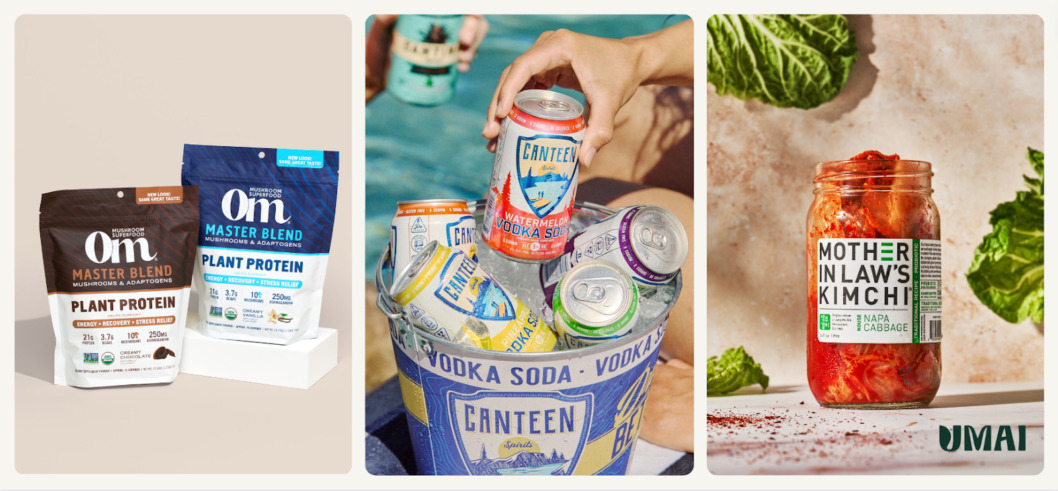
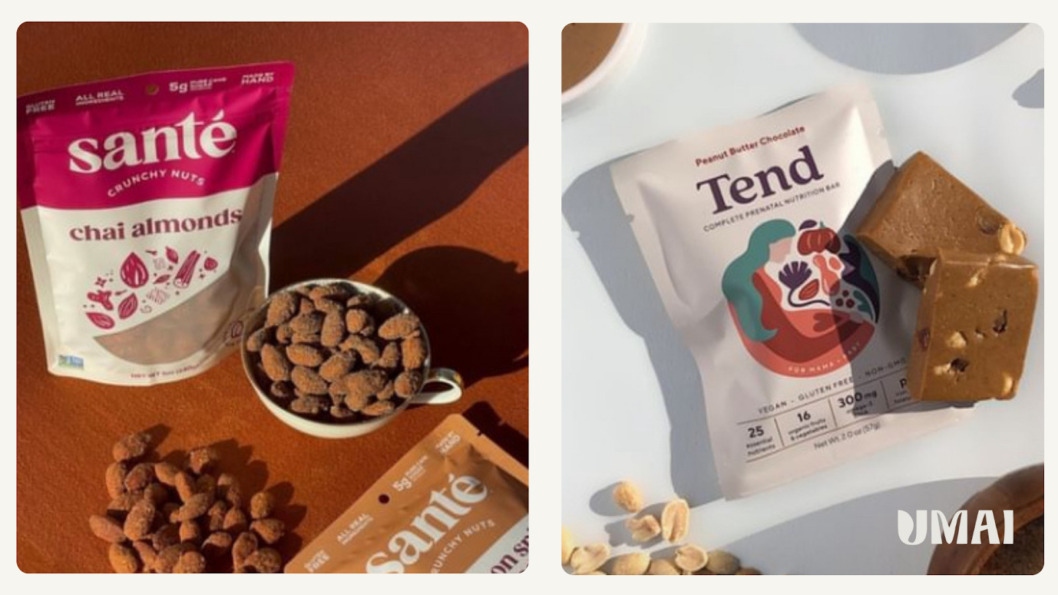
 Howdy! We’re UMAI Marketing, a boutique digital marketing and branding & package design agency. We specialize in crafting content and winning strategies for consumer packaged goods brands. We’ve launched countless CPG brands, like Serenity Kids Baby Food, and helped them go from $0 to $12MM+ in revenue in only a few short years, to helping scale multiple multi-million dollar established brands like Om Mushroom, Mother-in-Law’s Kimchi, and CANTEEN Spirits. We love helping brands of any size relate to, entertain, and engage their customers, and today we’re sharing some ways you can do just that using social media marketing.
Canada is really big. And the population is the size of California.
So how do you ship to such a big country in a cost-efficient, timely way?
That’s a big question, and that’s why we’ve brought on Adayra Lopez from InterFulfillment to shed some light on this question!
Transcript
This transcript was generated by AI and may have minor errors.
Brandon Rollins: Canada is big. Yes, that’s right, only the hard hitting facts here on Fulfillrite YouTube. But seriously, look at this on the map. Even when you account for the distortion up at the top, it’s still enormous. And the population? Considerably smaller than the U. S., about the population of California. That makes shipping tricky, and that’s why you need a local expert.
That’s why I brought on Adaira Lopez from Interfulfillment to talk about that. Now, we’re going to cut to the interview in just a minute, but real quick, my name is Brandon. This video is brought to you by FulfillRite. We ship orders for ecommerce and crowdfunding. Link below for more details. Quotes are always free.
Now, one last quick note. We edited this with a light touch on the interview because we wanted to keep it lo fi and simple, uh, just an honest, just like two professionals on a zoom call. All right, let’s cut to the interview. All right. Well, thank you so much for joining and for taking the time to do that, to do this video with us.
We really appreciate it.
Adayra Lopez: My pleasure. It’s really a pleasure, uh, you know, uh, having, uh, this interview with Fulfillrite, uh, and being able to help, uh, Online vendors to understand the Canadian market a bit better.
Brandon Rollins: Absolutely. And, um, I, I’m going to go ahead and just start with a ridiculously naive question.
Just to, uh, just go ahead and get that out there. And that is why not ship to Canada from a US based fulfillment center?
Adayra Lopez: It’s not. necessarily something that, uh, businesses should avoid. Um, most of the time is necessary because you’re exploring the market. And, uh, it is really a big decision to do it, to make that big jump.
And, um, And do it from here locally. So most of the customers that, um, are just penetrating the Canadian market, what they do is they start from their origin point. If that, let’s say, is the US, then they start shipping from the US to Canada. For a short period of time, it’s okay to do it, um, but it’s not sustainable because at the end of the day, you want to have your Canadian customers, uh, happy.
And that means you want to make sure that their shipments get delivered fast as opposed to having to wait for a delivery for 10, two weeks and, or God knows how much it will be. Um, and also they will encounter, uh, paying duties and taxes. And, um, You know, when as a consumer, when you go out and try and buy something from another country, uh, you know, you don’t know what you’re going to get hit at a later time.
Uh, and then you, you, you have extra costs that you did not anticipate. So in order for, uh, you to test the market is okay. But once you, um, are. Ensure about, uh, the growth that you can have in Canada. It is ideal to find a partner here for your order fulfillment, logistics, uh, solutions, and be able to then grow the market from within.
Brandon Rollins: I think that’s a good consideration because it is expensive to have multiple different warehouses in a whole bunch of different locations. Um, but once you start shipping a bunch of Canadian orders, I have to imagine the crossing the border and the customs that come along with that is expensive. The postage itself is probably a lot.
And then it’s like you said, 10, 12, 14 day travel times. And that can, um, not every customer is going to want to agree to that, especially once you start shipping a larger order volume and fewer people know you personally.
Adayra Lopez: That is right.
Brandon Rollins: So. Obviously, Canada is a really big country, but, uh, like really big.
It’s kind of ridiculous when you look at it on a map and you realize that. Along those lines, what are the factors that make Canadian order fulfillment different than other countries?
Adayra Lopez: You know, I can think of three factors that are important to emphasize. Population is one of them. Um, the country is huge, but we’re not as populated as, for example, the U.
S. Um, just to give you a perspective, you know, it’s 39, 000, 000 people in Canada, which is only. I believe the population of California stayed alone. So, um, in Canada, we have 10 provinces and 3 territories. Then if every province has remote locations. So, number 1, because of that, population or their volumes are not going to be as perhaps, uh, other countries, um, with more people in them.
And, uh, also you have those remote locations that will increase the shipping costs. Um, so that is different, um, than The European nations or the U. S. or the U. K. Um, and you also have the fuel store charge. Um, Canada seems to have more strict, um, gasoline taxes and also more strict environmental regulatory aspects.
So that drives the cost of gas to be higher at the pump and therefore carriers here delivering the goods will Continue to change the fuel surcharge on, um, the shipments and that changes every week. Um, and as you advance in the year towards the last quarter, um, that’s when you see the highest fuel surcharge on shipping.
So it is important to be aware of it. So that you can, um, be able to price your, uh, products correctly and make changes if necessary. Um, but Canadians are used to it. So that is the good news. So whoever lives in Canada, we know that. The cost of shipping is what it is, and we’re used to it. And if I live in the middle of nowhere, in an island in the North Pole, and that has been very extreme, um, I know I will pay a lot for shipping.
So, and I’m used to it. So it is more of a learning curve. For, um, foreign, uh, companies doing business in Canada, then the consumer that you are trying to target, which is, you know, well aware of
it.
Brandon Rollins: And I suppose if a lot of your markets and your Vancouver or Toronto areas or other larger cities, I think like Edmonton and Calgary, places like that, maybe Halifax, it’s probably less of an issue, but I have to imagine if you’re out and say, Yellowknife, or, um, I think you would say it Iqaluit or something like that.
Very different story than you’re talking about fuel surcharges and some of the stuff that people wouldn’t be thinking about all that often if they don’t ship to Canada very much.
Adayra Lopez: It is. And, um, it is very true that. You know, Canada Post is the only carrier that gets to every corner in Canada. Um, and so they do have, uh, airstage locations, uh, in which there is no more, uh, you know, they have, um, uh, a depot where in very small towns, remote, super remote locations where they drop off the packages by a small plane.
And people from that. Town will need to go there and pick up their packages. So it is as extreme as that, but you know, I don’t really want to scare anybody. Uh, uh, because of that, it’s really a very small percentage of orders that you will ever get to ship to those locations. Um, you know, the, the. Most of the orders in Canada are shipped to the East coast and the West coast and metropolitan areas.
So, um, you do have to pay attention to those remote areas, um, but you can still definitely, uh, run a business, uh, here and ship your products to many, many Canadians in, in metropolitan locations.
Brandon Rollins: Yeah, that makes sense. Um, so along those lines, what do you think are the biggest challenges of Canadian order fulfillment?
I feel like we’ve already touched on it a little bit anyway.
Adayra Lopez: Yes, you’re right about that. It is, um, the biggest challenge is learning, uh, the landscape in Canada and therefore be able to price your products uh, accordingly. Um, You know, the postal codes in Canada that have 2 zeros in them indicate they are remote areas.
So you can always have a way to, um, add more charges to those locations when customers get to your shopping cart. And, or you can also plan for targeted marketing so that you, um, start by just doing marketing in, um, populated cities. So that can be another option now successful online vendors. What they do is, uh, and that we’ve seen, uh, we’ve seen working is they incentivize customers by, um, you know, on the website.
Setting up offers such as buy a hundred dollar, uh, in, in, in products or 150 or depending on what it is and what the cost of it is in order to get free shipping, or they will put a flat fee for shipping across Canada and the rest will be. added to the price of the product. Um, so those are working well.
And, um, Canadians definitely, um, are able to, you know, also make the best out of their purchase. They can buy more products for almost the same amount of shipping. And, and that’s typically what happens for when you sell, you know, not, you Huge products, but more on the smaller size items that if it’s the same shipping costs, if you buy one, or if you buy two, it’s practically going to be very, very similar in cost, especially because carriers in Canada only charge, um, they don’t break, uh, the one pound, uh, weight, um, of parcels like it is in the U.
S., um, which is broken by, uh, One ounce, two ounces, three ounces and so on. And here is, if you ship a feather, still going to be a one pound price that you pay for.
Brandon Rollins: Yeah. And I suppose that’s something to definitely be aware of. If you’re shipping really lightweight items, there are only a couple of ounces or maybe like, uh, two ounces.
I think that would equate roughly to 60 grams or something like that, two ounces, literally. Um, because you are right. If you, if you are rounding up to the nearest pound, which is about 450 grams thereabouts, then yeah, that could be a very nasty surprise if you’re on the low end of that range.
Adayra Lopez: Yes, definitely. And also there’s the volumetric weight too, right? Um, carriers will take whatever is the, the, the biggest of the two, the actual, between the actual weight and the volumetric weight. So those factors are, uh, are something that can change the, the outcome of the cost for sure.
Brandon Rollins: Something to keep in mind if you’re shipping something lightweight that is huge, like, for example, a pillow might be a good example.
Adayra Lopez: Right. Yes, exactly. And then you can get hit by surcharges too. So, yeah, it is just important just to see all the costs that it involves to ship your products. And based on that, you can put a strategy, uh, um, and an offering on the website that will allow still to, for you to generate profits, but also for customers to be able to be, you know, happy going to purchase your items for sure.
Brandon Rollins: That makes sense. So what’s the best way to handle cross border shipping and customs?
Adayra Lopez: You, it is very straightforward, Brandon. If you’re a foreign company, you can always, um, get a status of a non resident importer, and that is, um, a process that you can get in place through a Canadian broker. Um, basically what they do is they.
Ask you to fill out a form. Um, and within three to four days, they get back to you with your importer number. And that allows you to be able to import the product in Canada and shipping, shipping that to your, uh, 3PL center. But the government also allows foreign companies to do business here. Um, Under that status.
So, so long as you don’t go by over the threshold that they set up for your revenue sales quarterly. And I always encourage customers to get familiar with their visit the Canadian government to see. What the threshold is, because regulation change from time to time, and you always want to be aware of it.
The idea from the government is that they find you, they invite you over to start doing business here. But once you get over that threshold, then you are supposed to create, uh, to register your, uh, company here in Canada and then be able to operate as a Canadian corporation. Um, the other, um, factor or important detail to to look at, look after is, um, make sure that your items are not regulated here.
You know, every country is different. Um, if you have products that are regulated, such as vitamins or supplements, um, those most likely are regulated in Canada by health Canada. And there is a certification that you have to have in place per SKU. So, um, Again, again, it’s nothing impossible, it’s just you just need to be aware of it to start the process.
Mm-Hmm. , get that in place and then be able to, uh, you know, legally sell products here so that you don’t encounter problems down the road. Mm-Hmm. Or get your inventory stocking customers because you don’t have a regulation that, uh, or a certification that is required. Um. But yeah, those are practically, um, the ways and how you can handle cross, uh, wording.
Brandon Rollins: And it sounds like working with a Canadian 3PL is probably a good way of going about, um, just making sure those things are taken care of as well.
Adayra Lopez: Yes. Yes, Canadian regulations and the government and everything is, it’s a strict, um, and it’s a structure, but they also, um, it’s just, at the end of the day, these are just processes that some take longer than others.
But once you have that, um, in place and approved, then. You know, everything else is just like in any other country where you operate. Um,
Brandon Rollins: that makes sense, which speaking of regulations, there’s also a lot of taxes as well, like GST and HST and PST, which are just some facts, some things I found when I was Googling this, um, how does that work when you are talking about e commerce order processing and fulfillment?
Adayra Lopez: So GST is the federal tax. PST is the provincial tax and the combination of both is the harmonized sales tax, GST. If you’re a Canadian corporation, you do have to file your income tax return, corporate business income tax return annually. Um, and when you operate as a Canadian corporation, then you definitely have to charge your customers with taxes.
Um, so I always encourage customers to be familiar with, um, with that by seeking the advice from a charter accountant. Um, that honestly is the best. Um, we pick, pack and ship, but we’re not necessarily extreme experts on, in that matter. So it is always good to, to consult with a charter accountant to be able to know at what point, uh, a registration is required and then what.
Uh, are your obligations as a Canadian corporation, uh, around taxes.
Brandon Rollins: Do you have a sense of when it might be a good idea to reach out to somebody to help with that?
Adayra Lopez: You know, it doesn’t hurt to do it right away just so that you know what to expect once you go over the threshold that we discussed before, in which you go from a non resident importer To a Canadian corporation.
Um, so it is good to do it as soon as you can. If you’re thinking to do business in Canada for the long term, um, that way you are able to have everything, uh, ready, uh, by the time that you actually have to register and be able to start, um, collecting taxes and
dealing
Adayra Lopez: with that.
Brandon Rollins: That’s understandable. Um, So going back to just shipping for a minute, what’s the best way you can go about, um, getting fast and reliable delivery within both the major Canadian cities and also some of the remote areas as well?
Adayra Lopez: Because Canada is very different in terms of how big we are and, and, and,
you know,
Adayra Lopez: You know, all the carriers in Canada that the major carriers in Canada have a state of the art technology in their facilities that allow already for them to, uh, support, uh, when it comes to shipping, uh, parcels fast and, uh, reliable.
So that is there already in place. You assuming that you already work also with a 3PL, uh, partner that helps. With, uh, meeting the call of times, shipping daily, um, that is also important that you look after, um, so that everything moves, um, and nothing gets delayed and, and then it ends up being in an, uh, you know, having an angry customer on, uh, at the other end.
Now, the services in Canada are available through carriers that are, um, because it’s such a. Huge territory, um, you can offer customers on your website, different options and not just stick to standard services, standard services. Let’s say, Brandon, if you ship from Toronto to Toronto is one day. Toronto to Vancouver across the entire nation, it can be five to six days.
So having said that, um, you can offer customers with standard Extra options when it comes to shipping, and that will be one standard. Uh, the second one can be express and the third one can be overnight. Obviously express and overnight will be more costly, but it allows your customer to have that, uh, service available and you know, why not make them, Um, Accountable for the decision as to how fast they want their package, right?
Um, and the carriers offered. All those services, um, and, and they’re reliable when it comes to guaranteeing it. So, um, it’s important to take advantage of that. The other option is to consider shipping from Toronto. And from Vancouver, because that will definitely reduce the delivery times for your customers that are on each side of the country.
Um, you know, keep in mind if you do fulfill from Vancouver, um, now your customer will have also the same delivery time than a Toronto, Toronto one day, um, rather than five to six days. And you hope that there is not a snowstorm or flooding that he can. affect that even more. So, you know, it depends on the situation for every online vendor.
Um, many of them start fulfilling from Toronto and they continue for years. Uh, and maybe they never really have that other step on location more precisely because of their items may be very small, but any other customers that do want, uh, to have that faster delivery, the solution is having, uh, orders fulfilled from both sides.
And be able to reduce costs as well, because that will bring the cost down on the shipping. Um, for you and your customers, you know, what it, what it used to be across nation. Now it’s going to be a local price.
Brandon Rollins: And which carriers tend to be the most reliable when it comes to speedy and, um, cost efficient shipping?
Adayra Lopez: All the major carriers here are. Reliable and they all have different footprints in the market for what they’re best for. So Canada Post, uh, gets to every single corner of Canada, P. O. boxes, uh, condominiums, uh, and they are great for very small parcels. Then you have UPS. UPS is a carrier that can handle heavier parcels and bigger in dimension.
Um, and. So, and they also do express services in a really remarkable way. They are incredible for that type of service, as well as a standard. And then you have the overnight, which I think the king of overnight, um, parcels is always, uh, It’s going to be FedEx, at least up until today. And so if you want to offer customers an overnight shipment, then FedEx will be the option to go to.
There are other carriers like Pirolator and Kampart and, um, and, and the key is also If you offer a standard service in which they’re all equally reliable, and try and use, uh, features such as Ray Shop, um, if your three PL has that feature, um, into fulfillment, offers, ratio feature, so that you can, um, shop amongst them all and pick the lowest, uh, to ship to that particular destination.
And, and this service will be equally good at the end of the day.
Brandon Rollins: That’s good. Now, of course, Canada is also bilingual as well. So does that create any issues with packaging and communication orders? And if it does, how do you, how do you handle that?
Adayra Lopez: It, you know, some people may call it a challenge and, uh, others will just say it’s just a requirement.
Uh, and that’s the way we see it. It is really just a requirement. Uh, from the government to have, uh, labels in French and English, and there are companies, um, that specialize in providing you advice about, uh, labeling your products and depending what they are, uh, is how you are supposed to have the format of the label.
So again, it is really just a process that, um, you just need to Have in place and once it’s done, it really is good for, for, for the, for, for any other, uh, plans you have to, to work here for any other products in Canada. So, um, stick for, um, help when it comes to, um, labeling, if you’re not sure of it, there are companies that I specialize in, in that service and that can help with that.
And the process then becomes very smoothly.
Brandon Rollins: Yeah, it seems like one of those things that once you get it right for the first time, every other time after that is not going to be an issue.
Adayra Lopez: Right. Once it’s done, it’s done. For sure. Absolutely.
Brandon Rollins: So, um, what advice would you give to companies who are looking to improve their order fulfillment processes overall in Canada?
Adayra Lopez: Uh, there are several things that I can think of. Um, one that is very, uh, straightforward, but not everybody perhaps has it at the beginning is, uh, obviously, obviously established companies, they, they do, or anybody that is already dealing with retailers that they do, but, uh, any online businesses that are just launching, uh, the business barcoding is key.
Barcoding your units. It’s an important because the 3PO, um, partner that, uh, works with you will receive big pack, um, with using barcode scanners. It’s just a quality, um, measure that, um, It is important to have in order to avoid misspeaks. It’s just the domino effect. You have a misspeak, then you have an end consumer that will not be too happy to get the incorrect product.
So always make sure that you have barcodes for your products in order to have that quality control when it comes to your fulfillment. Um, Another one is do plan for a marketing, um, campaign or campaigns to have a marketing plan throughout the year. Um, many times what we see is Canada is, um, it’s a, it’s a country that has, Enough, um, drive, I guess, on, on for e commerce, uh, orders.
And so customers that expand outside their own country, they usually have Canada in their, um, in their top three list of countries to expand to, but once they come and launch, uh, uh, the, the, the account, uh, sometimes what happens is they just forget about it because. It may not be a priority such as their biggest market that they can have.
So let’s say if you have a US and Canada, the US market will have a lot more volume than Canada. And once they launch here, they tend to forget a little bit that. Unless you do marketing here, you will then accelerate those sales, boost your sales in order to gain a more volume of orders. Um, so I always remind customers to have that marketing plan in place and not let it just grow organically because oftentimes that will be a very slow, uh, growth.
Right. And long
Brandon Rollins: term storage and a fulfillment center gets expensive pretty quickly.
Right.
Adayra Lopez: It can be and so that takes me to the next point, which is inventory. So it is important that you. When you start, if you don’t know how good or bad, even though you have an established company in another country, you still don’t know maybe how good or bad is going to, uh, go in Canada in terms of maybe having right away the order volume that you plan for, or maybe that’s not going to happen.
So I always suggest customers to start with the most minimum amount of inventory. Um, that way. They don’t find themselves in a situation where they overstock and now they have a lot of, uh, inventory that does not sell, but it does carry cost of storage. Um, so trying to have management around inventory is key, not just to start, but ongoing, um, because you also don’t want to be on the other side of the spectrum, which will be.
Now you have no inventory. You don’t have enough to be able to fulfill you, get your orders fulfilled. And then now you have customers waiting for the product to arrive. So you want to, um, you know, start with, uh, an amount that is. It’s good to cope with the demand of your orders, um, but then you can adjust to what it is, uh, that you’re, um, scaling it to, right?
So that is, that is good. Um, another suggestion is because fuel surcharge can be something that will change your shipping cost, uh, practically ongoing on an ongoing basis and more so in the last quarter, um, Always have someone paying attention to that fuel surcharge today. For example, from Canada post, I think this week is at 25.
5%. Um, but it can really go in November, black Friday, you now have a 40 percent fuel surcharge, so, uh, it can drastically change the price again, we’re used to it, we know that, but you do have to be aware of it because if you have a price that is now no longer. Um, you know, being able to get you to remain profitable because you didn’t adjust it.
Now you’re going to encounter problems and all those beautiful orders you got during Black Friday or holidays. Now it’s just not going to be, uh, you know, uh, good news once you reconciliate everything. So, um, Have someone looking after, uh, those, um, those trends on, on fuel surcharge, um, and then try to incentivize customers to, um, you know, buy more products for, uh, a good deal on shipping.
Um, so. Those things can help for sure. And have always a direct channel of communication with whoever you work with in Canada for your fulfillment solution. So it is important to have a point of contact for day to day. Um, inquiries, concerns, anything that, uh, is related to your operation so that it can run smoothly.
Um, and you can quickly get to, um, overcome challenges that happen on a daily basis, rather than not having that communication in place. And then you get to find out. In months from now, when you really need a smooth logistic solution, now you also have to cope with other challenges that you could have just addressed right away if you have that communication in place.
So, all those is what I would suggest to to pay attention to.
Brandon Rollins: Yeah, that’s all good advice. Now, how can InterFulfillment help?
Adayra Lopez: InterFulfillment has been in this industry for over 10 years. Um, we have the experience, the knowledge, um, to be able to help. Even if you’re unsure if this is the right time, do not hesitate.
You know, we welcome anybody and everybody to contact us and provide advice in what we do best. We pick, pack, and ship on behalf of our customers. And it’s whether that is direct to consumers or to businesses, we do it, we try to stay true to your brand. So we follow specifications to the T of how you want us to handle your orders, your packages, and so on.
We’re also very flexible around your business. So if during the year you have any sort of changes on the way you want us to package your orders, uh, we can follow that, uh, in order to help you get in that, um, you know, differentiate from others in this competitive market, because that is what ultimately we want.
We want to help you grow and we want to, uh, you know, be able to, um, you know, provide you a service that is fast, reliable, accurate, um, and scalable. Um, we have an HR department in place that can quickly scale, um, when needed. Um, also, uh, you know, we have facilities in both, uh, the East coast and the West coast.
Uh, in Toronto and in Vancouver, so if both are required, definitely we’re happy to help, uh, of fulfilling from both locations. And yeah, so definitely if anybody’s interested in our services, uh, we can, we can help send us an email, um, look, uh, visit our website, interfulfillment. com. And the email is sales at interfulfillment.
com. We’re interested in, in, in, in, you know, Discussing further in order to see how, uh, we can help, uh, contributing to your growth, uh, in market, in market, like, especially when you don’t know anything about Canada, you can rely on us to, to be able to serve you, uh, with extra information and advice
Brandon Rollins: and all the links are down there for anybody who wants to click on those.
Um, We, we can vouch for interfulfillment as you’re well aware, we send you leads quite a bit whenever we have somebody who needs to ship in Canada and it’s just not something we do. Um, and we, we, we always, we want to pass people along to partners that we trust for that sort of thing.
Adayra Lopez: Yeah, we’re extremely appreciative of it.
Um, we definitely, I know what you mean. We have referred at least to fulfill right, uh, seeking for a reputable company in the U. S. that they can not only start with, but start with. Scale with and grow. Um, so the common, uh, around that is, is incredible. Um, and, and we continue to, um, you know, seek opportunities in which we can help each other.
I, I am always a true believer that, uh, not because we’re in the same uh, industry, uh, we cannot, uh, you know. Also, uh, help each other.
Brandon Rollins: Absolutely. So on that note, thank you for your time on this. Lots of good information here about Canadian order fulfillment. Again, links are all down there below for anybody who wants to check out InterFulfillment and learn more.
Um, and thank you for watching.
Adayra Lopez: Thank you, Brandon.
Brandon Rollins: Thanks for watching this interview. I appreciate it. I know that Adaira does too. Details on both of our companies are down there in the description. And just in case you missed the name earlier, My name is Brandon, and I’m here on behalf of FulfillRite. If you need help shipping your orders, go to FulfillRite.
com and request a quote. We’ve shipped for thousands of crowdfunding campaigns before, and we’re happy to help you ship too. The quote doesn’t cost a thing, so if nothing else, you get some good information about pricing. Link in the description. Now, if you enjoyed this video, please take a moment to like and scribe and subscribe.
Don’t forget to slap some postage on the bell so we can express ship new videos to you as soon as they drop. And last but not least, if you have any questions, leave a comment below. I will personally answer as many as I can. Thanks for watching.
Kickstarter is loved by creators and backers alike because it provides the tools to raise funds and connects people looking for the next new thing with creators.
It’s no secret that many creators still favor launching on Kickstarter over other platforms because of Kickstarter’s traffic. Kickstarter draws in millions of unique visitors every month, so getting a slice of that traffic can greatly benefit your campaign.
But making sure Kickstarter drives traffic to your particular project can be challenging. We’ve seen more than enough examples of creators who just launch a project without much preparation, hoping for Kickstarter to drive all their sales, and the project falling flat on its face.
Luckily, there are tangible things you can do to rank higher on Kickstarter, like having a strong pre-launch game. But pre-launch alone is not all you can do, in this post, you’ll learn from YG Crowdfunding’s founder, who also used to work at Kickstarter, what you can do to rank higher in the Kickstarter algorithm.
How Kickstarter promotes projects
Before diving into the algorithm and how to optimize your project for maximal exposure, it’s important to understand the different ways in which Kickstarter promotes projects.
First, there is editorial promotion, which means, ways in which your project gets promoted by the team at Kickstarter, without the algorithm being involved.
This includes being awarded the “Project We Love” badge, and receiving a placement in one of Kickstarter’s newsletters.
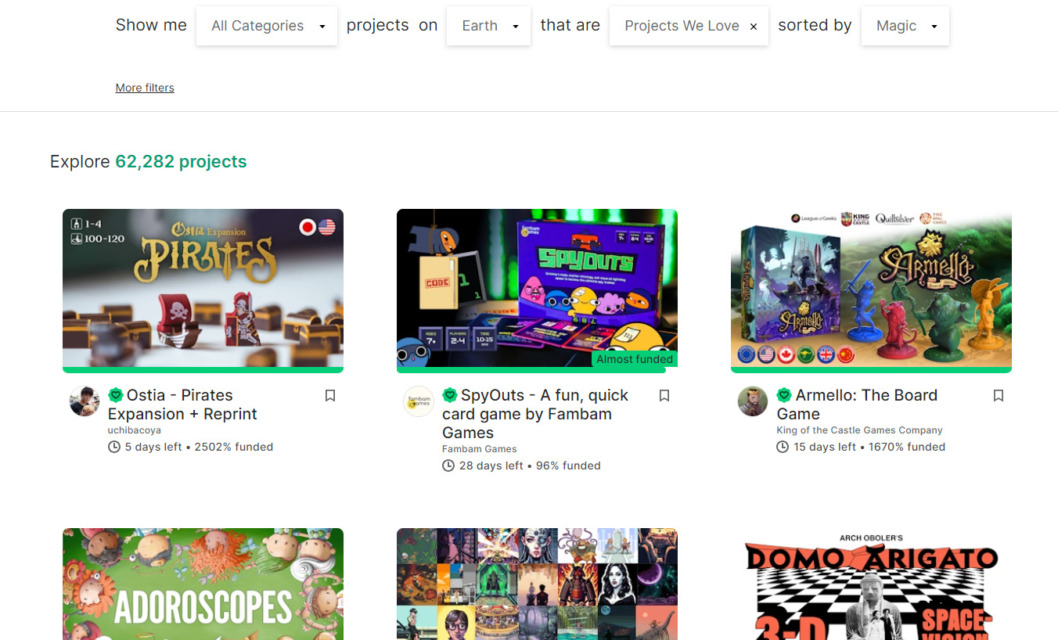
Both these forms of promotion are completely at the discretion of Kickstarter staff and are based on their preference for a project they see on the site. A great way to make your project more eligible for editorial promotion is often overlooked, yet is extremely simple. On Kickstarter.com/honest, you can find clear guidelines on how to talk about your project, which greatly increases your chances of receiving editorial promotion.
The algorithm explained
Now that you know how editorial promotion works, let’s take a look at how the algorithm works.
The first thing to note is that an algorithm factors in multiple metrics, and this may be a moving target. Doing the things outlined in this blog post will not guarantee success, and you should never fully rely on Kickstarter to drive all your traffic.
In fact, Kickstarter’s algorithm doesn’t drive traffic, it amplifies it!
This means you need to light the fire yourself, Kickstarter will only pour rocket fuel on it, but a project with 0 traffic or transactions will not magically receive backers from Kickstarter.
#1: Get fully funded in the first 24 hours
One important metric for every campaign is whether or not it reaches its funding goal within the first 24 hours.
Not only does this give a strong signal to future backers that this campaign is something not to miss out on, but the Kickstarter algorithm also looks at this as a weighting factor.
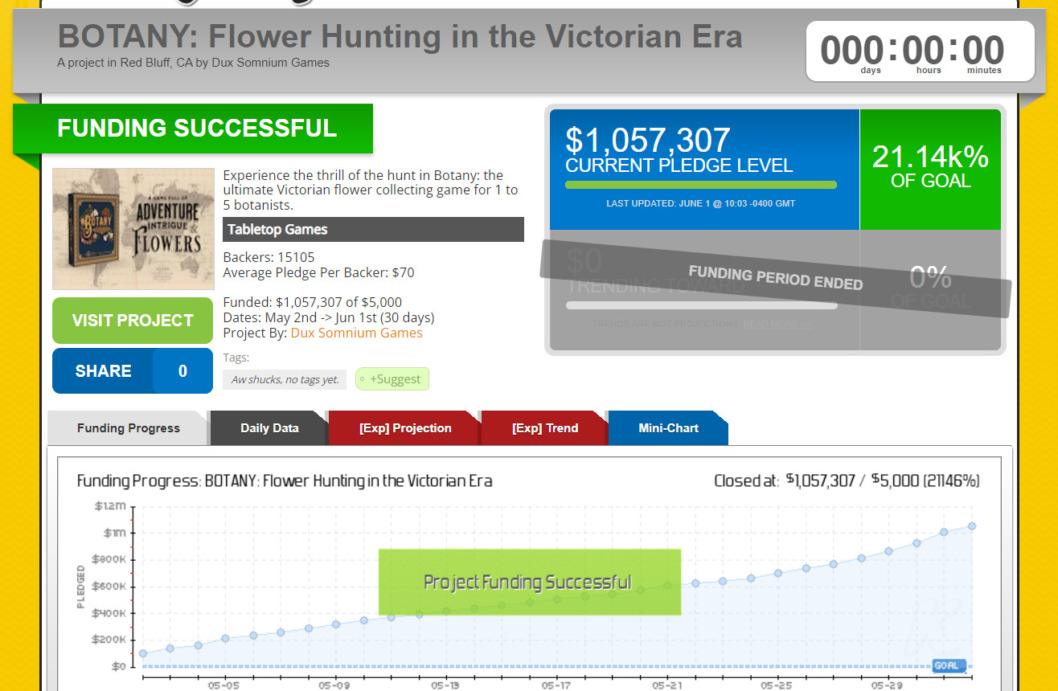
Campaigns that reach their funding goal in the first 24 hours typically see increased visibility and traffic from Kickstarter for the remainder of their campaign.
#2: Video through plays
Your campaign video is an important marketing asset, but not just because of the video content.
Once your campaign is live, Kickstarter measures how many people complete your video and watch to the end, this is called through plays.
Projects that have a video with a high percentage of through plays are seen as good projects and get boosted as a result.
That’s why you want to make sure your video is no longer than 2 minutes, as videos longer than that get dramatically fewer people watching it till the end, which can negatively impact your Kickstarter algorithm score.
#3: Transaction frequency
There is a common misconception that the more you raise on Kickstarter, the more Kickstarter will promote your project.
And although it’s an understandable theory, it’s not completely true. The absolute number of funds raised does not impact your ranking, but rather, the number of pledges does.
Kickstarter is a great platform for projects of any size, and it does not prioritize projects that raise large sums of money. To keep things fair for smaller projects, or those with rewards that have lower prices, Kickstarter looks at the frequency with which you receive pledges.
That means that having a lower-tiered reward, for example, a sticker pack can be a great way to increase your frequency!
Final Thoughts
Kickstarter can be a huge driver of traffic for your campaign when you play your cards right, but don’t rely on it completely!
As you can see from these tips, you need to bring traffic to get traffic. Only campaigns with strong performance out the gate will benefit from Kickstarter’s reach. Think of Kickstarter as a way to amplify your campaign, but don’t expect Kickstarter to do all the heavy lifting for you.
 Need help with your Kickstarter marketing and ensuring a strong launch? Feel free to schedule a meeting with me so we can review your strategy together.
George Lam is the founder of YG Crowdfunding and former Kickstarter outreach lead. He and his team have helped hundreds of creators raise millions of dollars across the games and hardware categories on Kickstarter.
If you’re an e-commerce business owner looking to expand globally, you will want to know a thing or two about international shipping. Mistakes can be costly when it comes to international shipping, and even if you work with a fulfilment partner, having the right knowledge can help you make the best decisions for your supply chain. At Delta Fulfilment, we consider ourselves experts in UK fulfilment services, so we’re here to share the essential dos and don’ts to set you on the path to worldwide business success.
International Shipping Terms To Know
Before we get into the nitty-gritty, here are a few terms used in the world of international shipping for e-commerce brands.
- Freight forwarder: A freight forwarder organises how your goods will be transported from one place to another, handling all the logistics.
- Bill of lading: This document is used as a receipt and contract, listing the type and quantity of goods, the destination, and the shipper.
- Incoterms: These are pre-defined terms set by the ICC to provide clear terms between global buyers and sellers for each part of the shipping process, including payment, transport, insurance, and even customs duties.
- Cargo insurance: A safety net that protects you financially if your goods are lost, damaged, or stolen during transit.
Now we’ve covered a few key terms you’ll see pop up in this post, let’s get to the good stuff!
The Dos of International Shipping
Choose Reliable Freight Forwarders
If you’re sending wholesale goods, your choice of freight forwarder can make or break your international shipping experience. A good freight forwarder not only ensures your goods reach their destination on time but also helps you navigate complex customs regulations, saving you time and potential legal headaches.
You should look for forwarders with positive reviews and testimonials and a wide network in various countries. If you can get a recommendation from a fellow business owner, that’s even better! However, you should also make sure that your chosen freight forwarder has experience in your specific industry or product type, as they will be better equipped to handle any unique challenges.
Properly Package Goods
The journey from warehouse to customer can be full of potential hazards. Proper packaging for your customer orders ensures they arrive in exactly the same condition they left your warehouse and improves your customer retention rate. How you package your products will depend on the type of products they are, but you can use these general guidelines to get you started.
- Opt for double-walled boxes for added strength.
- Use bubble wrap, foam, or paper to fill gaps and prevent items from moving.
- Use strong tape, ensuring all openings are sealed.
For perishable products, consider using insulated packaging and including ice packs for items that need to stay cool. You may also find anti-static bags beneficial to prevent damage to electronics during transit.
Consider All Modes of Transport
If you are sending bulk orders internationally, there are various ways to transport goods. Over 80% of all international goods are transported by sea, which makes sense as it’s one of the cheapest ways to send goods internationally. However, delivery timescales are longer with this route, especially compared to sending by air. This option is more expensive but you can ensure quick delivery of your goods.
Alternatively, road-based transport is often used for smaller intracontinental deliveries, while rail services are best suited for large order quantities over land.
Depending on the products your e-commerce business sells, you may find that you need to increase your international shipping delivery charges to customers to cover a more expensive mode of transport. For example, if you sell perishable goods, your best option is to send goods via air so they arrive quicker, but you need to ensure this decision doesn’t impact your profit margins.
You should consider all modes of transport to ship your goods internationally and, ideally, use several to accommodate the different order sizes, values and delivery options you want to offer your customers.
Invest in Cargo Insurance
Nobody wants to think about what can go wrong with international shipping, but the reality is that shipments can and do get damaged, lost, or stolen. Cargo insurance gives you financial protection and helps to protect your reputation with wholesale customers by quickly addressing and rectifying any issues. It’s worth noting that not all cargo insurance policies cover every risk or the full value of your products, so make sure you read the fine print and understand what’s included.
Comply with Customs, Duties & Regulations
Every country has its own customs procedures, and while the specifics vary, the goal is to regulate goods entering and leaving. Duties and taxes are paid on imported goods and these rates vary from country to country as well. It’s essential that you research this so you are clear on whether your goods are likely to have higher duties or taxes in certain countries and who will be responsible for the charges.
For example, if you’re a US-based business with access to UK fulfilment centres to supply customer orders in the UK, you will generally be responsible for covering these costs. This Incoterm is known as Delivery Duty Paid (DDP) shipping. Whereas, if you ship goods to customers in the UK from a US fulfilment centre, you will need to decide if that is a cost you will cover or pass on to your customers. If you choose to pass that cost on to your customers, the most widely used Incoterm is Delivery At Place (DAP) shipping. Our guide to DDP vs. DAP shipping provides many more examples than this and can help you decide which Incoterm, if either, will work best for your business.
Your Incoterms should be effectively communicated to international customers to ensure they know any additional costs they may incur before they receive their goods.
The Don’ts of International Shipping
Don’t Slack on Paperwork

Paperwork might seem tedious, but documenting everything helps keep a smooth process in all areas of your business, especially with shipping goods internationally. Proper documentation provides a clear record of what you’re shipping, where it’s going, and its value, which ensures that your goods move through customs without delays or penalties.
Inaccurate or incomplete information can lead to your shipment being held up and, in the worst-case scenario, result in fines or confiscation of your goods. In the event that your goods or documents are lost during their shipment, we recommend you keep copies of all shipping documents so you can track them and make any disputes or claims needed.
Don’t Underestimate Shipping Costs
International shipping costs can quickly escalate, especially when unexpected fees crop up. Some of the “hidden costs” with international shipping that you need to watch out for are:
- Demurrage and detention fees if your goods aren’t picked up from a port or returned in time.
- Fuel surcharges added by couriers.
- Delivering to remote areas.
If you are working with a fulfilment partner, they should ensure they get detailed quotes from couriers or freight forwarders that include all potential charges. You should also budget a little extra for unforeseen expenses, especially if you are new to offering international shipping of your goods.
It’s also worth noting that sending goods internationally can often increase packaging costs, especially for food goods that need controlled temperatures or electronics that need protection from electrostatic discharge.
Don’t Keep Customers in the Dark
In the world of D2C e-commerce, transparency isn’t just appreciated; it’s expected. As international shipping takes longer than nationwide shipping, keeping customers in the loop, especially when issues arise, improves their customer experience and trust in your brand. Having a clear line of communication with customers can also prevent misunderstandings and reduce the number of customer service queries, which can help reduce staffing costs or heavy workloads on your customer service team.
Follow these best practices for communicating with your customers from the time they place their order.
- Provide order tracking so customers can track their orders in real time.
- Communicate delays or problems with customers before they come to you.
- Ensure your website clearly outlines shipping times, costs, and any other important information.
- Have a clear returns policy on your website and consider partnering with local return centres.
Don’t Sacrifice Quality Over Costs
As you explore modes of transport, make sure you don’t let the costs impact the overall quality of your brand’s customer experience. While it might seem ideal to use sea freight for international delivery of your customer orders, your delivery timescales will be a lot longer. Depending on your business model, this may not be an issue. After all, brands like Shein quote 7-11 working days for deliveries and customers are happy to wait that long because of how inexpensive the goods are. However, if you’re selling a premium product or price competitively for your industry, making customers wait too long for their goods can lead to negative reviews or a low customer retention rate.
International Shipping Opens Doors
Offering international delivery for your customers can open up many doors for your business. So, even if this blog post has given you some food for thought, know that it’s a step that can scale your e-commerce brand to global success. If you’re feeling unsure about how to get started with this, at Delta Fulfilment, we’re here to steer you in the right direction. We specialise in UK and EU order fulfilment services for growing e-commerce brands, and we’re passionate about creating trustworthy and reliable fulfilment partnerships. After all, your business success is our business success!
 Dani Mechlowitz is the Founder & Managing Director of Delta Fulfilment. When you’re ready to expand into new markets, Dani and the Delta Fulfilment team are here to help guide you every step of the way. Request your quote today for UK and EU fulfilment solutions!
Let’s say you’re making a board game. Kickstarter’s an awesome place to get published.
The publishing model is great for crowdfunding, and Kickstarter got first mover’s advantage.
But – and I say this as a serial Kickstarter backer myself – the platform’s not really built with board games in mind. It was built in 2009 before the big board game boom.
So what if you want to launch somewhere that’s built by gamers, for gamers? That’s where Gamefound comes in.
That’s why I’ve brought on Alex Radcliffe, the Chief Marketing Officer at Gamefound, a company that specializes in crowdfunding for board games.
Transcript
This transcript was generated with AI and may contain occasional minor errors.
Brandon Rollins: Let’s say you’re making a board game. Kickstarter is an awesome place to get published. The publishing model is just a great fit for crowdfunding and Kickstarter. Of course, first mover advantage on actually making crowdfunding a popular thing that people do. But and I say this as a serial Kickstarter backer myself, the platforms aren’t really built with board games in mind.
Brandon Rollins: It was built back in oh nine before the Big Board game boom. So if you want to launch somewhere that’s built by gamers for gamers, well, that’s where gaming comes in. That’s why I brought on Alex Ratcliffe, the chief marketing officer at Game Phone, which is a company that specializes in crowdfunding for board games. We’re going to cut right to the interview in just a minute.
Brandon Rollins: But real quick. My name is Brandon. This video is brought to you by Fulfill, Right? We ship orders for crowdfunding campaign, so if you want more details, click on the link below. Quotes are always free. Now one last quick note we edited with a light touch on this interview because we want to keep it simple and a bit low.
Brandon Rollins: Find nice and honest. Just like two professionals on a Zoom call. So with that in mind, let’s cut to the interview. So thank you very much for joining me, Alex. I really appreciate it.
Alex Radcliffe: Absolutely. Thanks for having me on.
Brandon Rollins: Yeah. So my very first question I wanted to ask you, how exactly did game time get started?
Alex Radcliffe: So I have the game plan history. I don’t actually have all the dates, but game found Game font started with from where Week and Realms effectively awaken Realms, as you know, large board game manufacturer. They had a lot of board games and they created their own in-house solution. I want to say maybe 2014, 2015, but they create their own in-house solution to manage all the things that Kickstarter didn’t effectively, that they had all this extra level of prep that had to be done past the campaign itself.
Alex Radcliffe: And so they brought their own in-house tool to the surface to be able to do that. Then I don’t know exactly when it happened, but they started having friends within the industry who were like, Hey, we’d love to use your tool. And they were like, We we can have a conversation with them. And so they started sharing it with friends informally.
Alex Radcliffe: And then at some point again, I want to say I think 2016, maybe 2017, they actually branched out into the saying, you know what, we’re not going to be sharing this with like in friends, the industry, We’re going to create a full fledged manager system so that others can actually benefit from this infrastructure, from this software, from there.
Alex Radcliffe: They did that successfully for several years, getting to 100,000 backers in 2019, I want to say. And then in 2020, I believe again, my data not perfect on this, but they eventually said, you know what? We sat here and we built this platform to be a solution for the things that typical crowdfunding doesn’t do. But why do we just have to be that we can be the entire package from start to finish.
Alex Radcliffe: We can be not just a pledge manager to help people run all the things out of the campaign. We can be the entire ecosystem as opposed to forcing people to use separate tools to get the job done. As they jumped into crafting with a bang, they had hundreds of thousands of users. I think if I recall correctly, they had around 150,000 active users at that time.
Alex Radcliffe: They’ve recently crossed a million users on the platform. Now, like with the timing issue, crowdfunding full for full, fully all all ships ahead or whatever it is. All I feel is an expression not using all steam’s. I don’t know, there’s some attraction, but they jumped into it fully and they they’ve been actively and successfully crowdfunding campaigns for the past several years now, continuing to take a larger and larger chunk out of the market every year.
Alex Radcliffe: They grew 70% from 2020 to 2021, and 2023 is likely even higher than that. We’re hitting a lot of milestones, having a lot of big projects, but effectively it started as a passion project for realms. It’s split off and it’s worth noting at this point as well that the the ownership is completely separate. They have the ownership. They have shared ownership stake in realms, but completely separate companies outside of that.
Alex Radcliffe: A completely separate employees. They communicate, obviously, but it’s at this point when they branched off into doing their own pledge manager, they recognize even then the potential issues and they can start a completely separate company with completely separate people running that company.
Brandon Rollins: That makes a lot of sense. And I think there’s a couple of things that are really interesting about this. First being like I’m hearing of more and more companies that are starting with kind of soft launches by creating in-house the thing that they always which existed like period, they create their own software because it’s like the best possible option they’ve got and then they show it to some friends and then they show it to some friends of friends or maybe a handful of people in the industry.
Brandon Rollins: You just sort of heard about it. And then after that they go for a soft launch and then they go public. I think that’s interesting because I don’t even know that that was a thing like ten years ago. It just seems to be something people are doing more and more of these days and it’s like it’s cool. The game time is just another instance of that kind of slow, gradual slide into a bigger business model.
Alex Radcliffe: Yeah, I’m a customized after degree and like I’ve gone through that. I’ve worked with companies that do Code IV code in the past and like I built an entire bartering system that my partner wanted to like franchise and sell outside to other people. And it’s always a delicate balance when you where do you have enough of a framework that it could be useful to others versus when are you custom coding solutions that are just for you and it won’t be perfect.
Alex Radcliffe: Everyone else?
Brandon Rollins: Mm hmm. Yeah, there’s probably an XKCD comic strip down there that shows like this on a graph or something like that to Yeah, I think another really interesting thing and we’re going to obviously cover this in depth, but I’m just going to put some context out there for somebody who just finds us on YouTube and is like kicking around the possibility of crowdfunding for the very first time.
Brandon Rollins: The status quo, which is only really starting to change very recently, is like you crowd fund and then you you basically have to have another form of software to help you handle the pledges after the fact. Like you can use Kickstarter survey tools to collect addresses and that kind of thing, but it doesn’t work very well. You can’t cross.
Brandon Rollins: So if people try and change their addresses, that’s a mess. It’s got to be handled by like direct messages. And there has been for years this kind of third party software that handles that backer kit, proud of that sort of thing. Game time does that all in one. Basically, it’s like you have your crowdfunding and you have your pledge manager and you just roll from one to the other.
Brandon Rollins: I just thought that would be some useful context to throw out there for some folks who might have just stumbled across this, which almost enters my second question a little bit, but also still plenty. Anyway, which is what’s has game found apart from other crowdfunding platforms.
Alex Radcliffe: So game found, game found. I mean, the most biggest thing is going to be that ultimately, like you said already, there’s there’s tools, variety of tools out there that will help you run your campaign post crowdfunding. The biggest thing that will start game kind of argument is that we do crowdfunding and we do play strategy. We are an entire all in one solution.
Alex Radcliffe: We handle your marketing, we handle your crowdfunding, we handle your late pledge, and there’s even future plans as well to add even more to the long tail end of of of just full e-commerce, of being able to complete handle everything for you from start to finish. And so that’s before we get into the features, there are a bunch of features as well that are just features we don’t see on other platforms.
Alex Radcliffe: I, I would argue that game found is the cutting edge of development in the space right now that I think that there are other platforms Kickstarter back yet they are adding things but I think at this point if you just follow the if you follow what’s out there, it looks like game form for the most part. And obviously I am biased, I work for game hunting center account.
Alex Radcliffe: But if you look at the objective data, the game found is consistently adding features every single week, and those features sometimes are being mimic or copy where they can be and other times the behind being added in 2023 was Stretch Me the idea of having installment payments or crafting, which is a natural fit for crowdfunding. And it’s been a huge, huge early adopter by the community and it’s one of the things you want to be responsible back, only what you can afford.
Alex Radcliffe: But it is one of those things that has been a good tool for creators and backers alike. We have the most payment methods from any of the platforms. It’s a PayPal which I don’t believe any other platform takes profile yet, but we take PayPal as part of crowdfunding. Yeah, we just recently out of that’s been a large uphill battle to get.
Alex Radcliffe: That is not the nature of PayPal within the crowdfunding ecosystem is very unique and very different. PayPal often has very strict terms around crowdfunding, but we’ve actually been able to utilize and incorporate that into the system, and that’s an instant requested by the community for four years from the systems, from the various ecosystems out there. And that’s pointing out two of dozens and dozens of features that I think do make game found stand out from the crowd.
Alex Radcliffe: Again, we are an all in one solution. We cover you from start to finish, but past that generic aspect of things, which is far from generic, we have a ton of features, a ton of things that I think making found. I mean, one of the things that will set us apart to a degree again back at recently started doing it, but I think back it might be only one is even within the crowd, even within the pledge manager aspect of things.
Alex Radcliffe: Place managers for the most part don’t usually let you browse them to see what’s out there usually have to be coming at them with a link game account. Treat it like a store. We treat it like, Hey, by the way, a bunch of pledges over here. You want to come to the platform and see what you may have missed?
Alex Radcliffe: We don’t. She does like we don’t do counseling as an ecosystem that exists for two and a half weeks that’s done. We treat like a complete long tail. It’s there, it’s available, it’s part of the process. And so you can find things without having to, like, hunt down a link for something else. You can look and browse active open pledges on the platform.
Alex Radcliffe: Again, so many, so many ways against this, but there’s just a handful of key features.
Brandon Rollins: Yeah. And can people like launch on Kickstarter and then use game founders and pledge manager.
Alex Radcliffe: 100%? Yeah, we, we and just to be very clear on the answer, you can launch on Kickstarter and then use game plan as a pledge manager. We don’t let you launch on Kickstarter and then launch the same thing on game found as crowdfunding. We do want what you think the table to be unique to what extent you can come back a year and a half later with a reprint and expansion and all that stuff, but we don’t.
Alex Radcliffe: We had some people who want to run a campaign on multiple platforms. We currently don’t let that happen. The long consequence to why and how we just don’t think the ecosystem. We think we think the way crowdfunding operates. Focus is best for right now. It’s obviously like any like any policies. Obviously they will monitor and keep in touch with.
Alex Radcliffe: But as far as a place manager, you can launch on any platform you want on the market, on Kickstarter and on Game Bound and then use game found for the pledge manager.
Brandon Rollins: Yeah, no scheme can still 100% for games.
Alex Radcliffe: No, I’m going say no to board games, although the question of what you count as board games. So again, for our current reasons.
Brandon Rollins: Like board games and accessories and stuff that are related to the industry, there we go, like tables. Like what you got in the background is exactly.
Alex Radcliffe: It has tables, it has accessories, it has RPGs, it has board games. We don’t I don’t think we’ve done comics yet, but we are I think we are in talks to do comics around board games. I think so. Like it is very focused on the tabletop industry. We are open to expanding it to a degree, but we are.
Alex Radcliffe: We are very much a focus platform. We’re not looking to just do generic crowdfunding and even within I would say our focus is likely geek focused more. I say that’s more of a focus and board game focus. So like, you know, geek, the geek category tabletops that not videogames will get to a second, but anything that might be in generically in that umbrella, something we’re open to.
Alex Radcliffe: Like we’ve talked with creators about doing cosplay content, for example. That’s something we would consider doing, but we’ve done escape room things. That’s kind of a game. Video game is something that we’re very, very cautious about because of the high failure rate on. We want crowdfunding to be a safe place. We want it to be as safe as possible.
Alex Radcliffe: We can’t control everything. Ultimately, the creator is who has the obligation to you, but we want to cultivate an atmosphere and an environment that has a high degree of return. We don’t want it to feel like you’re gambling your money away. We want it to feel like you’re actually paying into it, supporting a project to bring it to life, but getting what you were promised to.
Alex Radcliffe: And unfortunately video games just have a very high failure rate on them. And so we don’t we are very mindful about whether video games is or isn’t a good avenue to dive into. It may happen one day, but we are taking it very seriously and right now we’re not doing it. Yeah.
Brandon Rollins: Yeah. And then that makes sense. Let me think. So what are some of the big, big projects that have launch on getting found through this?
Alex Radcliffe: So many to go through. But I’ll just I’ll, I’ll hit on a few. I mean, the biggest one this past year was the Elder Scrolls from a chapter of games that, you know, I think it hit was a 4.7 million. Five was a million did very high. I don’t know exactly where it went to, but it was one of the higher prices we’ve had in the platform ever in general.
Alex Radcliffe: You know, we’ve had we had Andromeda’s Edge did fairly well. We had, you know, kind of unknown. Did great. We had Scarface 1920. There are so many projects that have crossed that million mark and then some on the platform both this year, previous years we had we obtained two Grail Kings of Moon on the platform. We recently had Stalker Stalker from Waiting realms that did around 3 million.
Alex Radcliffe: And Dragon Eclipse right now as we speak, is trending towards that 3 million mark as well. So it’s been a lot of Firefly. Firefly was a very much a surprise hit. I think that was one that I do a lot of the internal projections of the company. And so I know I have a good sense of where Project Will head will end up just for my my time in crowdfunding.
Alex Radcliffe: I’ve spent a long enough year that I have a good sense where project lined up, regardless of what the ecosystem is on platform was on. But I would say that Firefly is definitely one that surprised me, that wanted significant about an unexpected crossing $2 million. And so there’s been a lot of smash, smash, just like smash successes, Smash hits on the platform this year, last year, hopefully next year as well.
Alex Radcliffe: But it’s been it’s been very fun to watch the platform grow.
Brandon Rollins: If for you, are you talking that to the early 2000 TV show they’re looking for a second season. You know, that’s what they’re doing. They’re going they’re going for the second season.
Alex Radcliffe: They had a collector’s edition board game from it’s a ten year, it’s a 10th anniversary edition of the board game. And they brought it to the platform and did very, very well.
Brandon Rollins: Yeah, that I mean, that’s a three million’s a little surprising on an old franchise. On a franchise about two decades old. But now anyway, yeah, that’s a that’s a ridiculous amount of stuff that’s raising in the multi-millions now. Probably sounds like a did you guys notice a big boom during like pandemic days back when that was really getting started up?
Alex Radcliffe: It’s hard to say because crowdfunding in general definitely saw, but it was actually surprising some of the things that wasn’t necessarily expected. But crowdfunding in general saw a bit of a boom and it’s gone a bit down since then. The tricky part to gage with game found is as a as a still newer platform, it’s always hard to to see exactly what effects things, meaning Kickstarter has a long enough track record that you can just say, Oh, look at the new thing that happened and how it impacted things.
Alex Radcliffe: This is Game Found has been growing consistently started. So did we see a boom? Yes, but we’ve been seeing growth nonstop since we started. So how much of that is pandemic? How much of that is, you know, the general fact that we are still I mean, only two or three years old at this point. And at this point, like we’re out of the exact sense of the market share.
Alex Radcliffe: We have available job gains, but we have a very satisfying percentage from from where we are. But again, it’s very hard to it’s very hard to say what was affected by what I would say. The pandemic had an effect only because I know it had an effect on crowdfunding in general.
Brandon Rollins: But it’s just unknowable how much are normal.
Alex Radcliffe: And then there’s a tailwind curve. Does it, Helen curve that as well. The issues that never caused the increased freight, the the additional shipping charges, they’re they’re rolling rolling delays and asks asking backers for more money had a additional effect on the tail end that brought things down. There’s less confidence in crowdfunding is one of the reasons we introduced the stable pledge on game found it a commitment from the creator that prices won’t change by more than 10% or you get a refund.
Alex Radcliffe: And it’s an option program. But it gives us an additional confidence that the creator can’t just change things without offering the refund on the table. And that was partly in response to this. The the uncertainties we were seeing in crowdfunding because of the pandemic.
Brandon Rollins: It makes a lot of sense. So I guess kind of in a different direction. So our question here, what kind of pros and cons you see for first time creators who are thinking of using game found.
Alex Radcliffe: First time creators are a tricky, tricky conversation and pros and cons are the key word there, because I’m a big fan of being transparent with the strengths, but also the areas where game found is a little weaker. And for first line creators, that’s going to be the biggest area where we are potentially weaker. There’s still many reasons to engage in the platform, but I’d also be very mindful meaning effectively Game Fan comes in with, I believe and again our four game plan, take that into account throughout this entire conversation.
Alex Radcliffe: But I believe Game Plan has the best suite of tools compared to any platform out there, just period. And I will die on that hill. I will fight you on it. I’ll go through it, I think is the best platform. But what it doesn’t have is it doesn’t have the longevity and therefore the user base of Kickstarter. Kickstarter has more active users.
Alex Radcliffe: We’re growing quickly. We just crossed a million active users. We have around 2 million have 2 million unique visitors every single month. So we are a very large platform, but we still don’t compare to the scope and scale of Kickstarter. And that means Kickstarter tends to have more drive by traffic versus I think, gain function versus at a higher rate, which is basically short for if you are able to drive an audience to games.
Alex Radcliffe: On if you able to bring an audience because maybe you have a large IP, maybe you already launched, maybe already did seven other projects and you have an audience already box or games, whatever the reason is, maybe your advertising is creating a large advertising budget. You’re able to ratable there. If you have enough of a reason why people are checking out your project, I believe Game fan will convert at a higher rate than Kickstarter.
Alex Radcliffe: But the flip side of that is if you don’t have those things, if you are a smaller creative something for the first time and you’re hoping for more than drive by traffic, you might have a better time on Kickstarter initially just because of that larger user base. If you don’t have the tools to drive the audience yourself and so that’s always a tricky conversation where with first time creators, I like to have more nuanced conversations about what their plans are.
Alex Radcliffe: Sure, you’re a first time creator, but what is the draw of your project is to drive your project you’re working with? A large IP still may well be a great fit for game found, and a big part of it as well is, especially with the growth of the industry and the way things are shifting Game around is capturing a larger segment of the market every single year.
Alex Radcliffe: So you want to look at the strengths of launching and getting found is you’re launching on the platform that I do believe. I believe that the vast majority of tabletop crafting will be on game found over the next five years. I think we’ve done a credible job growing where we are and things only continue to grow and we are continuously putting time, effort and energy into a dedicated sector.
Alex Radcliffe: We are dedicated towards the needs of tabletop crafting that is our entire audience. And so we’re able to focus on that. And so I think that every time you launch a project, you are building an audience on that platform. I think jumping in on game found now as it continues to grow, as it continues to be the default place means you don’t have to wrestle with a decision through years now about whether to move or not.
Alex Radcliffe: You started there and you’re growing there. But again, I think there are mindfulness aspects. I always want to be very clear with the creator when it when I’m confident that game found the right choice, which does happen when I am confident Game Hunt’s the wrong choice, which also happens. And then when I’m just unsure and frankly, it’s your risk to take like we’d love to have on the platform, but I don’t want to.
Alex Radcliffe: I never want to sell someone on a solution that they don’t need.
Brandon Rollins: Yeah, absolutely. Ideally, we try and take the same approach here. It’s like if you if you go signing a big deal with somebody and it’s not actually going to work and it doesn’t like every everybody ends up losing as a result of it. So it’s better to kind of act as like a matchmaker. I think the one interesting thing about crowdfunding, it’s like you you do make an interesting point that is easier to get discovered organically on Kickstarter.
Brandon Rollins: Now that might very well change as more and more people start to just check game found for like board game specific news that I think that is already happening to some extent already. And like the calculus could be totally different for a first time or three or four years from now.
Alex Radcliffe: Yeah, very much. I think I think it is. I think we’re talking three or four years from now. I think it’ll generally be the right choice. I mean, it’s not impossible to predict the future, but I we are just growing in a large space and it’s becoming a big part of it is where do people go to find the board games, if you will?
Alex Radcliffe: Naturally I commit to game found. Is that where they understand where it is or are they still just Kickstarter users first and foremost? And again, that conversation is going to change every single year. Consistently. For right now, I just want to be equally mindful of our strengths as I am of our weaknesses.
Brandon Rollins: And that my With that in mind, how do the fees for games on compare to costs on other platforms like Kickstarter and Indiegogo?
Alex Radcliffe: So I don’t have the fees and structures for everything offhand, but I will say that we have the same rates as Kickstarter. So, you know, 5% of what you raise on the platform is crowdfunding then, plus of course, payment processing fees, which I believe are about par. And then and then so this is what passes a crowdfunding, which compared to game found compared to Kickstarter, we are at the same general area.
Alex Radcliffe: And then there’s the pledge manager, which I think I mean, coach manages 5% across the board, but it’s only on what you raise through the platform. And that’s what’s trickier to compare. Like so for example, this is in fact as one example, backer charges a larger percentage, but they also charge on everything you brought in from Kickstarter as well.
Alex Radcliffe: So they’re charging on the initial raise. And so usually and we usually we usually tell creators, okay, we’ll work with you on whatever, but I believe usually our fees are once you do the full math and our fees are equitable or less than that, yet we try not to be more. Every platform can have its own fees and there’s like seven of the pledge managers and whatnot.
Alex Radcliffe: So it’s hard to compare against all of them. But our goal is to be our goal is always to be competitive, you know, to to be offering, you know, someone else is charging much less. We want it to be very clear that bringing much less to the table, we don’t want to be perceived as the expense of crowdfunding platform.
Alex Radcliffe: We want to be either reasonably priced or cheaper.
Brandon Rollins: MM Yeah, I think that makes sense to me. And I also think it’s worthwhile to remind people if you’ve like, if you’ve never done a crowdfunding campaign before, there is a 3% plus whatever amount per pledge that is charged by credit card companies and they are set by credit card companies. And that’s not something like even though the payment looks like it’s going to kickstart, looks like it’s going to gain pound, it’s actually going to Visa, MasterCard, American Express, all these other folks that like actually set that charge limit.
Alex Radcliffe: Perceptually, I see a lot of people who think that Kickstarter charges 10%, and that’s because they’re getting charged around 8%, 5% for the platform and 3% from the fees. So like, it looks like, oh, yeah, Kickstarter takes 10%. No, it takes 8% and only 5%. Really?
Brandon Rollins: Mm hmm. Yeah, that’s about right. It’s like if there’s something weird, it’s like $0.29 plus 2.9% of a credit card or something. It’s like, depending on the price of your product, they can look like Kickstarter is taking nine and a half percent. Sometimes it can just look like a smidge over 8%. That’s it’s weird because like when you go, look this stuff up online, people are like 10%.
Brandon Rollins: It’s not the right answer. Yeah. Anyway, so what additional support for resources this game can offer to help creators succeed, particularly when it comes to like marketing.
Alex Radcliffe: So marketing is going to be a big one often, but I’d say in general we have we have dedicated people available to help. Any time you’re always talking to a live person, we have a support team, you know that it’s you usually have a direct rep depending on your campaign or you have a team you can reach out to.
Alex Radcliffe: In marketing, we have an entire marketing team that you can choose to utilize or not at your discretion, whatever you, whatever you prefer, whatever your preference is. But we’re there to help you run your ads and manage your ad spend and basically take the expertise we’ve developed across running. You know, dozens of million dollar campaigns and applying that towards the success of your campaign.
Alex Radcliffe: If you have your own personal marketing team that works for you that you’ve enjoyed using and you like, great, you can use them to you can work in tandem with a marketing team without a marketing team or exclusive to the marketing team. Our goal is to be a resource to you at all times. We are. We are very motivated by the success of the product on the platform.
Alex Radcliffe: Our interests inherently align with those of our creators. I mean, if we’re trying to grow our crowdfunding space, it’s in our best interest as all of our projects do incredibly well. And so we definitely chase that incredibly well as much as we possibly can.
Brandon Rollins: Aside from that, can you also talk a little bit more about the pledge manager? What kind of features does it have?
Alex Radcliffe: So the pledge manager is interesting because it’s a fascinating evolution because at one point it’s our bread and butter, but then at one point and the pledge manager for the longest time was free, we offered as a free service. The tricky part is once we pivoted to adding crowd funding, coffee was a paid service. We started putting all our time, effort and attention into crowdfunding because that’s what was paying for the employees effectively was this.
Alex Radcliffe: The pledge manager started to get left by the side is the wrong terminology, but it was less prioritized. And so eventually we decided that the part of the solution to that was we made the place manager have fees built in as well. And then we put our time after an attention to continuously making sure that there’s more service, more attention, you know, more service, more absence, more features there.
Alex Radcliffe: But as far as the pledge manager, the first the most basic thing is going to have is going to have I mean, I mean, this is like there’s so many things to get into. I’m going to focus on certain ones, but it’s going to manage manage your budget. So you got be able to input all your pledges, track everything they’re run everything, they’re insurable, getting what they need, pricing out, shipping, using our shipping calculators and different ways to be able to manage that shipping process to ensure that people are paying for their add ons.
Alex Radcliffe: A big part of it in place management in general is the use of having add ons. You may have have new things in the new place. Levels are new add ons that weren’t even there in your company campaign, and that’s all going to be built in there, of course, of using us as a crafting service. Porting it over is going to be significantly easier and less work than Kickstarter, but the way we can manage that for you, we recently added some other features that are been so highly sought after in crowdfunding to the pledge manager.
Alex Radcliffe: So if you want to pay in PayPal the payback check, if after paying in the paper on the pledge manager is there yet, I know we’re looking at I don’t know if it was added yet, but stretch pay was out as well. A ton of payment features. We have a lot of localization and payment features. I think we have the platform with the most payment features out there.
Alex Radcliffe: One thing that people don’t often realize is there’s a lot of countries that credit card is not the default way of having, and we’ve really added a lot of local payments across the world. And it might be 1% of your backers and 1% of your backers, but you do that three or four times and you have an additional 4% of reach for your crowdfunding that you didn’t have in another platform.
Alex Radcliffe: And we’ve had a ton of those, a ton of local payment methods that are very specific, but have communities, have audiences that are backing and are using these payment features. We have Apple Pay, we have Google Pay, We have a lot of a lot of ways to try to lower the barrier to entry as much as possible. Plus, of course, there’s I mean, it’s a ton of things is once you use our pledge manager if used for crowdfunding as well, you’ll you’ll be all your people all your backers who use this even pledge manager will be notified when you start new campaigns.
Alex Radcliffe: There’s a lot of that as well is there’s a lot of a lot of things going on to help you making managing your project better. We have a analytics dashboard set up so you can just track what’s going on, both doing crowdfunding and Pledge Manager. Yeah.
Brandon Rollins: Yeah. Plus all the additional benefits that just come with pledge managers in general. Easy surveys, of course, the ability to cross-sell on upsell, like all that stuff. That doesn’t really work well with crowdfunding, but those like really useful for that transition into e-commerce and perhaps even retail distribution after the fact. So with that in mind, what comes next for Game Pound.
Alex Radcliffe: Next the game found so so we haven’t heavily gotten into this, but we have we are constantly improving everything we do. We’re constantly improving our pledge manager, our constant improving crowdfunding or improving our marketing. If we do something, we want to be the best at it in general. But we’re also looking past that. We’re looking into what the ecosystem is and we think the next pivot for the forecasting in general is treating it like an ongoing e-commerce store.
Alex Radcliffe: To a degree, this has been in game pounds submissions since the very beginning, since when they started crowdfunding, but almost treating it like a essential hub, like a steam database or like like a steam store or epic games store. But it’s more than just crowdfunding, but also e-commerce in general. And so we are looking into that as a continued, you know, next step of the platform, like, hey, you know, he sat there and you have your campaign and you have all that audio of your campaign that was on crowdfunding did incredibly well.
Alex Radcliffe: Then you had eight months of the pledge manager, then you finally shipped Why waste all that? So why waste all that presence? Why not also continue to sell that game on the store as an e-commerce platform? And so we’re looking at that next evolution of crowdfunding, of having a having a hub, a hub for board games that is a central place, not that dissimilar from a board game store except us, the creator responsible.
Alex Radcliffe: We’re not selling and buying your products and selling that external retailer. We’re giving you an opportunity to connect with people continuously and not just doing a certain phase of your product lifecycle.
Brandon Rollins: Yeah, that that makes a lot of sense. I mean, people already kind of treat crowdfunding like a store in a way anyway, especially in board games because it’s like kind of a de-facto publisher is not quite the right word, but it’s like it’s taking the place of a lot of traditional publishing functions in some ways. So it’s interesting that nobody is actually trying to marry that with the actual distribution and e-commerce arm of it.
Brandon Rollins: It’s like you set up ecommerce and then like the literal only thing left is like order fulfillment. You like have got the entire process start to finish figured out pretty much.
Alex Radcliffe: Yeah, yeah. There’s a lot, there’s a lot of stuff going on there. And then that management as well, when they even talk about the whole I should mention this earlier, I think the what makes game fans stand out is like we have full on bat handling, you know in general for crowdfunding for that’s huge. It takes a lot of the burden off of creators to try to take care of a whole bunch of stuff.
Alex Radcliffe: It’s very hard to learn on the sand and we just process it for you as a marketplace. We are marketplace to recognize as a marketplace in the EU. And so like that means we can take care of all of that for you. Let’s put all that forth. So the crowdfunding for the place manager and possibly for whatever e-commerce steps happen next.
Brandon Rollins: I don’t want to let that one slip by. This is like really important actually, because Kickstarter and I think most of the other platforms, they don’t actually do this like maybe the pledge managers do, but like definitely the crowdfunding platforms don’t. They don’t account for the VAT or anything like that. You have to figure that out. Customs same thing.
Brandon Rollins: It’s like you can use software avalanche, a tax jar to kind of manage this stuff, but that is that’s another software to get in the mix that someone else to pay. That’s like that’s more software, more complicated stuff. It’s like having another system to handle that for you. Huge, huge timesaver.
Alex Radcliffe: Yeah, it’s a big deal. We’re very, very proud of. It’s been part of the part of it we’ve done since the beginning. Yeah.
Brandon Rollins: So one last question for you, and that is if there’s one message you’d like potential creators to take away from this interview, what would it be?
Alex Radcliffe: Whoo! Ooh, that’s a good one. The easy thing to say is huge game fan. This is insane. But I let’s, let’s be trying to be a bit more nuanced than that, I think. I think crowdfunding is still growing. We’re ten years into board game crowdfunding and it’s still growing and still evolving and it’s still constantly changing. You do have to make sure to find the solution that’s right for you and this is not right for you is going to be a wide, wide series of questions of the audience, the type of game it is.
Alex Radcliffe: You know, who that game, what type of audience there is for that game. How expensive is that game? What are your long term plans for the space? I think the biggest thing that I would caution any critic to take away from this, which is not really the focus of where we were, but I think it’s a big focus is know what you’re getting yourself into.
Alex Radcliffe: Crowdfunding is is very tricky because you’re effectively getting a payment upfront for a whole lot of work over the next year or two years, whatever it is. And it’s always tricky to balance that. And so you want to make sure you’re set up for success as much as possible. And that means, well, more than just choosing the right crowdfunding platform, it means choosing the right partners, things like people in the space, getting advice to understand what the actual things are.
Alex Radcliffe: Don’t sign up for something that seems like a good idea and it’s too late before you find out it’s not. And part of that part of that is choosing the right platform. And so that and I’ll say use game found but are only part of the messaging.
Brandon Rollins: Mm hmm. I feel like a lot of a lot of what crowdfunding has always been pitched at as as an entire industry has been like, all right, looks like fund the dream. That’s the idea In reality, it’s more like it’s a product validation machine. You do less work than the traditional business would have to do to make a thing.
Brandon Rollins: You don’t have to do the manufacturing yet, but you have to, like, prototype it and get a good. And in order to succeed, the idea has to be like valid enough to get a critical mass of people behind it. And it’s like that’s still a huge amount of work is still starting up an entire business. It just means that you get the money one step earlier and you get to mitigate just a little risk.
Brandon Rollins: I feel like that somewhat gets buried. So knowing what you’re getting into I think is definitely good advice.
Alex Radcliffe: Yeah, it’s a lot. It’s a it’s a lot. It’s a very fun space to be in, but a space you have to work hard to be in.
Brandon Rollins: I completely agree. Now, at this point in the interview, I will say that anybody who wants to learn more about game down, I’ve got all the links. They’re all down there in the description game found website game found dot com. I mean that’s right as a matter of game found that yeah yeah if game found dot com as far as all the social media that we’ll all be down there in the description and really all I have left to say at this point is thank you very much for your time Alex, I really appreciate it.
Alex Radcliffe: Thanks for having me.
Brandon Rollins: Thanks for watching this interview. I appreciate it. I knew that Alex game found us, too. Details on both our companies are in the description. And just in case you missed the name earlier, my name is Brandon here on behalf of full seller, if you need help shipping your orders, go to fulfill right dot com and request the quote we’ve shipped for thousands of e-commerce companies before and we’re happy to help you to the quote doesn’t cost a thing.
Brandon Rollins: So if nothing else you get some good information about pricing link in the description. Now if you enjoyed this video, please take a moment to like and subscribe. Don’t forget to slap some postage on that bell so we can expect ship New video. See us soon as they drop. Last but not least, if you have any questions, leave a comment below.
Brandon Rollins: I will personally do my very best to answer as many as I can. Thank you for watching.
Shipping to Canadian shoppers can be a daunting task for eCommerce merchants. With various regulations, duties, and shipping costs to consider, it is essential to establish best practices to ensure customer satisfaction while maintaining profitability. In this article, we will discuss the importance of shipping from Canadian fulfillment centers, considerations for free shipping promotions, selecting the right courier, and choosing the best 3PL partner.
Shipping from Canadian Order Fulfillment Centers
Shipping orders from Canadian order fulfillment centers can significantly benefit both the merchant and the customer. When Canadians receive an order with a declared value of over CAD $200, they are likely to be charged customs or duties upon delivery. Couriers such as UPS and FedEx are known to charge additional fees to collect these taxes and duties. This often results in the shopper refusing the package altogether, and the seller is forced to refund the order, ultimately losing the sale. To mitigate this, merchants should consider importing products and storing them at a Canadian-based 3PL company. By shipping from within Canada, shoppers are not charged any additional duties and taxes upon delivery, thus reducing the return rate on Canadian orders.
It is also important to note that using USPS to ship to Canadian shoppers from the USA is rarely a good idea. The parcels will be handed off from USPS to Canada Post for delivery, which can result in disjointed tracking numbers and potential delays, particularly during busy seasons. Carriers like UPS and FedEx will deliver parcels without handing them off, ensuring a more seamless delivery process. This is an important consideration if a merchant opts to ship products to Canada from the United States.

Canadian Customs has the authority to hold any parcel indefinitely. This is a crucial point for merchants shipping from outside of Canada to communicate with their Canadian shoppers. Clear communication about potential delays due to customs processing is essential. Failure to do so can result in negative reviews and a poor customer experience, especially if a buyer is expecting to receive a package by a specific date for a holiday, birthday, or other special event. By being transparent about the potential hurdles in the shipping process, merchants can set realistic expectations and foster a positive relationship with their Canadian customers.
Understanding Canadian Shopper Expectations
When it comes to online shopping, the expectations of Canadian consumers can vary greatly depending on their location. Generally, Canadians expect their orders to be processed and shipped promptly, similar to American consumers. However, the delivery time expectations can differ significantly.
For those living in rural or remote areas, there is an understanding that parcels may take longer to arrive. The lack of infrastructure and the vast distances that need to be covered mean that next-day delivery is not a common expectation. These consumers are usually accustomed to waiting a bit longer for their packages to arrive.
On the other hand, consumers living in city centers and metropolitan areas like the Greater Toronto Area (GTA) and the Greater Vancouver Area (GVA) have higher expectations when it comes to delivery times. The presence of better infrastructure and more delivery options in these areas means that shoppers often anticipate shorter delivery timeframes, similar to what American consumers expect. This is a critical distinction that merchants need to consider when setting delivery expectations for their Canadian customers.
By taking into account the geographical and logistical differences that exist within Canada, merchants can better manage customer expectations and improve overall satisfaction. This includes providing accurate and clear information on delivery timeframes during the checkout process, and being transparent about any potential delays that may occur.
Considerations for Free Shipping Promotions
When it comes to promotions offering free shipping across Canada, merchants must tread carefully. The cost of shipping a package can vary greatly from one location to another. For example, shipping to remote Canadian addresses can be ten times more expensive than shipping the same parcel to the Greater Toronto Area (GTA). All merchants should familiarize themselves with remote location postal codes to avoid any surprises when setting up their shipping policies and charges. While some products may be suitable for free shipping promotions in certain areas, others may not be feasible. This can be a significant challenge for merchants shipping to Canadian consumers for the first time, especially when they are accustomed to USPS Priority Flat Rate shipping, which does not exist in Canada from Canada Post or any other carrier.
Selecting the Right Courier and Shipping Service
Understanding the Canadian landscape and selecting the right courier is crucial. Canada is a vast landmass, and not all carriers have the capability to deliver parcels to remote locations in a cost-effective manner. Choosing the same courier across all orders can have negative ramifications for the merchant. While a courier may be cost-effective when shipping to a major city or a specific part of a province, they can charge excessively for another. This can easily wipe out any profit margins and put an order in the red. It is also important to note that Canada Post Lettermail does not offer tracking, unlike USPS First Class. This is a crucial distinction, as eCommerce consumers typically expect to receive a tracking number as soon as an order is processed. Merchants must take this into account when shipping to Canadian consumers. InterFulfillment offers a RateShop feature that allows their system to automatically shop for the most cost-effective rate for each parcel, ensuring that the best carrier and service are selected.
Delivery Timeframes
Delivery timeframes can be just as tricky in the Canadian shipping landscape. Online shoppers typically expect items to be delivered in a timely fashion or at least have an estimated timeframe when checking out on a website. This is not always possible in Canada. One shipping service may result in a parcel being delivered the next day to a certain address, while another address may cost more and take over a week or even longer for delivery. This comes down to understanding the landscape and the various carriers and services offered.
Canada Post offers carbon-neutral shipping, with many tracking emails featuring a badge indicating that a shipment will be carbon-neutral. This may be an important value-added aspect of shipping for consumers. Generally, Canada Post is the most suitable across the board when it comes to shipping in Canada. However, there are instances when using UPS, a company that continues to improve its Canadian infrastructure and shipping capabilities, may be more cost-effective. The fact that a large number of Canada Post shipments are carbon neutral, paired with the fact that Canada Post is typically the most suitable carrier with their Expedited Parcel service, may be reason enough for certain merchants to choose them over others.
Choosing the Right 3PL Partner
Selecting the appropriate third-party logistics (3PL) partner is crucial to the success of any e-commerce merchant shipping to Canada. The ideal 3PL provider will offer a range of comprehensive order fulfillment services that can be tailored to meet the specific needs of the merchant and their Canadian customers. This includes warehousing, pick and pack services, and transportation management. By leveraging the expertise and infrastructure of a 3PL partner, merchants can optimize their logistics operations and focus more on growing their business.

In addition to logistical support, a good 3PL partner should also serve as a knowledgeable guide for merchants navigating the complex landscape of shipping to Canadian consumers. This includes understanding the intricacies of customs regulations, taxes, and duties, as well as the various shipping options available to reach customers across Canada’s vast and diverse geography. The 3PL provider should take the time to learn about the merchant’s products, asking detailed questions about the shape, size, and weight of typical parcels to determine the most efficient and cost-effective shipping methods.
They should help the merchant strike the right balance between shipping costs and delivery times. This is especially important in the Canadian market, where shipping costs can vary significantly based on the destination. A suitable Canadian 3PL partner will have established relationships with various carriers and can negotiate competitive rates on behalf of the merchant. They should also offer a range of shipping options, from standard to expedited, to meet the expectations of different customers.
One way to ensure that you are choosing the right 3PL partner is to request a comprehensive quote that outlines all the costs associated with shipping your products to Canadian customers. Companies like InterFulfillment can provide detailed cost analyses that take into account all the variables involved in the shipping process. This will provide a clear picture of the costs involved and help you make an informed decision based on your business needs and budget.
Conclusion
In conclusion, shipping to Canadian shoppers requires a strategic approach. By shipping from Canadian fulfillment centers, considering the implications of free shipping promotions, selecting the right courier, and choosing a suitable 3PL partner, eCommerce merchants can successfully navigate the Canadian shipping landscape, ensuring customer satisfaction and profitability.
 Ready to start shipping orders to your customers from Canada? InterFulfillment has you covered. Request your quote today or email us at sales@interfulfillment.com!
Adayra Lopez is the Sales Manager at InterFulfillment.
Did you know that 40% of businesses struggle more with customer acquisition than retention? To entice someone to click the “buy now” button in this commotion may seem like conquering Mount Everest.
In today’s rapidly evolving digital landscape, customer acquisition is the lifeblood of online businesses. Businesses prioritize customer acquisition methods to stay ahead in the game. It is crucial to ensure you spend your customer acquisition cost wisely.
In this comprehensive guide, we’ll unravel strategies to acquire new customers efficiently, ensuring your customer’s lifetime value far outweighs the initial investment. Let’s optimize and create a powerful customer acquisition strategy.
1. Defining Your Target Audience

Recognizing and defining your ideal customer is essential for optimizing marketing efforts. It ensures your digital marketing strategies, content marketing, and influencer marketing campaigns resonate with those who matter most.
A fundamental step in this process is to do market research. This helps in diving deep into customer insights, understanding the customer journey, and fine-tuning acquisition marketing. By focusing on the right customer or client, businesses can reduce customer acquisition costs and increase their chances of converting prospects.
Every stage of the customer acquisition funnel should align with your target audience’s needs and preferences. This alignment bolsters acquisition tactics and emphasizes customer satisfaction and lifetime value.
2. Crafting a Compelling Value Proposition

A compelling value proposition lies at the heart of an effective customer acquisition strategy. It’s more than just a catchy sentence; it’s the promise of value your business delivers. Your value proposition should address the needs of your ideal customer and stand out amidst the noise of today’s digital marketing landscape. It’s pivotal to your marketing and sales initiatives as the backbone for email campaigns and content marketing endeavors.
A robust value proposition can increase your chances of customer retention and define your customer acquisition marketing strategy. So, how do you craft one? Identify your customer’s pain points and uniquely align your solutions. Ensure it speaks to both customer experience and customer satisfaction.
Always measure customer acquisition outcomes after refining your proposition. A significant customer acquisition strategy pivots on how effectively you can communicate your unique value in a crowded market.
3. Leveraging Multiple Digital Marketing Channels

Optimizing your customer acquisition strategy means being present where your audience is. One of the best ways to achieve effective customer acquisition is by diversifying your customer acquisition channels. Sole reliance on a single marketing channel can leave your business vulnerable to unforeseen changes, such as algorithm tweaks or market saturation.
By embracing various customer acquisition strategies, you not only lower your customer acquisition risks but also improve your customer acquisition strategy. For instance, while social media marketing effectively catches users’ attention, a well-timed welcome email can enhance that initial interaction.
Speaking of which, if you need inspiration, here are some excellent welcome email examples that can serve as a touchpoint in your acquisition funnel. A multi-channel approach is crucial in ensuring a sustainable customer acquisition strategy for your business.
4. Search Engine Optimization (SEO)
In pursuing a sustainable customer acquisition strategy, Search Engine Optimization (SEO) stands out as one of the best ways to optimize customer acquisition efforts. SEO, at its core, enhances the visibility of your online presence, ensuring that when potential customers search for services or products similar to yours, your business lands at the top of their search results.
SEO is an essential stage of the customer acquisition funnel, where new customer acquisition begins. When done right, SEO can significantly lower your customer acquisition costs by driving organic, targeted traffic to your site.
Strategies like social media marketing can be impactful; a solid SEO foundation ensures that you’re not just reaching out but that the right customers are finding you. It’s not just about acquiring new customers or clients; it’s about ensuring the right customer acquisition strategy for your business is in place.
5. Content Marketing
In the online business landscape, optimizing customer acquisition is a clear growth path. Enter content marketing, a powerhouse in this realm. It’s not just about creating content; it’s about crafting relevant, engaging narratives tailored to your audience.
When you provide valuable insights or solutions through your content, you’re not just shouting into the void—you’re building trust. This trust, in turn, nudges potential customers closer to your brand. It’s essential to know your audience, understand their pain points, and address them with your content.
Distribute this content where they frequent and in formats they prefer. As you consistently offer value, you not only enhance your brand’s authority but also amplify your customer acquisition efforts. In the vast online marketplace, content marketing is your beacon, guiding prospects to your business and fostering growth.
6. User Experience (UX) Optimization

User Experience (UX) stands at the forefront. When users land on your platform, the ease and intuitiveness they navigate can either boost or hinder your customer acquisition efforts. An optimal UX is one of the best ways to ensure effective customer acquisition. It goes beyond aesthetics; it’s about ensuring each stage of the customer acquisition funnel is seamless.
A positive experience can lead to customer referrals, significantly helping to reduce customer acquisition costs. A solid customer service team, attuned to user needs and feedback, can enhance the overall UX.
As marketing is the process of reaching new audiences, having an outstanding UX can make marketing to new customers more fruitful. The goal is not just acquisition but also customer retention and customer satisfaction. UX optimization is a pivotal component in your acquisition strategy for your business.
7. Conversion Rate Optimization (CRO)

Conversion Rate Optimization (CRO) revolves around refining the user experience to drive more conversions. Think of it this way: marketing is a valuable way to bring traffic to your site, but without an effective CRO, potential customers might leave without making a purchase or taking desired actions.
A robust client acquisition strategy should not just focus on new acquisitions but also on harnessing the power of the traffic you already have. Here’s where your marketing or sales team comes into play.
By analyzing user behavior and making targeted changes, they can ensure that the amount spent on marketing yields a higher return. It’s like customer care but before the purchase. Get the right customer acquisition strategy, which is as vital as the strategy that works for CRO, and watch your business thrive.
8. Customer Relationship Management (CRM)

Customer Relationship Management, popularly known as CRM, serves as the backbone of any sustainable customer acquisition and customer retention strategy. But why? Behind every successful online business is an unwavering focus on understanding, anticipating, and catering to customer needs.
A potent CRM system doesn’t just store customer data—it deciphers patterns, forecasts behaviors, and aids in crafting a tailored client acquisition strategy. The best way to get insights into your audience’s preferences and pain points is through a CRM.
A synchronized sales and marketing approach is paramount, and a CRM bridges the gap between marketing and customer experiences. When used effectively, it can significantly reduce customer attrition, ensuring that your digital marketing strategies and investments bear fruit. Attracting new customers is essential; retaining them and understanding the ‘why’ behind customer choices can propel your business to greater heights.
9. Analytics and Data-Driven Decision Making

Understanding and leveraging analytics is crucial for an effective customer acquisition strategy. It’s not just about attracting a vast number of visitors; it’s about attracting the right visitors. To identify your customers and truly understand your target market, delve deep into the data. The insights obtained can illuminate the cost of customer acquisition and highlight the customer lifetime value for each segment.
Relying on gut feelings or hunches is no longer sustainable. Instead, adopting data-driven decisions ensures that every dollar spent produces the best possible return per new customer. Incorporating analytics into your customer acquisition plan helps fine-tune email marketing campaigns, ensuring email marketing is a valuable asset in your arsenal.
By monitoring the marketing funnel closely, businesses can adapt a variety of customer acquisition strategies, ensuring a strong customer acquisition strategy for steady online growth. The goal is not just to build a customer base but to sustain and grow it with precision and intent.
10. Scaling and Iterating

Expanding your online presence requires more than initial success; it demands constant adaptation and refinement. A great customer acquisition strategy isn’t stagnant; it evolves. As you scale, it’s imperative to continuously create a customer acquisition strategy that factors in new insights, market shifts, and feedback. This dynamic approach ensures that the cost of customer acquisition remains optimal, maximizing your return per customer.
Regularly revisiting and iterating on your customer acquisition plan allows businesses to tap into unexplored avenues and improve current customer acquisition tactics. For instance, email marketing can constantly be enhanced, given its evolving best practices and tools. Your email marketing campaigns today might drastically differ from those a year later, emphasizing its adaptability.
With many acquisition tools available, it’s beneficial to experiment and iterate. Creating a customer acquisition strategy is a continuous journey, not a one-time task. The ultimate aim is to grow a robust customer base efficiently and sustainably.
Conclusion
In the digital realm, mastering customer acquisition is paramount for sustained online business growth. By clearly defining your target audience, you can craft a compelling value proposition tailored to their needs.
Employing various customer acquisition strategies, from SEO and content marketing to UX optimization and CRO, will ensure you reach your audience effectively. Leveraging multiple marketing channels emphasizes that email marketing is a valuable tool in this mix. Adopting CRM systems streamlines relationship-building, while analytics offer insights, guiding data-driven decisions.
For continuous growth, create a customer acquisition plan that allows for scaling and iterating based on feedback and results. It’s not just about attracting customers but nurturing them and refining your strategies based on the FAQs about customer acquisition that arise. The roadmap to success is multifaceted; each step, when optimized, propels your business further.
 Will Schneider is the founder of WarehousingAndFulfillment.com, a company that operates as a match-making service for the fulfillment industry. Prior to starting WarehousingAndFulfillment.com, Mr. Schneider gained extensive experience in the logistics industry running two private warehousing and fulfillment companies, and served as the Vice President of netQuote, a real-time quoting service for the insurance industry. In addition to writing informative posts about outsourced fulfillment and shipping services, he is also passionate about helping businesses find the right solutions to improve their overall operations. When not working, Will enjoys coaching youth basketball.
Imagine making a board game about collecting flowers…
…And then raising over $1 million on Kickstarter.
That’s what Amy & Dusty Droz, the husband and wife duo behind Dux Somnium Games, did last year.
It’s a remarkable story of success, and one which is remarkably grounded, relatable, and repeatable. Not to mention interesting and shareable!
And so we want to share that with you today.
Successful crowdfunding comes from putting the same effort into the campaign story as you did the project itself.
Your crowdfunding campaign story:
- Is the first impression you give potential supporters,
- Persuades readers to engage with your campaign, and
- Encourages them to share your campaign with their networks.
Without an engaging story, how will the world know about your phenomenal project? Spread your passion for this project and solidify support with a gripping narrative that grasps readers’ emotions.
Crowdfunding campaign stories and online reader behaviour
All stories target emotions. Your crowdfunding story is no different, but you only have a few seconds to grab those emotions and hold onto them.
The average internet user doesn’t read articles, they skim. They look for headings, graphics, lists, and other eye-catching content to tell them what they want to know.
Consider your behaviour when you first opened this article. Did you start reading from line one and continue word-by-word? Or was your eye drawn to the three-point list in the first section, then moved to check out more section headers?
If you said the former, you’re in the minority. Most readers will predictably glance through the headers in this article to find the pieces they’re looking for.
However, there is one major difference between this article and a crowdfunding story.
Crowdfunding stories are NOT blog articles
Advice and best practices for writing online articles are focused on search engine optimization (SEO = ranking as high as possible in online search results). Depending on the content, ideal word count for SEO purposes is around 2000 (beyond for financial articles).
But a blog article is teaching something. A crowdfunding campaign is selling something. And there’s a reason why marketing ads are brief.
“But all of the information is important!”
I’m sure it is… to you. The people you’re targeting require much less information than you think. And when someone wants further information, you’ll have links to where they can find it waiting. The core story for the project, however, must communicate only essential details.
This means you have less than 500 words to establish a strong enough connection with someone that they’ll contribute to your crowdfunding campaign.
And yes, it’s possible!
Crowdfunding campaign story elements
Opening (25 to 50 words)
Start strong with something eye-catching and relevant. It can be:
- An agreeable statement to bring the reader into your mindset,
- A rhetorical question to spur their thoughts about the problem you’re solving,
- A glowing review, award, or other accolade from a credible source (i.e. not your mom),
- Product quote or tagline.
Your opening material’s role is to prevent as many visitors from ‘bouncing’ (immediately exiting out of the campaign) as possible. You won’t catch everyone – a high percentage will click away without even scrolling. But, once you’ve hooked them, it’s easier to keep them long enough to convince them to support the campaign. So, this section, while the shortest, also requires the most consideration and creativity.
Example from The Collected Doug Wright Vol. 2 (Designed & edited by Seth)

Project background (50 to 100 words)
Provide a BRIEF background on the project. This is part of what helps readers emotionally connect with you. Why did you create this? Is it a passion project? Are you solving a problem you or someone else has?
Be real and open with your readers. Transparency enforces trust, and trust in crowdfunding is essential. In most cases, campaign supporters won’t receive their rewards (if there are any) right away, as the campaign works to raise funds to produce the project. Therefore, your supporters need to trust you.
Example from the One Tin Soldier campaign, a Burning Man art installation:
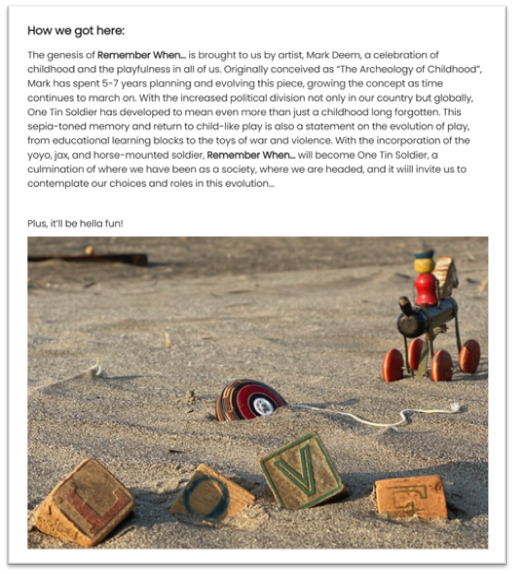
A close-up of blocks on the sand Description automatically generated
Project description (100 to 150 words)
A project description can include a variety of things, depending on what the campaign is for. Of course, you must include what the project is, relevant specs and available options, but the key is to highlight what makes your project unique.
Every project is different, which means every project brings something new and valuable. Aim for two or three important value-adds to highlight in your campaign.
Communicating that value is crucial, and doing so briefly can be difficult. Consider these questions when writing your description:
- What problem does your creation solve?
- What does it include or do that other comparable creations don’t?
- Are there components, characters, themes, or other characteristics focusing on under-represented groups or ideologies?
- Why do you believe you and your project are extraordinary?
Example from TPK Brewing and “The Blooms That Feed On Fire, A 5e adventure by Portland’s first TTRPG brewpub”
Who is going to love this project? (25 to 50 words)
Hint: The answer is NOT “everyone!”
Identifying your target audience is important for your campaign promotion as well as its story. You’re solving a problem for other people as well as yourself, so shout it out to them. What makes your project unique is what drives this specific set of people to support it.
If you haven’t yet gotten far enough in your campaign to determine your audience demographic, now is the time. Detailed descriptions are unnecessary, but here are some traits to consider when outlining who that audience might be:
- Age, gender, orientation
- Socioeconomic status
- Common pain points
- Hobbies, activities, interests
- Where do they live (geographic location and living situation)?
- When might they be most interested in this project?
- What are they passionate about?
- What similar well-known products, media, etc. might they also enjoy?
Example from “Ain’t Got Time to Die: Film Festival Run”

Outline what funds will be used for (25 to 50 words)
As supporters are pre-funding a project before it happens, they must trust you. Part of that is being open about how you arrived at your crowdfunding goal. Doing so helps supporters understand your project’s scope and likelihood of success, shows how well-planned your project and campaign are, and helps them understand the value of their contributions.
Some choose to simply list expenses, but a word-conservative and more effective way is through visual representation. Like pie charts!
Example from “Backstory One-Shot Comic by Ryan K Lindsay, Jen Vaughn, and Teo Acosta“
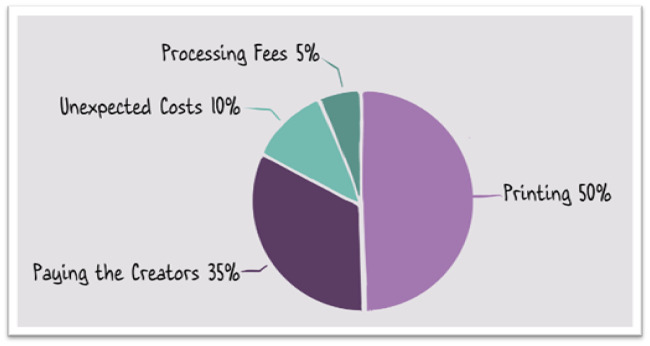
What is going to happen and when? (50 to 100 words)
The next thing supporters want to know is the timeline of events from the moment they contribute or claim a reward to when they receive said reward (or, to when the campaign ends and fulfills all promises if rewards aren’t a part of your campaign).
Considerations for this section are:
- What happens if you do not hit your campaign goal?
- When do you expect to ship rewards? (An approximation, such as ‘June 2024’ is acceptable)
- Do you foresee any risks or challenges?
- How will you communicate updates and changes?
Your timeline might change, even for reasons out of your control (cough-worldwidepandemic-cough). And that’s okay! Communication is key, here.
Crowdfundr provides multiple avenues to communicate with supporters, through public updates and private messaging in the communication centre.
Consider updates a required feature of your crowdfunding story. Updates aren’t only useful for communicating changes, they’re fantastic pieces of content for you and your current supporters to share and drive more contributions! This article helps explain further.
Crowdfunding story calls to action (20 words)
There are two calls to action for every crowdfunding campaign story: contribute (or claim a reward) and SHARE!
Unless you’re running a private campaign for a select group, you’ll want people to share your campaign. Even if they cannot contribute (not everyone is in a financial position to do so), they can still help support you by spreading the word.
Be direct with your ask and make it easy:
Help bring this project to life by:
- Claiming a reward.and/or
- Sharing this campaign with your network!
What about the ‘extra’ information?
Some supporters might want the nitty-gritty details you left out of your campaign story. It’s important to provide easy access to more information (like FAQs, specs, shipping information, etc.) for those who want it, without crowding your story. There are multiple places you can put these details and link to them in your story:
- Outside website
- Newsletter
- Crowdfundr user profile / Organization account profile
- Crowdfundr extra story tabs
- Downloadable files
Where are campaign rewards included?
While every platform is different, Crowdfundr was designed to highlight rewards with descriptions, images, add-ons, and variant options to exist within the reward itself. So, when it comes time to describe your rewards, a simple “Discover reward options on the right side of the campaign (for desktop) or scroll to the bottom (mobile devices),” is all you need.
Visual appeal of a crowdfunding campaign story matters!
You could have every element listed above within the suggested word count, an intriguing project, and rewards to die for… but that will all fall flat if not presented in an attractive way.
Three things will help with this:
- Headers. Remember, online readers skim. Make it easy for them by separating story elements with headers.
- Colour and font style. Highlight extra-important information with a colour and/or font change. Keep these changes minimal to keep their effect, and don’t go overboard! One or two extra colours (with the main story components in black) are more than enough, and they should align with the rest of the campaign and your brand.
- Images. Of yourself, of your project creation, of your rewards, of anything of value that attracts attention. Break up content with carefully chosen images to bring supporters closer to you and your project.
There is no single “right” way to write a crowdfunding campaign story
The points listed above for writing your story are meant to be guidelines. We at Crowdfundr have seen successful campaigns ignore most of these recommendations, but they’re not common.
If you are to take one key message away from this article, let it be to keep your campaign story short, informative, and highlighting your project’s key values.
Yours in success,
Shan Reeb, Crowdfundr
If you are interested in tabletop role-playing games, Crowdfundr is currently running the Tabletop Nonstop Spotlight. Check out amazing crowdfunding campaigns from TTRPG creators!
Three friends from Barcelona are travelling through Asia when they stumble onto something that changes the trajectory of their lives. In Shanghai, they discover a thriving world of affordable, high-quality tailoring—master craftsmen producing bespoke garments at a fraction of what it would cost in Europe.
Most people would bring home a nice suit and a good story. These three brought home a business plan.
All three of them were engineers. Not a single fashion degree among them. No background in textiles, no experience in retail, no rolodex of garment industry contacts.
That turned out to be the advantage.
Today, Hockerty and its sister brand Sumissura have served over 400,000 customers across 81 countries. Their consolidated revenue has reached £17 million, with growth exceeding 20% year over year. They’ve produced over 10,000 custom jeans alone. They were named Swiss Brand of the Year 2025/26 and Best Tailored Menswear Brand 2025 by LUXlife Magazine.
And they’ve done it all without raising a single round of venture capital.
This is the story of how a group of engineers built a fashion company by treating bespoke tailoring like a technology problem. And how a marketing manager who knew nothing about fashion joined them at 27 and helped scale the whole thing through search, testing, and a growth hacking mentality that never went away.
When Engineers Build a Fashion Company
With an engineering mindset, “efficiency, features and processes become more important,” says Salva Jovells, Head of Marketing at Hockerty and Sumissura. “And that is deep in the core values of the brand.”
Salva is describing what happens when engineers build a fashion company from scratch. Not designers, not retail veterans. The priorities are different. Where a traditional fashion house might lead with aesthetics or trend forecasting, Hockerty leads with systems.
“When you apply [systems], the quality and precision of bespoke fashion can be offered worldwide with very competitive starting prices,” Salva explains.
The company was originally called Tailor4less when it launched in 2008, and the name tells you everything about the founding philosophy: make custom tailoring accessible to people who couldn’t otherwise afford it. The original slogan was “affordable elegance,” and that DNA has never left.
Co-founders Alberto Gil and Andreu Fernandez built the business from their experience in technology, not fashion. Their epiphany from Shanghai was straightforward: skilled tailoring existed at scale and at reasonable cost. What didn’t exist was an efficient digital bridge between those craftsmen and customers around the world.
So they built one.
From the very beginning, the company developed its own proprietary technology rather than relying on existing eCommerce platforms. Not out of stubbornness (though every entrepreneur has a streak of stubbornness), but rather necessity.
“Since the beginning, Hockerty created its own proprietary technology,” Salva says. “It has been proven to be a strength versus those many competitors that disappeared.”
The decision to build in-house meant they could create a 3D configurator that lets customers design garments down to the last detail—fabric, lapels, buttons, lining, monograms—and see a hyper-realistic preview before ordering. Try doing that on Shopify.
“It allowed us to be the first ones to have 3D designers in many different types of products that were not usually related to bespoke brands: jeans, chinos, field jackets,” Salva says. “And keeping those updated to our customers’ high standards.”
The configurator isn’t just a visual gimmick. Behind it sits an algorithm that generates tailor-made patterns from a customer’s measurements. Feed it a few inputs, and it produces a precise body profile that the company’s tailors in Shanghai use to cut and sew each garment.
“Does the iteration ever finish?” Salva says when asked about the algorithm’s development. “I would say it is a constant improvement. There are always challenges to be tackled, patterns to be improved, and changes in customer behaviour that become opportunities to improve the result.”
That engineering mindset—treat everything as a system, measure it, improve it, repeat—is what separates Hockerty from the wave of online tailoring startups that launched in the late 2000s and early 2010s. Most of them are gone. Hockerty is old enough to vote.
“And that’s our commitment,” Salva adds. “We won’t stop improving the patterns so they are balanced for everyone, no matter what size.”
The Marketing Manager Who Knew Nothing About Fashion
Salva Jovells joined Hockerty in 2015. He was 27 years old, coming from another startup, and by his own admission, he knew nothing about fashion.
What he did know was growth hacking.
“During the interview with Alberto, one of the founders, I felt he was really interested in hearing my ideas, and I knew he would let me learn, try, and scale different strategies,” Salva recalls. “It was key to know that it was a place to test, learn, and grow.”
That culture of experimentation wasn’t a phase. A decade later, Salva still describes his work in those terms.
“And I get that excitement even today when testing AI tools and processes myself, for example,” he says.
When Salva arrived, the business was already on solid footing. It had been growing steadily since 2008, and the fundamentals were sound. But the opportunity was about expanding—into new regions, new channels, and new product lines.
“The business was already solid; it was already about expanding regionally, channel-wise and product-wise,” Salva explains.
“Hockerty has always been bootstrapped and growing based on benefits, so that is something that also makes you confident to join,” he adds.
That’s worth pausing on. In an era when most direct-to-consumer brands measure success by how much venture capital they’ve raised, Hockerty has grown entirely on revenue without outside investors or an eager board demanding hyper-growth at all costs.
Instead, the company grew by being profitable and reinvesting those profits into the business. It’s the kind of boring, disciplined growth that doesn’t make headlines but does produce companies that survive for nearly two decades.
The Bets That Built the Business
Every company that survives long enough has two or three moments that made the difference. For Hockerty, Salva identifies two.
“The bid we did on SEO,” Salva says. “The white hat one. Creating content, improving experiences, and creating relations with brands. Long-term actions that made us grow and keep building on top of the brands.”
This wasn’t the shortcut-laden, keyword-stuffing SEO of the early 2010s. Hockerty invested in legitimate content creation, user experience improvements, and brand partnerships that built domain authority over time. It was slow and it wasn’t glamorous. And it compounded.
The second was surviving COVID.
Think about what the pandemic meant for a made-to-measure clothing company. No weddings. No office dress codes. Everyone working from home in sweatpants. The core reasons people buy custom suits evaporated overnight.
“No weddings, home office…” Salva says. “But keeping the teams, the workload, so we could get out of that dark period stronger than the rest. And it worked.”
That last part is critical. While competitors cut staff and scaled back, Hockerty kept its teams intact. They maintained the workload. They bet that demand would return and that being ready—with experienced staff, refined systems, and improved products—would matter more than surviving lean.
They were right. The company’s data shows that suits and wedding outfits remained top sellers even during the pandemic. Love, it turns out, conquers all, including broken supply chains. And when the world reopened, Hockerty was positioned to capture demand that competitors had abandoned.
The company now coordinates roughly 60 employees across three continents. The Barcelona office houses design, IT, customer service, and product teams. The board and marketing team operates from Zurich, Switzerland. And Shanghai handles logistics and manufacturing, with shoes crafted separately in Spain.
Two Brands, One Philosophy
In 2014, the company launched Sumissura as a separate brand for women’s made-to-measure clothing. Two years later, Tailor4less rebranded to Hockerty for the men’s line.
Why two brands instead of one?
“It was Sumissura that split from Tailor4less to have her own identity in 2014,” Salva explains. “Well, you never know what would happen if we had the two brands together, but there are many good things.”
The split forces different thinking. Men and women approach custom clothing differently, and trying to serve both under one brand risks diluting the message for each.
“It forces you to think differently, distinguishing and understanding what women want differently than men,” Salva says. “It allows us to give women the right independent space in a traditionally masculine bespoke clothing environment.”
That last point matters. Bespoke tailoring has historically been a men’s world—Savile Row, old-school haberdasheries, the whole culture of men’s suiting. By giving Sumissura its own brand identity, Hockerty ensured that women’s custom clothing wasn’t positioned as an afterthought or a spin-off. It has its own voice, its own marketing, its own collections.
The two brands share technology, supply chain, and operational infrastructure. But they maintain distinct identities in how they speak to customers. And that dual approach has paid off—Sumissura saw sales surge during the pandemic as women increasingly sought out inclusive, well-fitting options that off-the-rack couldn’t provide.
“We Don’t Know What Clothing Sizes Are”
Ask Salva about inclusivity versus customization, which matters more to the business, and his answer is immediate.
“Mom or dad? Complicated to decide,” he says. “It is mandatory for us to keep both the most balanced we can. We need to offer customisation to everybody. We don’t know what clothing sizes are.”
That last sentence is the whole point. Hockerty’s business model doesn’t just accommodate non-standard bodies. It treats every body as non-standard. In their world, there’s no such thing as a “regular” or “standard” size. Every garment is cut to the individual.
The motivation differs between men and women, though.
“Men don’t know their pants size, so having made to measure options help them purchase online,” Salva observes.
He’s right. Most men have no idea what their actual measurements are. They know they’re “roughly a 34 waist” or “usually a large,” but those sizes vary wildly across brands. Made-to-measure eliminates the guessing game entirely.
For women, the value proposition cuts even deeper.
“Women know perfectly the importance of clothes that fit perfectly,” Salva says. “Once they find the jeans that fit them perfectly, they can’t go back to off the rack.”
This is where Hockerty and Sumissura’s retention story becomes powerful. Once a customer creates a body profile and receives a garment that fits, the switching cost is enormous. Not financial switching cost. Emotional switching cost. Going back to off-the-rack clothing that almost fits feels like a downgrade.
The company’s mission statement captures this: “In a world where the fashion industry forces people to fit into boxes, Hockerty exists to make people feel confident and secure by creating bespoke garments that reflect everybody’s uniqueness.”
It’s not just marketing copy. It’s the engineering problem they’re solving. Instead of manufacturing thousands of identical garments and hoping they fit some percentage of the population, they manufacture one garment at a time, designed for one specific person.
Affordable Elegance Is Not a Discount Strategy
Custom shirts starting at £39. Custom suits under $300. For made-to-measure clothing, those are shockingly accessible price points.
How does Hockerty keep prices this low?
“It is hidden on Hockerty’s DNA as it was originally called Tailor4less and its original slogan: ‘affordable elegance,'” Salva says. “We make big efforts to keep the starting point as low as it is for years.”
The pricing philosophy reveals something important about how the company thinks about margins.
“Our prices are fair, margins are fair and tight, which doesn’t allow us to be on these stupid (sorry) forever discounts,” Salva says. “We offer the best price all year long.”
There’s a real tension in eCommerce between pricing strategy and brand integrity. Many online retailers inflate their “regular” prices so they can run perpetual sales—30% off everything, all the time. It creates an illusion of value while training customers to never pay full price.
Hockerty goes the opposite direction. Margins are tight by design. The price you see is the real price. There’s no Black Friday blowout because the everyday price is already as low as they can sustainably go.
This approach requires operational efficiency that most companies can’t achieve. Every dollar of waste—in manufacturing, logistics, technology, or customer service—directly threatens already-thin margins. It’s why the engineering mindset matters so much. Systems thinking, process optimization, and continuous improvement aren’t just nice-to-haves. They’re survival requirements when you’re selling bespoke clothing at near-mass-market prices.
The company’s made-to-order model also helps. Because every garment is produced only after a customer orders it, there’s zero unsold inventory. No end-of-season clearance sales. No warehouse full of suits that didn’t sell. That zero-waste approach is both environmentally responsible and financially essential for maintaining low prices on custom work.
What Comes Next
From three engineers in Barcelona to 400,000+ customers across 81 countries. From Tailor4less in a garage to Swiss Brand of the Year. From a company nobody in fashion took seriously to one that’s outlasted most of its competitors.
The Hockerty story demonstrates what happens when engineers apply systems thinking to a traditional craft. When a company chooses bootstrapped profitability over venture-funded growth. When the response to “Shopify won’t work for this” is “then we’ll build it ourselves.”
Salva Jovells arrived knowing nothing about fashion and brought a growth hacking mentality that helped the company scale through SEO, testing, and experimentation. The founding team built proprietary technology that became the company’s biggest competitive advantage. And the decision to keep teams intact during COVID—when the easy move was to cut—positioned Hockerty to emerge stronger than competitors who played it safe.
The product line continues expanding. Custom jeans launched in 2021 have already crossed 10,000 units produced. Custom sneakers now feature augmented reality try-on. Sumissura keeps growing its women’s line with shoes, boots, and dresses. The configurator keeps getting more detailed. The algorithm keeps getting more accurate.
And prices stay low. Without “40% off” every day.
You can explore Hockerty’s full range of custom clothing at hockerty.com and Sumissura’s women’s collection at sumissura.com.
Key Takeaways
Proprietary technology can be your biggest moat.
Hockerty built its own 3D configurator and pattern-generating algorithm from day one because existing platforms couldn’t handle their model. That decision outlasted every competitor who relied on off-the-shelf solutions. If your business model requires something that doesn’t exist yet, building it yourself might be the best investment you make.
Bootstrapping forces discipline.
Nearly 18 years of growth funded entirely by revenue. No outside investors, no pressure to sacrifice margins for market share. Bootstrapping meant every decision had to make financial sense immediately, which built operational discipline that compounds over decades.
White hat SEO compounds like interest.
Hockerty’s biggest growth lever was legitimate SEO. That meant content creation, user experience improvements, and brand partnerships. It was slow and unglamorous, but it built a foundation that short-term tactics like paid ads can’t replicate.
Keeping your team through a crisis pays off on the other side.
When COVID wiped out demand for custom suits, Hockerty kept its staff and maintained its workload. When demand returned, they were ready while competitors who’d cut were scrambling to rebuild. The cost of retention was real, but the cost of rebuilding would have been worse.
Tight margins and honest pricing beat perpetual discounts.
Hockerty’s prices are low by design, not by promotion. Fair margins with no fake sales builds customer trust and avoids the discount-dependency trap that erodes brand value over time.
Separate brands for separate audiences can be better than one big tent.
Splitting into Hockerty (men) and Sumissura (women) forced the company to think distinctly about each audience rather than treating women’s clothing as an add-on to a men’s brand. In traditionally masculine industries, giving women their own dedicated space matters.