
How to Optimize Packaging for Fulfillment
The following is a guest post by Beth Owens of noissue. Noissue specializes in custom packaging that is gorgeous, unique, and eco-friendly.
Packaging is an important consideration for any business, but especially for eCommerce operations. Shipping orders is a huge expense, so you want to make sure that your packaging design is as effective as it can be. But this isn’t just about saving money where you can. It’s also about making sure that you are delivering the right impression to your customer. Here are our top 3 tips for choosing a packaging design that benefits your order fulfillment strategy.
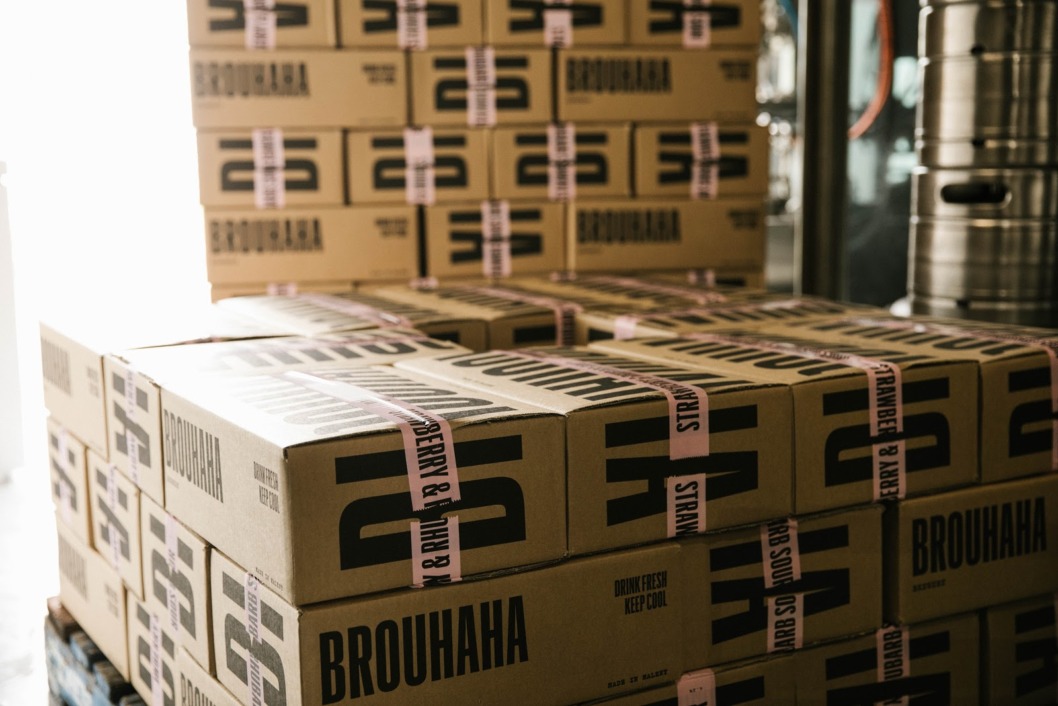
1. Keep it light
Being able to build up a global customer base is a massive boon for eCommerce companies. But it does come with some drawbacks too. Namely, shipping costs will be one of your biggest expenses. However, this expense is at least partially dependent upon your packaging design. The fact is, the larger and heavier your packages are, the more they will cost you to send!
Choosing a cost-effective design comes down to evaluating your own needs carefully. How fragile are your products? What is the average weight/size? Where are the majority of your customers based? These questions are important to consider, as the best packaging designs rest on one principle: efficiency. You need to cut down on the bulk as much as possible, whilst still maintaining the integrity of your design.
Box sizes
One of the most common mistakes that businesses make is choosing the wrong box size. Many end up with boxes that are too big for the products they are shipping. This isn’t expensive just from the perspective of postage costs. There is also the cost of filler materials to stop your products from rattling around. By choosing a smaller size, you can limit the need for filler, creating a more cost-effective design.
Return-ready packaging
Buying online comes with its own risks, namely that customers can’t examine a product before purchasing. This means that an easy returns process is something that customers value highly. Surveys show that 92% would buy again from a brand with a straightforward returns process. This doesn’t just mean terms and conditions, but also the means to return goods. By choosing packaging that can be sent straight back to your warehouse, you eliminate the need to provide extra materials for this purpose.
Using mailers
Some businesses don’t even need to use boxes at all! Boxes make up a huge proportion of packaging costs. So, cutting these out completely, or even partially, will save you a lot of money. If some of your goods are small or lightweight, mailer envelopes are a really great option due to their low weight and cost. Noissue’s mailers are also 100% compostable, providing an easy solution for both businesses and their customers.
2. Give your customers a custom-branded experience
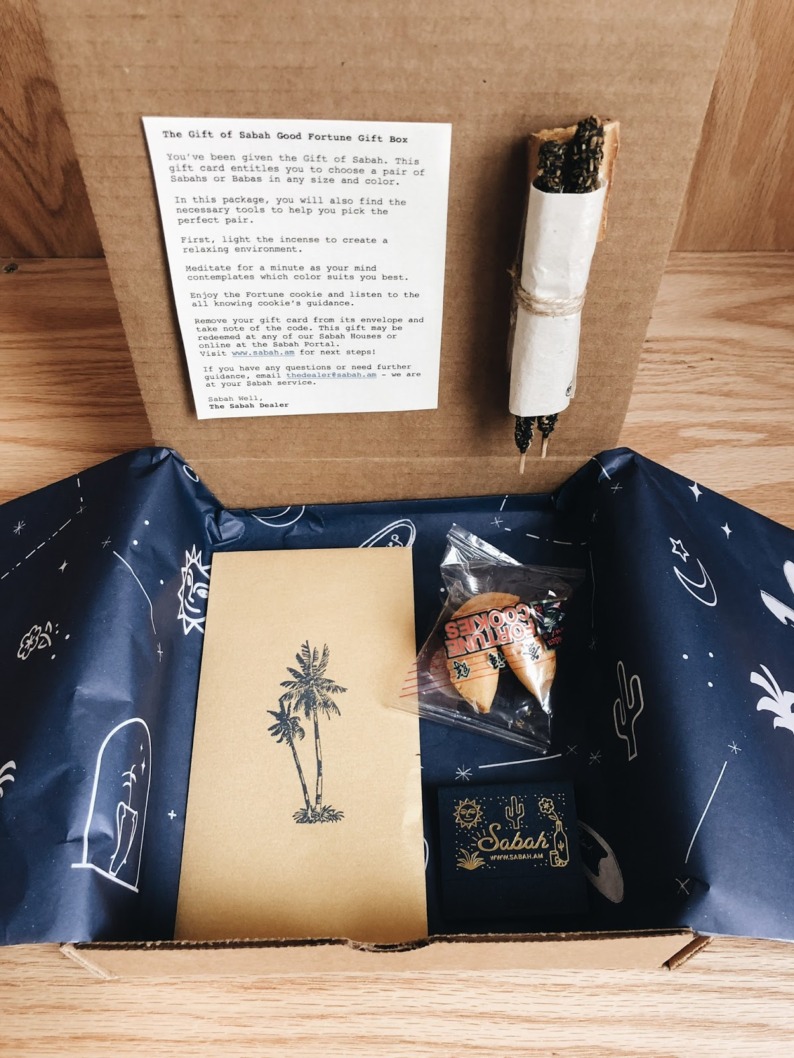
Our customer The Sabah Dealer using noissue custom tissue in their gift box.
Let’s look at two different scenarios:
- Example 1: Your product arrives in generic packaging
- Example 2: Your product arrives in attractive, premium packaging with branding elements
Which one do you think is going to engage your customer the most, and stick in their mind long-term?
Packaging feeds brand perception because it’s the first real touchpoint that customers will have with your brand. So, first impressions really do matter! Custom-branded packaging is effective because it tells your customer something about your ethos. It says that you are different and that you want every interaction with your brand to be memorable. By comparison, what does generic packaging say about your brand? Nothing at all. And when you are trying to stand out to your customer, that is a problem.
Unboxing, or the attractive, curated presentation of products, has become a phenomenon because it occurs when your customer is at their most amenable. They have already made the transaction, and are eagerly awaiting delivery. So, anything they receive besides the product carries a “value-added” perception. This makes unboxing a genius piece of post-purchase marketing. Because it occurs AFTER the sale, it represents a deeper level of care and attention to detail. This is what makes unboxings interesting and thrilling for customers.
Creating a custom packaging experience sounds intimidating, but it doesn’t have to be. Even small additions, such as customized stickers or packaging tape, go a long way towards personalizing your delivery. Custom tissue paper also offers a really versatile option. As well as adding some flair and dramatism to your package, it also provides a big canvas for important branding elements, such as your logo or selling channels.
3. Be environmentally responsible in your packaging design
This last point doesn’t always get discussed in relation to fulfillment. But in 2019, it really bears thinking about. The fact is, packaging is responsible for a lot of waste. According to a 2015 study by the EPA, packaging materials make up around 37% of all landfills. Consumers are much more environmentally-conscious than they once were, and they want to know what businesses are doing to reduce their footprint. According to a Cone Communications Study, a whopping 91% of consumers now expect businesses to take steps to address both social and environmental issues.

The takeaway: All businesses are now expected to take steps to become more sustainable, even if “sustainability” isn’t a part of their brand image. And let’s be honest: this is something we all have a responsibility to invest in.
Your packaging design presents one of the most straightforward ways for you to channel a more sustainable approach. In fact, over a third of consumers consider both the type and amount of packaging to indicate a brand’s stance on environmentalism. This makes packaging an important marketing channel for your sustainability efforts.
3 ways to make your packaging design more sustainable

Reduce: Don’t over-package
Multi-layered packaging is a strategy used by brands to channel a more luxury feel. But to today’s more environmentally-conscious consumers, boxes within boxes or endless layers of cellophane is unnecessary and wasteful. Naturally, this doesn’t spell good news for your brand image. Moreover, reducing the amount of resources your design needs is the first step toward greater sustainability. By channeling a more minimalist approach in the first instance, you are cutting down on the amount of materials that need disposing of.
Reuse: Reusable packaging
Most packaging has a very short life cycle – it has served its purpose once the customer receives their order. After this point, it’s destined for disposal. So, if we choose packaging with more than one possible use, we can create a circular economy of reduced waste. Most of us keep some empty boxes handy from online orders because they are useful for organizing or transporting things. This outlook can be easily applied to other packaging elements as well! Using cloth pouches to hold your products, for example, has many applications in comparison to single-use soft plastic. It also gives your brand a much more premium look!
Recycle: Maximise the use of renewable materials
Many conventional packaging materials cause environmental issues. Why? Because they aren’t designed with the environment in mind. Soft plastics and polystyrene are not recyclable and are extremely slow to biodegrade. This leaves few responsible disposal options available to consumers. Limiting these materials where possible and maximizing sustainable alternatives will go a long way towards lowering the impact of your packaging. Papers and cardboard, for example, provide multiple reuse and recycling options for consumers. For this reason, 71% of consumers said they were more likely to buy from brands who use paper or cardboard packaging. Newer innovations, such as biodegradable packaging materials like corn starch and sugarcane, also present new opportunities for brands to show off a more eco-friendly approach!
Final Thoughts
Today, packaging design isn’t just important in terms of keeping your orders safe and lowering your shipping costs. It’s also about the brand image it represents. In eCommerce, packaging is a vital touchpoint with your customer base. This makes it a powerful tool for shaping brand perception. The materials you use and whether it reflects your brand all play into how your customer perceives you at the moment of delivery. If you invest effort into this area, you stand to gain far more than just cost savings!
Beth Owens is the Content Strategist and resident unboxing expert at noissue. Their premium custom tissue paper is acid-free and FSC-certified as being socially and environmentally responsible in its production. Their low minimum order quantities and quick turnarounds mean that they are suited to help everyone, from small independent businesses to Fortune 500 companies.
THE COMPANY
Calamityware is a graphic-designer owned e-commerce company that sells products with (often humorous) designs drawn from the owner’s personal sketchbook. Calamityware uses the crowd-funding platform Kickstarter as the basis of every product they sell, using the platform to test the demand for each product idea before initiating a production run. They’ve had over 60 successful Kickstarter projects to date. After each Kickstarter campaign, any surplus products are made available on his website, www.calamityware.com.
THE CHALLENGE
When Don Moyer first started his business, he was relying on the manufacturer of their products for fulfillment. “That was a bad idea,” he says. “They were not good at doing both.” In addition, the company was starting to produce new products made by other manufacturers, which further complicated fulfillment.
They knew they needed a more efficient, streamlined process. They had been emailing spreadsheets filled with order details once a week to their manufacturers, who had limited shipping options available. It often took days for orders to be shipped out. “We knew we needed to find a dedicated fulfillment partner,” says Don.
THE SOLUTION
Don found Fulfillrite through referrals from the Shopify community. “After our first conversation with Fulfillrite, we realized immediately how much they could help us.” Fulfillrite synced to Calamity’s Shopify store, which allowed for orders to be fulfilled within hours after payments were processed. “All of this really allowed our company to grow in ways we would not have been able to grow before,” says Don.
While speed and efficiency are what first drew Calamityware to Fulfillrite, Fulfillrite’s technology was a major factor in their decision to stay. “Early on, there would often be times when I wished the portal would do something it didn’t do, and within months they would add a new feature that was better than what I could have imagined. At this point, the portal works so well and has such amazing reporting, including shipping transactions and inventory levels, I can’t imagine what could be better.”
Another major factor was Fulfillrite’s commitment to personalized service and affordable, transparent pricing. “They treat my business like it’s a number one priority,” says Don. “Fulfillrite is very clear about their policies and fees and makes it easy for you to pay only what you need to pay based on the size of your business. It’s a very scalable system.”
THE RESULTS
Now that Fulfillrite has vastly streamlined, systemized, and simplified Calamityware’s fulfillment process, the company is able to sell a variety of products made by various manufacturers out of a variety of materials in a variety of different packaging—all with the same fast, reliable shipping.
“We often have 50 to 100 orders per day, and Fulfillrite is quick to fulfill all of these orders timely. Sometimes we even have 1000 Kickstarter rewards, and they can get them shipped out all in one day. Our ability to ship so quickly really impresses our customers and makes us look good. Fulfillrite really treats their customers well, and if I’m being treated well, it means my customers are treated well, and they keep coming back for more. And that’s a win-win for everyone.”
—Don Moyer, Owner, Calamityware
CalamityWare is a graphic-designer owned e-commerce company that sells products with (often humorous) designs drawn from the owner’s personal sketchbook. They use Kickstarter as the basis of every product they sell, using the platform to test the demand for each product idea before initiating a production run.
Ready to see what fulfillment would cost for your business?
We’ve helped thousands of eCommerce and crowdfunding brands like Calamityware ship orders. These companies range from startups doing 100 orders a month to established brands doing 10,000+.
Tell us a little about your business and we’ll put together a custom quote for you.
Here’s something that happens every day in Indian households across the United States, the UK, Canada, and Australia.
You want a specific brand of pickle your mother used to buy. Or a particular Ayurvedic supplement that you know for a fact works. Or maybe the exact spice blend from a company you grew up with in Mumbai or Hyderabad.
So you check the local ethnic grocery store. No dice.
They either don’t carry it, or they want three times what it costs in India.
So you ask your family back home to ship it. And sometimes this works just fine, but it’s also expensive, the customs are a pain, and you feel guilty about making your parents stand in line at the post office.
This was Kiran Kotla’s life for more than a decade after moving to the United States.
“The breaking point was realizing that the problem was NOT logistics,” Kiran says. “It was layers of inefficiency and middlemen driving up prices and limiting availability.”
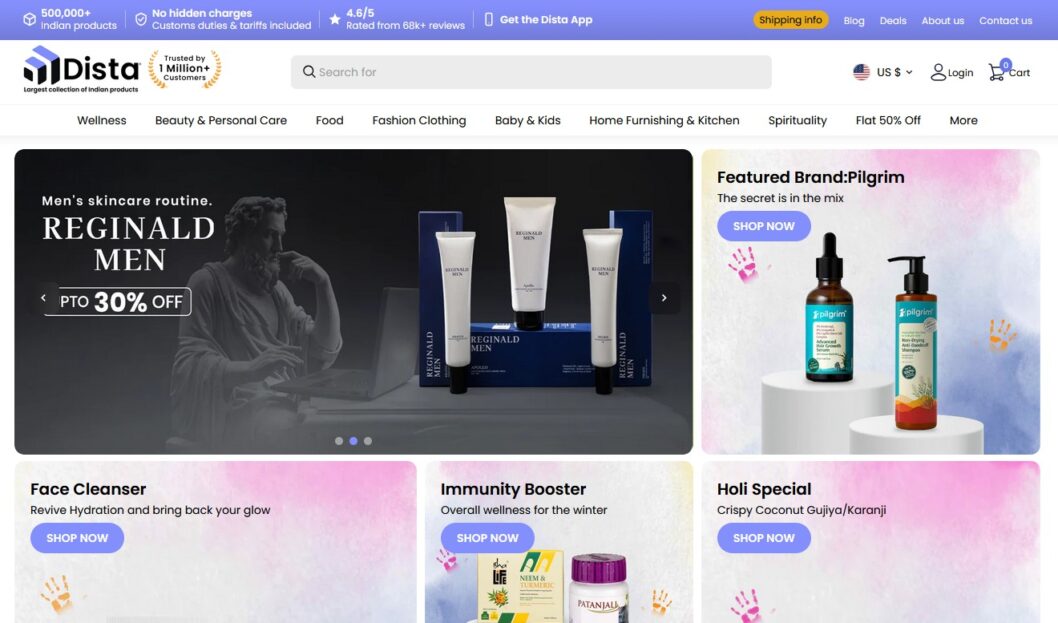
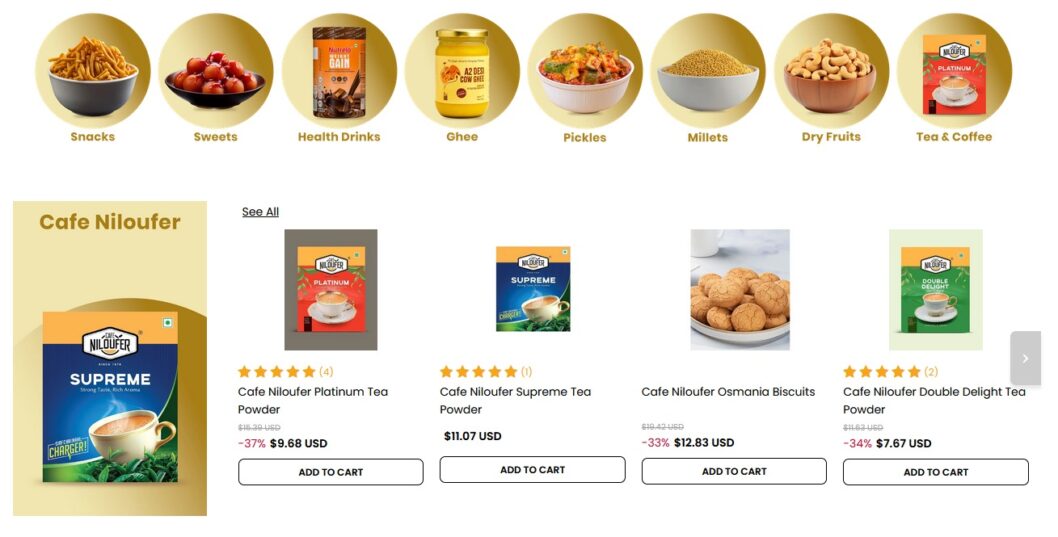
And from that frustration, came Distacart. It’s a marketplace that ships authentic Indian products directly from India to customers in over 40 countries. Since coming out of beta in 2020, the company has processed over a million orders, earned more than 68,000 verified reviews, and built a catalog that spans wellness, food, beauty, fashion, home goods, and spirituality.
And here’s the part that surprised even Kiran: a significant percentage of Distacart’s customers aren’t Indian at all.
“What surprised us later was that this problem was not just limited to the Indian diaspora,” Kiran explains. “A high percentage of non-Indians also shop on our website every day, buying Indian food, wellness, and home products.”
This is the story of how a tech professional turned his frustration into a cross-border business that he calls “the TEMU from India.”
Four Middlemen Between You and Your Pickle
You might wonder: why do Indian products cost so much outside India?
And to answer that, you need to understand the traditional distribution chain. Kiran lays it out “simply” in six stages:
- Manufacturer
- Master distributor
- Regional distributor
- Importer
- Local ethnic retailer
- Customer
That’s four layers between the person who made the product and the person who eats it, wears it, or uses it. “Each layer adds margins and opacity,” Kiran says. “This is where Dista comes in and collapses that chain by sourcing directly from Indian manufacturers and brands, and shipping straight to customers globally. Fewer hands mean better pricing, fresher inventory, and clearer accountability.”
Let’s linger on that “fresher inventory” point for a second. When products pass through four intermediaries across international borders, they sit in warehouses at every stage. So if you, like us, are living by the Jersey Shore, then by the time a spice blend lands on a shelf, months may have passed since manufacturing.
But if you ship direct from India? Then the whole time from production to consumption is compressed. And because orders are fulfilled on demand, the entire economic structure is different. Hence why Kiran was able to build what he was able to build with Distacart.
But then there’s the small matter of, well, collapsing a distribution chain that’s existed for decades. And that requires convincing Indian suppliers to change how they do business.
Winning Trust with Suppliers
“When we started, many suppliers were used to operating with bulk distributor orders, and were skeptical about direct-to-consumer exports,” Kiran admits.
And this is hardly surprising. It’s the kind of problem every marketplace faces in its early days. Suppliers have established relationships with distributors, and they come along with large orders, familiar payment terms, and known logistics.
So they ask themselves: why risk that for an unknown platform promising to sell their products one unit at a time to individual customers scattered across 40 countries?
Kiran’s answer was proof of demand.
“We proved a very real demand from customers across the globe, gained their trust with the kind of experience we provided to not just the end customer, but also to the brand by handling international payments and logistics seamlessly,” he says.
The company didn’t just fulfill orders. It handled the parts of international commerce that most Indian manufacturers had never dealt with: cross-border payments, customs documentation, regulatory compliance, and last-mile delivery in foreign countries. For suppliers, Distacart removed the operational burden of going global.
“It did not just end there,” Kiran continues. “We also drove their products into repeat purchases, proving that the customer base spread across the globe is very loyal.”
The turning point came when non-Indian customers started ordering in significant numbers.
“Suppliers realized this was not only about serving the diaspora,” Kiran says. “The market potential is much higher than they expected it to be. It was about expanding Indian products into mainstream global markets.”
And it’s exactly that shift that changed the way supplier conversations went. Instead of just serving homesick expat, they were opening mainstream market access. So all of sudden, Distacart wasn’t just a convenient channel. It was a real way for the suppliers to grow their businesses too.

An Underrated Differentiator for Distacart: Compliance
If you find yourself shipping food, wellness products, and Ayurvedic supplements across international borders, you’ll quickly find out just how complicated regulations can be.
But what can you do? Fail to comply? That’s not an option.
Different countries have different rules about which ingredients are permitted. Ayurvedic products can run into FDA scrutiny when imported to the US. A supplement that’s perfectly legal in India might be prohibited in Germany. A food product that clears customs in Canada might get seized in Australia.
Most cross-border sellers handle this reactively. They ship the product, hope for the best, and deal with problems when they arise. Kiran took the opposite approach.
“We treat compliance as a product, not a checklist,” he says.
Every SKU on Distacart is classified, documented, and validated before it ever ships. Labels, declarations, and paperwork are standardized in advance. The goal is to eliminate uncertainty before the package moves.
Or to put it more simply: Kiran wants to be 100% sure that when an order is placed, it can get to the customer. Sounds simple, but this is shockingly hard to do in practice, at scale.
“Many cross-border sellers from India on third-party marketplaces do not handle customs and documentation rigorously,” Kiran explains. “Shipments may leave India, but incomplete or inaccurate paperwork makes the outcome at destination unpredictable. That unpredictability damages a customer’s trust, which is extremely difficult to mend.”
After processing over a million orders, Distacart built something most competitors don’t have. They now have a proprietary compliance database that maps products and ingredients to country-specific regulatory requirements.
“Our technology ensures that only products permitted in a given country are enabled for purchase there,” Kiran says. “If a product or ingredient does not meet FDA guidelines in the US, or similar standards in other markets, it simply cannot be ordered for that destination.”
But the system goes further than simple product-country mapping.
“We have also built AI models that predict compliance outcomes for products we have not handled before or where regulations are ambiguous,” Kiran explains. “The system learns from how shipments are processed in each country. Over time, it has become more accurate and more predictable. This continuous learning loop allows us to prevent compliance issues rather than reacting to them.”
Three Business Days from India
Cross-border shipping has a reputation problem. People hear “shipped from India” and think “arriving sometime next month, maybe.”
Kiran pushes back on that assumption hard.
“Cross-border shipments through Dista do not take weeks,” he says. “Our fastest shipments quite often reach a customer’s doorstep in less than three business days from India.”
Three business days. From India to doorsteps around the world. That’s faster than USPS Ground from New York to California.
“Recently, Dista built a technology to orchestrate shipping from India to the global markets through localized hubs in major countries,” Kiran explains. “The technology dynamically selects optimal routes and carriers to minimize logistics costs, and reduce total delivery time.”
This orchestration layer does what a human logistics manager would do—evaluate routes, compare carrier performance, factor in customs processing times—but does it automatically for every single order. The system picks the optimal path for each shipment based on destination, package characteristics, and real-time carrier performance data.
Speed isn’t just a nice-to-have in cross-border commerce. It’s a trust builder.
“Speed and predictability are always critical for building trust in cross-border commerce,” Kiran says. “We built trust through transparency, accurate and predictive documentation to clear customs, proactive tracking updates, and owning the shipment end-to-end. When customers see international orders arriving quickly and consistently, confidence builds naturally.”
Bootstrapped with Discipline
International shipping is expensive. And when your entire business model depends on moving physical products across borders, margins are going to be thin by nature. This isn’t software-as-a-service and there are not 80% gross margins to fall back on.
“International shipping is expensive,” Kiran acknowledges. “That leaves margins to be derived from only operational efficiency, and not markups.”
From the beta phase through Distacart’s growth years, every individual shipment had to make economic sense on its own. There was no venture capital cushion to subsidize unprofitable orders in pursuit of growth.
“The business remained bootstrapped until October 2024, which forced an early discipline into the system,” Kiran says. “Even after raising our first pre-seed round, unit economics continue to drive every operational decision for us.”
That sentence is worth reading twice. Even after raising outside capital, the company still operates with the same unit-economics-first discipline that bootstrapping forced on them. Many companies raise their first round and immediately start spending on growth at the expense of profitability. Distacart’s years of bootstrapping created habits that survived the arrival of outside money.
The discipline extends to how they balance supplier margins with customer affordability.
“These efficiency gains allow us to maintain healthy supplier margins while passing savings directly to end customers,” Kiran explains. “Scale and technology make that balance possible.”
The key phrase there is “scale and technology.” Distacart doesn’t squeeze suppliers to lower prices for customers. Instead, it uses consolidated volume to negotiate better shipping rates and uses its logistics orchestration technology to route packages optimally. The savings come from the system, not from someone’s margin.
“Silence Destroys Trust”
When did Kiran realize that customer service would make or break the business?
“Very, very early, especially during and right after the beta phase,” he says.
The reasoning is specific to cross-border commerce. When a customer orders from a domestic retailer and the package is late, it’s annoying. When a customer orders from a marketplace that ships from India—trusting a company they’ve never heard of, paying for products that will cross international borders—and that package goes silent? The anxiety is approximately one million times worse.
“In cross-border commerce, silence destroys trust,” Kiran says. “A shipment delayed without explanation feels worse than a slow but well-communicated one.”
So Distacart invested in round-the-clock customer support before it was operationally efficient to do so. The 24/7 helpline wasn’t a luxury or a marketing bullet point. It was a survival requirement for a business asking first-time customers to trust international orders.
Today, the company has accumulated over 68,000 verified reviews across platforms. That review volume didn’t happen by accident. It happened because the company treated every interaction—especially the ones that went wrong—as a chance to prove reliability.
“As non-Indian customers began ordering, that reliability mattered even more,” Kiran notes.
Non-Indian customers don’t have the cultural familiarity or personal motivation that drives diaspora purchases. They’re buying because they discovered Ayurvedic skincare on TikTok, or because a friend recommended a specific spice brand, or because they’re curious about Indian wellness products.
Their tolerance for a bad experience is much lower. There’s no nostalgic memories of sunny days in Jaipur to fall back on, and to make the waiting worthwhile. One fumbled order and they’re gone forever.
Why Not Just Use Amazon?
Amazon sells Indian products. Local ethnic stores sell Indian products. So why does Distacart exist?
“Selection, authenticity, and predictability,” Kiran says.
Selection means having the largest catalog of authentic Indian products available globally. Not just the mainstream brands that Amazon might carry, but the specific regional brands that a customer from Hyderabad or Chennai grew up with. If a product isn’t listed, customers can request it and Distacart will work to source it.
Authenticity means every product ships directly from India, with rigorous quality control before dispatch.
Predictability is the thread that ties everything together. The compliance database ensures that products clear customs. The logistics operations ensures delivery is fast and accurate. The QC process ensures product quality. The customer service ensures problems get resolved. Each piece reinforces the others.
“Local stores are often expensive and inconsistent in availability,” Kiran observes. “They often don’t carry the brands and products that the diaspora is used to consuming in India.”
And while Amazon has reach, the experience for Indian sellers on that platform is fundamentally different. Sellers manage their own logistics and customs, and compliance isn’t always rigorous. That creates unpredictable customer experiences—exactly the problem Distacart was built to solve.
“Dista owns the experience end-to-end, so customers know exactly what to expect,” Kiran says.
Unpredictability Is the Real Enemy
Ask a cross-border commerce CEO about their biggest operational nightmare and you’d expect to hear about a specific disaster. They might regale you with a tale of a full forty-foot container seized at customs, a shipment of perishables that spoiled in transit, or a carrier that lost a thousand packages.
Kiran’s answer is more fundamental.
“Unpredictability,” he says.
“Customs delays or documentation issues can disrupt a customer’s trust overnight. Also unpredictable tariff regulations and broader geopolitical factors add on to this. Trade tensions, policy shifts, and conflicts between countries can instantly change landed costs and shipping dynamics.”
This is the reality of cross-border commerce that most domestic eCommerce businesses never face. A policy change in Washington or Brussels or Canberra can alter your unit economics overnight. A trade dispute between two countries can make your shipping routes suddenly unviable. A new tariff can turn a profitable product category into a loss leader.
“In cross-border commerce, external factors can alter economics within days,” Kiran says. “That forces us to build systems that are adaptable and resilient.”
The emphasis on systems over heroics is deliberate. You can’t know how geopolitical events are going to shake out, and even tariff policy has proven hard to predict.
What you can control is how quickly your technology adapts when those shifts happen. And that’s where Distacart’s investment in proprietary compliance databases, AI-driven prediction models, and dynamic logistics orchestration pays off.
The TEMU from India
After eight years connecting the Indian diaspora to products from home, where does Distacart go next?
The answer is bigger than most people expect.
“Dista started as a diaspora marketplace, but the opportunity is much larger,” Kiran says. “Our ambition is to become the TEMU from India, building a true factory-to-door global commerce engine which operates with technology and AI as its backbone.”
That means expanding beyond the categories where India has traditional strength—food, wellness, Ayurveda—into western apparel, pharmaceuticals, home decor, and broader consumer categories that don’t have a diaspora barrier.
The timing may be strategic. As global supply chains diversify and US-China trade relations evolve, companies and countries are actively looking for manufacturing alternatives. India is increasingly positioned as a long-term production hub with competitive economics and improving quality.
“Over time, we believe India can supply a broad range of global demand with competitive economics and improving quality,” Kiran says.
The infrastructure Distacart built to ship Ayurvedic supplements and pickle jars—the compliance database, the logistics orchestration, the carrier optimization, the customs documentation systems—turns out to be the same infrastructure you’d need to ship anything from India to anywhere. The technology is category-agnostic even if the initial use case was culturally specific.
“The platforms that connect those factories directly to global consumers in a compliant and predictable way will define the next phase of cross-border commerce,” Kiran says. “That is the future we are building toward.”
You can explore Distacart’s full catalog of Indian products at distacart.com, including wellness, food, and beauty products.
Key Takeaways
Everyone wins when supply chain inefficiencies are smoothed out.
Distacart’s entire business model is built on removing layers of middlemen between Indian manufacturers and global customers. Fewer hands mean better pricing, fresher inventory, and clearer accountability. If your industry has a bloated distribution chain, the opportunity may be in cutting it down rather than competing within it.
Distacart figured out the nuances of compliance, and was able to offer a much better customer experience.
Compliance is usually a cost center. But Kiran saw the opportunity to build a proprietary compliance database and AI prediction model. And that helped him turn an inevitable expense into a competitive advantage.
Bootstrap discipline should survive fundraising.
Distacart operated for years requiring every shipment to make economic sense on its own. That discipline persisted even after raising a pre-seed round. Many startups lose their operational rigor the moment outside money arrives. The best ones don’t.
Build trust before it’s efficient.
Management textbooks might tell you that building out 24/7 customer support before order volume came in was premature. But Kiran knew that in cross-border commerce, customers were trusting Distacart with international orders, which make people anxious. So radio silence was not an option.
Your initial niche may not be your final market.
Distacart started serving the Indian diaspora but discovered that a significant percentage of customers were non-Indian. That insight reshaped the company’s ambitions from diaspora marketplace to global cross-border commerce platform. Pay attention to who’s buying and why. The answer might be bigger than you planned.
Predictability beats speed as a competitive advantage.
Fast shipping matters, but consistent, predictable shipping matters more. Customers will tolerate a seven-day delivery if it’s reliably seven days. They won’t tolerate a delivery that’s “usually five days but sometimes three weeks.” Invest in predictability over speed.
Let’s be honest about eCommerce: it’s brutally hard.
When asked what surprised him most about eCommerce, Dan Korte, founder of Riseabove Apparel said, “honestly, how hard it is. “You picture steady progress and quick wins, but in reality, it’s constant setbacks—delayed shipments, poor quality, inventory issues, unexpected costs. There are so many moments where you question if it’s even worth it.”
“You learn that persistence is the real skill,” says Dan. “You can’t control every challenge, but you can control how you respond. That mindset—refusing to quit even when everything feels uphill—is what’s kept Riseabove moving forward.”
That mindset isn’t just business philosophy for Dan. It’s lived experience.
Dan is a testicular cancer survivor who faced down mortality, then discovered his oncologist was accused of committing fraud. He built Riseabove Apparel for people like him. That is, people who’ve been through hell and found recovery through fitness.
Riseabove isn’t just another athletic apparel company. It’s a community where people wear their scars proudly as reminders that they can overcome whatever life throws at them.
This is the story of how Dan Korte turned tragedy into a mission-driven brand that competes on authenticity, not price. And it’s also a story of why persistence matters more than any marketing strategy.
When Your Oncologist Gets Accused of Fraud
Dan Korte’s journey to founding Riseabove Apparel began with a testicular cancer diagnosis. After treatment and recovery, he felt grateful for a second chance at life.
“Fast forward to 2012, I had the idea to create a non-profit testicular cancer foundation called ‘RISEABOVE,'” Dan explains. “I wanted to give back because I had gotten a second chance at life.”
It was not much longer after that when Dan discovered something that shook him to his core.
“In 2013, I found out that my hematologist oncologist was accused of prescribing chemotherapy drugs to healthy individuals and submitting many fraudulent claims to Medicare,” he recalls on the Riseabove about page. “This made me question many things in life, but thankfully I was not a victim of this evil.”
Imagine that moment. You’ve survived cancer. You’re grateful to your medical team. Then you learn your oncologist may have been committing fraud on a massive scale. The doubt, the fear, the questioning of everything you thought you knew.
For years, Dan struggled to make sense of it all. “It wasn’t until many years later that I realized that I had to go through these events in order to build RISEABOVE,” he says.
The turning point came in 2017, at a coffee shop.
“I met a woman that would change my life forever,” Dan recalls. “I told her about my idea at a coffee shop that I wanted to create an athletic apparel company around individuals who have gone through tragedies and struggles in life. She immediately related to the idea and pushed me to get it off the ground.”
With her encouragement, Dan started sharing the concept. “I started getting the idea out there with her help and immediately knew we were onto something life changing.”
The mission crystallized into “a community of individuals who have gone through tragedies and struggles in life and found recovery through fitness.”
And the tagline said it all. Wear your scars proudly as reminders that you can overcome life’s struggles through fitness.
From Hardcore Athletes to Weekend Warriors
When Dan launched Riseabove Apparel, he had a clear picture of his customer. Or so he thought.
“Initially, we thought we were designing for hardcore athletes,” Dan admits. But the market had other ideas.
“Over time, we realized our audience includes anyone who embraces an active, resilient mindset—from gym-goers to weekend warriors,” he explains. “That insight reshaped our messaging.”
This realization was crucial. Riseabove isn’t about athletic performance metrics or competing in competitions. It’s about resilience mindset. It’s about showing up to the gym even when depression tells you to stay in bed. It’s about running when anxiety makes your chest tight. It’s about lifting weights as a way to process trauma.
The struggles customers overcome range widely: weight loss, mental health challenges, personal setbacks, cancer, anxiety, postpartum depression, PTSD. The common thread isn’t athletic ability. Rather, it’s the decision to rise above whatever’s holding you back.
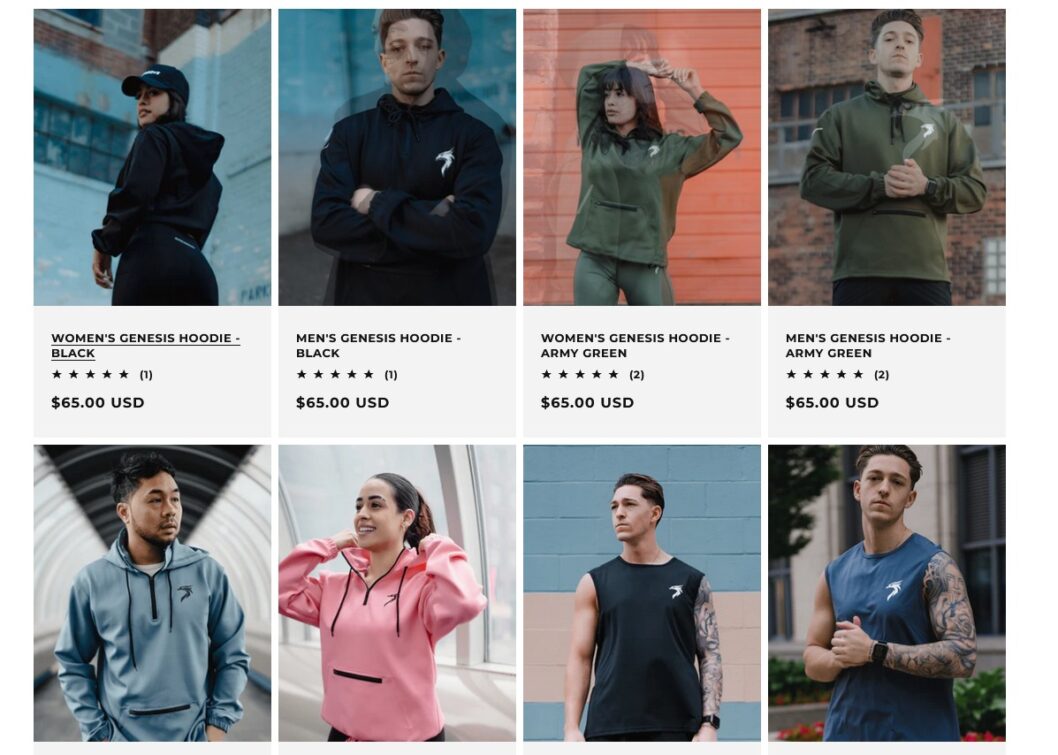
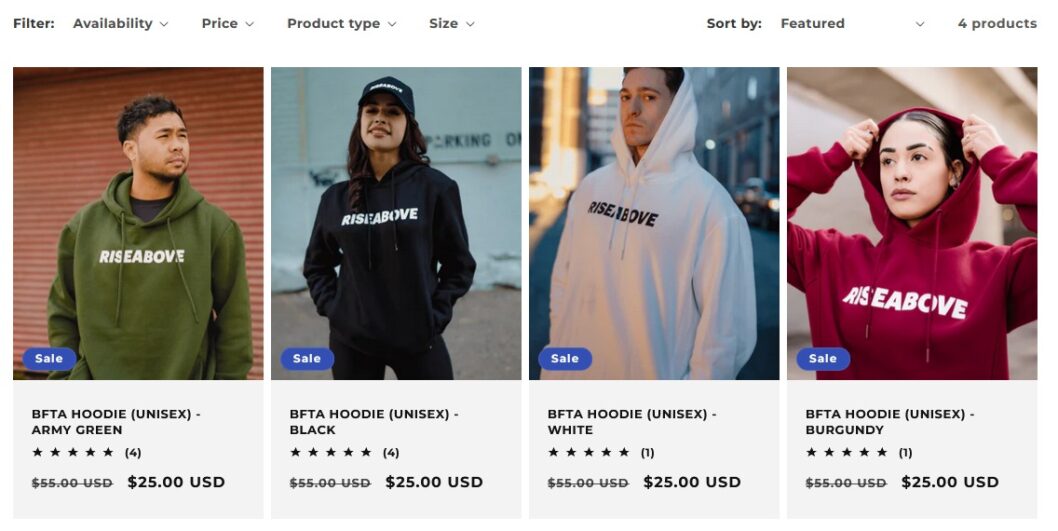
The product line reflects this mentality through its sale of men’s and women’s athletic shirts, tank tops, hoodies (including theGenesis Hoodies collection), performance shorts, biker shorts, leggings, sports bras, and hats. Each piece features symbolism representing transformation. The Phoenix rising from ashes is a recurring motif.
Customer testimonials reveal the emotional connection people have with the brand:
“I have hit rock bottom many times in life,” one customer wrote about their hat. “Wearing this hat is a reminder that I was able to overcome those hardships.”
The product quality backs up the mission. Reviews consistently mention that items are “super soft and comfy,” “high quality,” and “fits great after I washed it.” But quality is table stakes. What keeps customers coming back is the reminder every time they put on Riseabove gear: they’ve overcome before, and they can overcome again.
The Products Are the How, But the Mission Is the Why
How do you balance selling products with telling mission-driven stories? For Dan, this is the beating heart and soul of the brand.
“Our mission—empowering people to rise above limits—drives everything,” Dan says. “We try to show it through real stories of athletes, everyday grinders, and our own journey as a small business. The products are the vehicle, but the mission is the why.”
This philosophy shapes everything about how Riseabove operates. The brand doesn’t lead with fabric specs or performance features. It leads with stories of people who’ve been knocked down and gotten back up.
When it comes to customer reviews and testimonials, Dan maintains authenticity by refusing to cherry-pick only glowing feedback.
“We spotlight honest, detailed feedback—including constructive comments,” he says. Showing real feedback, including criticism, builds trust in a way that perfectly curated five-star reviews never can.
The competitive advantage is clear: “Our storytelling is what sets us apart from the competition,” Dan notes. Any brand can source athletic wear from manufacturers. What they can’t replicate is Dan’s lived experience, authentic mission, and community of people who genuinely relate to the struggle.
Don’t Try to Be the Cheapest
Big athletic brands can undercut small companies on price all day long. So how does Riseabove compete?
“We don’t try to be the cheapest; we focus on being the best value,” Dan explains. “Customers appreciate authenticity more than deep discounts.”
This distinction—cheapest versus best value—is of tremendous importance. The Genesis Hoodies, for example, retail for $65. That’s not bargain-basement pricing. But customers aren’t just buying a hoodie. They’re buying:
- Ultra-soft, durable fabric blends that provide comfort and flexibility
- Quarter zip designs with high neck protection against cold
- Secure zip pouches for essentials
- Adjustable drawstring waists for customizable fits
- Symbolic details celebrating strength and renewal
- Membership in a community of people who understand struggle
Most importantly, they’re buying a reminder every time they put it on: I can rise above this.
The email strategy reinforces this value-over-discount approach. “A new customer receives a warm welcome flow focused on story and value, not discounts,” Dan says. New customers don’t get bombarded with 20% off codes. They get the story, mission, and—vitally—breathing room to make decisions they feel good about. The kind that don’t end up as buyer’s remorse.
Dan explains, “quality over frequency keeps open rates high.”
The result is customers who buy because of the mission stick around longer than customers who buy because of a discount code. When your next purchase decision is driven by “does this brand represent my values?” rather than “what’s on sale today?”, you’ve built something sustainable.
Focusing on Repeat Purchase Rate, Not Vanity Metrics
What metrics does Dan actually watch? Not the vanity metrics most eCommerce brands obsess over.
“Repeat purchase rate, customer lifetime value, and engagement on community posts,” Dan says. That’s it. Three metrics that matter.
Why repeat purchase rate? Because it indicates mission resonance, not just product satisfaction. Someone might buy once because they like the design. They buy again because they connect with what Riseabove represents.
This focus on repeat purchases shapes customer acquisition strategy.
“We reverse-engineer it from our average order value and repeat purchase rate,” Dan explains. “If we know our average customer buys again within a few months, we’re comfortable spending a bit more upfront.”
The logic is sound: if lifetime value is $200 and you know customers typically make three purchases, you can afford to spend more acquiring them than if you’re hoping for a single $65 sale.
Engagement on community posts matters because it measures connection to the mission, not just transaction completion. Someone commenting on a post about overcoming anxiety or sharing their own cancer recovery story signals deep brand affinity.
These metrics also drive product decisions.
“We look at both data and community feedback,” Dan says. “If a product isn’t performing after several months and we can’t clearly identify why, we sunset it to make room for stronger performers.”
“On the flip side, when we see repeat customers or organic social buzz around a particular design, we reinvest—often improving materials or expanding colorways.”
Authenticity Beats Reach
Influencer marketing or paid ads: which channel is the better investment? Dan has a clear answer based on his experience with Riseabove.
“For us, micro-influencers—especially those who genuinely live the Riseabove lifestyle—outperform larger partnerships in terms of engagement and authenticity,” Dan says.
The key word here, of course, is genuinely. Riseabove doesn’t pay fitness influencers with millions of followers to post once. They work with people who relate to the mission of overcoming struggles through fitness. People whose audiences trust them because they share real struggles, not just perfect gym photos.
When it comes to tracking ad effectiveness, they do so in a way that acknowledges recent privacy changes that make conversion tracking harder. Namely, “we’ve leaned more heavily into first-party data: building our email list, optimizing post-purchase surveys, and using tools that help model attribution,” Dan explains.
When the Facebook pixel became unreliable thanks to Apple’s privacy changes, Riseabove had to change their processes. After all, it’s not like they could simply keep throwing money at ads and hoping the platform’s attribution was accurate.
They had to build owned data assets. That means things like email lists they control, post-purchase surveys that capture how customers found them, attribution modeling tools that fill the gaps iOS privacy protections created.
It’s more work than relying on Facebook’s black box. But it’s also more sustainable and gives Riseabove insight into customer journeys rather than algorithmic guesses.
Cash Flow Healthy, Customer Satisfaction First
How does a small apparel brand manage inventory without tying up all their capital or missing sales from stockouts?
“We stay lean,” Dan says. “Smaller runs keep cash flow healthy and allow us to test new designs quickly. If something sells out fast, that’s a good problem—and a signal to scale.”
This approach prioritizes learning over maximizing every potential sale. Yes, selling out means leaving some money on the table. But it also means Riseabove can test new designs without committing $50,000 to inventory that might not sell.
When something does sell out quickly, that’s data. Reorder larger quantities. Maybe expand colorways. The sellout validated the design.
Returns policy reveals Dan’s priorities even more clearly.
“We make it frictionless,” he says. “Our policy is simple: if you’re not happy, we’ll make it right—fast. We prioritize customer satisfaction over short-term margin.”
Think about the math. Charging a $10 restocking fee might save $10 today. But if that frustrates a customer who would have made three more $65 purchases, you just traded $10 for $195.
For a mission-driven brand, this matters even more. You can’t build community by nickel-and-diming people on returns. Trust is everything when customers are buying into values, not just products.
Email segmentation follows the same customer-first logic. Emails are not sent with overwhelming frequency. Customers are not bombarded with daily promotions. There’s simply thoughtful communication that respects people’s inboxes while building connection to the mission.
Constant Setbacks and the Refusal to Quit
What surprised Dan most about building an eCommerce brand was the unglamorous reality behind the Instagram posts. The sheer difficulty of sticking to it.
“That mindset—refusing to quit even when everything feels uphill—is what’s kept Riseabove moving forward,” Dan says.
There’s a meta-lesson here. Riseabove’s mission is helping people overcome struggles through fitness. Building Riseabove required Dan to overcome constant struggles through persistence. The founder embodies what he sells.
When Dan wears Riseabove gear, he’s wearing his entrepreneurial scars proudly—delayed shipments, quality issues, cash flow problems—as reminders that he overcame them. Just like his customers wear their scars from cancer, anxiety, weight loss journeys, or whatever battles they’ve fought.
The brand isn’t just marketing messaging. It’s lived experience at every level.
Final Thoughts
From testicular cancer survivor to apparel founder. From a coffee shop conversation to a community of people overcoming struggles through fitness. From questioning whether it’s worth it to building something that genuinely helps people.
Dan Korte didn’t set out to build just another athletic wear brand. He set out to create something that represented his own journey—surviving cancer, discovering his oncologist’s fraud, getting a second chance, and choosing to use that second chance to help others.
Riseabove Apparel competes on mission, not price. On authenticity, not discounts. On community, not scale. The metrics that matter—repeat purchase rate, lifetime value, community engagement—reveal whether the mission resonates, not just whether products sell.
The challenges are real, be they inventory issues, quality problems, or simply moments of doubt. But the response is what defines Riseabove: refusing to quit even when everything feels uphill.
Explore the full Riseabove collection atriseabove.org, including theGenesis Hoodies Collection symbolizing transformation and fresh beginnings.
Key Takeaways
Did you read this piece looking for tips on how to grow your own business? Here are some things that stood out to me.
Mission-driven positioning makes higher prices more acceptable to customers.
Riseabove doesn’t compete on price because customers buy the mission. “We focus on being the best value. Customers appreciate authenticity more than deep discounts.” Community belonging justifies premium over commodity athletic wear.
Repeat purchase rate shows if customers connect with your mission.
Dan watches repeat purchases and lifetime value, not just first-order metrics. Customers returning signal mission connection, not just product satisfaction. Calculate CAC from LTV, not arbitrary benchmarks.
Micro-influencers beat macro when mission matters.
“Those who genuinely live the Riseabove lifestyle outperform larger partnerships in terms of engagement and authenticity.” Reach means nothing if the audience doesn’t relate to the core message.
Lean inventory makes it possible to do fast testing.
Smaller production runs make it easier to keep cash in the bank and quickly iterate on designs. Dan says the market will give you data, and that “if something sells out fast, that’s a good problem—and a signal to scale.”
Frictionless returns build lifetime value.
“If you’re not happy, we’ll make it right—fast. We prioritize customer satisfaction over short-term margin.” Return fees save $20 today but cost $500 lifetime value.
Email segmentation prevents overwhelm.
New customers get “warm welcome flow focused on story and value, not discounts” with breathing room before broader campaigns. Frequency kills engagement faster than irrelevance.
iOS tracking changes pushed Dan to start collecting first-party data.
There’s no substitute for owning your own data. Dan’s approach, which is a good one, was to start “building our email list, optimizing post-purchase surveys, and using tools that help model attribution.”
Persistence is the actual skill.
“You picture steady progress and quick wins, but in reality, it’s constant setbacks.” The skill isn’t avoiding challenges—it’s “refusing to quit even when everything feels uphill.”
Imagine being on holiday in Paris, working late at night, when your phone lights up with a notification. You glance at the screen and see that Kim Kardashian just posted about your product to her 329 million Instagram followers.
Your first thought: fake account.
Your second thought, after checking: this is real.
That’s exactly what happened to Michael Jankie, co-founder of NATPAT, when the reality star bought BuzzPatch mosquito repellent stickers and shared them on Instagram in September 2022. The company didn’t pay her for the endorsement or send her free products. They had no idea she was even a customer.
“When Kim Kardashian bought BuzzPatch and posted about it, we had no idea until it happened,” Michael recalls. “Suddenly sales spiked, our phones lit up, and people started seeing us as credible.”
Today, NATPAT has sold more than 1.5 million packs of wellness stickers across its product line. The company’s revenues are “well into eight figures” across direct-to-consumer, marketplace, and wholesale channels. Their products are available at Target, Walmart, Amazon, Woolworths, iHerb and in markets across Australia, North America, Europe, the UK, and Singapore.
But NATPAT didn’t start with aspirations of celebrity endorsements or eight-figure revenues. It started in Michael Jankie’s backyard in Australia, watching his kids play and feeling frustrated every time he reached for the chemical spray bottle.
This is the story of how two friends built a wellness patch business on problems they faced as parents. And it’s also the story of how an unexpected Instagram post from one of the world’s most famous women validated everything they’d been building.
When Spraying Your Kids Doesn’t Feel Right
“The idea started in my own backyard in Australia, watching my kids play and realizing how often we were spraying chemicals on them,” Michael explains. “It didn’t feel right. I wanted something safe, simple, and fun that my children would actually enjoy using.”
That frustration—that nagging discomfort every parent feels when doing something they’re not entirely comfortable with—turned into curiosity. And curiosity turned into a question: what if there was a better way?
“That frustration turned into curiosity, and from there the sticker idea was born,” Michael says.
The logic was simple. Kids love stickers. They’ll wear them voluntarily, happily, without complaint. So why not make stickers that do something functional while being fun?
Michael Jankie, Gary Tramer, and Andrei Safonau founded NATPAT (Natural Patch Co.) in April 2020, drawing on their wealth of experience in eCommerce and startups. The timing couldn’t have been worse—or perhaps, in retrospect, better. The pandemic had just begun. Supply chains were chaotic. Consumer behavior was unpredictable.
But families stuck at home were spending more time outdoors in their yards and local parks. Mosquito season was coming. And parents were increasingly conscious about what chemicals they put on their children’s skin.
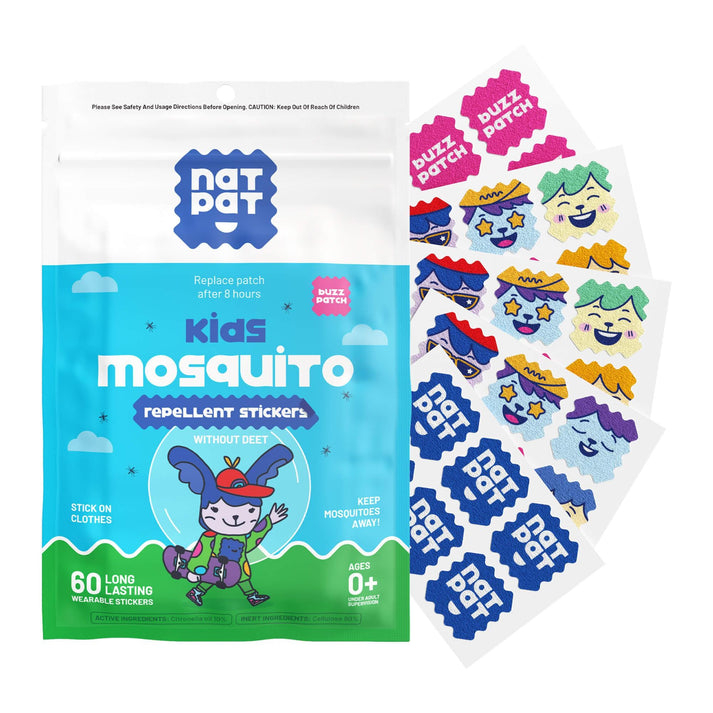
The first BuzzPatch packs were sold in May 2020, just one month after founding. The stickers used natural essential oils—particularly citronella—infused into colorful, kid-friendly patches that could be stuck on clothing rather than applied directly to skin.
No DEET. No harsh chemicals. Just plant-based essential oils that mosquitoes happened to hate, delivered in a format kids wanted to wear.
Building Trust Over Decades
The NATPAT founding story has an unusual element that most startups can’t replicate: Michael Jankie and Gary Tramer have been friends since they were three years old.
“That kind of history builds deep trust,” Michael says.
Think about what that means for a business partnership. It means no need to prove motives and no uncertainty about whether your co-founder will prioritize personal gain over the company’s mission. No awkward early conversations trying to align on values because the values are already aligned after decades of friendship.
“When we started NATPAT, the focus was never on money first,” Michael explains. “It was about creating something safe for our kids. That foundation of honesty and care is what shaped our culture from day one.”
This wasn’t abstract philosophy. It shaped concrete decisions.
“This philosophy shows up in practical ways,” Michael says. “We design for safety first, we keep the company flexible and family-friendly, and we say no to opportunities that don’t align with our values even if they look profitable.”
That last part—saying no to profitable opportunities—is where most businesses reveal whether their stated values are real or just marketing copy. NATPAT takes the hard step of turning down revenue when it would compromise what they’ve built.
“Profit matters, but joy is what makes the business sustainable,” Michael notes.
The Australian roots also matter. The products are formulated and designed in Australia, bringing a specific approach to natural wellness that resonates with parents globally. The company draws on indigenous communities’ centuries-old use of essential oils for insect repellent, combining traditional knowledge with modern delivery mechanisms.
Reaching 329 Million Followers with Zero Warning
Even though their products received high praise and generated expected revenue, the legitimacy of NATPAT as a business was a constant question mark.
Were sales driven by marketing or genuine product quality? Were they building something real or just riding a temporary trend? As inventors and owners, they constantly wondered if the product was actually good enough.
Then came September 2022.
“When Kim Kardashian bought BuzzPatch and posted about it, we had no idea until it happened,” Michael says. He was on holiday in Paris, working at night as entrepreneurs do, when the notification came through. His immediate reaction was skepticism—probably a fake account using Kim’s name.
But it wasn’t fake. Kim Kardashian had genuinely purchased BuzzPatch (the team still doesn’t know from where—their website, a retailer, or Amazon), used it, and decided to share it with her 329 million Instagram followers in an Instagram story.
“Suddenly sales spiked, our phones lit up, and people started seeing us as credible,” Michael recalls.
The NATPAT team quickly assembled online from different parts of the globe to strategize. But the right response was obvious: lean into the moment while staying authentic to what they’d built.
“It was less about celebrity validation and more about realizing the idea had crossed into the mainstream,” Michael explains. “That gave us the confidence to double down.”
The deeper significance wasn’t just the sales spike. It was the answer to that nagging question about product quality versus marketing.
She didn’t receive free product. She wasn’t paid for the endorsement. She bought BuzzPatch because she needed mosquito repellent for her kids, it worked, and she chose to share it.
That organic endorsement—from someone who could have anything for free—validated that NATPAT had built something genuinely good.
The experience also shaped NATPAT’s current marketing approach. While the company has experimented with influencer marketing, they now focus primarily on resharing genuine posts from customers.
Creating Products Around Their Own Problems
How does NATPAT decide which products to develop? The answer reveals why their product line resonates so strongly with parents.
“Every product comes from a problem in our own homes,” Michael explains. “Sleep, focus, allergies—these were not opportunities we spotted in a market report, they were real needs we faced as parents.”
Start with BuzzPatch, the original mosquito repellent sticker. The essential oil blend—citronella combined with other natural oils—creates what NATPAT describes as a “virtual shield” that confuses mosquitoes and hides children from their senses.
Because mosquitoes find humans by sensing the carbon dioxide we exhale, certain essential oils can overpower that CO2 signal, essentially making you invisible to mosquitoes.
But BuzzPatch was just the beginning. Once the technology proved effective, Michael and Gary looked at other problems they faced as parents.
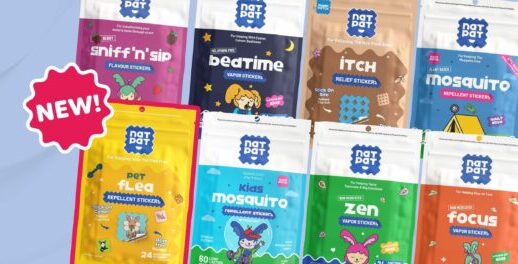
For sleep troubles, they created SleepyPatch with essential oils like mandarin, lavender, sweet marjoram, and vetiver designed to calm the nervous system and promote relaxation.
Focus and concentration issues, they made FocusPatch for school, homework, sports, and activities.
For big emotions and anxiety, they launched ZenPatch for mood calming and emotional regulation.
For congestion from colds or allergies, they introduced StuffyPatch for respiratory relief.
The product development process is consistent: “We look for natural solutions, test them thoroughly, and only bring them to life if our own kids would use them,” Michael says.
The technology behind all NATPAT products is AromaWeave™, a bamboo-based fiber using nanomaterial that releases essential oil molecules consistently—approximately every 30 seconds—rather than dissipating quickly after opening the package. This allows the patches to work for 8-12 hours depending on the product.
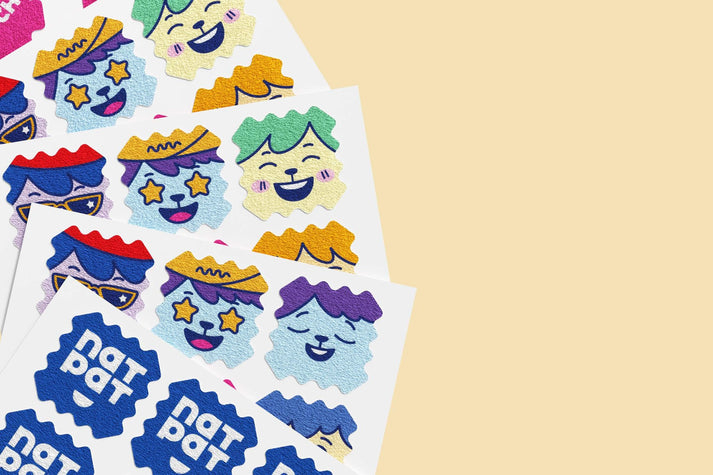
The patches are made with medical-grade non-woven fabric and adhesive safe enough for children’s clothing but strong enough to stay put during active play. The colorful emoji face stickers make them fun for kids to choose and wear.
The parent appeal is equally important: stick them on clothing rather than applying chemicals directly to skin, no messy sprays or creams, DEET-free and plant-based, and kids are more likely to want to wear them.
Making Value-Driven Decisions
Most companies claim to be values-driven. NATPAT’s approach reveals the difference between values as marketing and values as operating principles.
“This philosophy shows up in practical ways,” Michael explains. “We design for safety first, we keep the company flexible and family-friendly, and we say no to opportunities that don’t align with our values even if they look profitable.”
Designing for safety first means using only natural ingredients, testing formulations thoroughly, choosing medical-grade materials, and avoiding harsh chemicals like DEET or synthetic compounds. Every product must pass the test: would Michael and Gary use this on their own children?
Keeping the company family-friendly means understanding that parents work around children’s schedules. It means building flexibility into company culture rather than demanding traditional office hours and presence. It means recognizing that sometimes business decisions need to wait until after bedtime.
Saying no to profitable opportunities is the hardest part. When a partnership or distribution channel offers significant revenue but requires compromising on ingredients, messaging, or brand values, NATPAT walks away.
“Profit matters, but joy is what makes the business sustainable,” Michael emphasizes.
Instead of scaling according to conventional wisdom—raising venture capital, expanding rapidly, maximizing short-term revenue—NATPAT chose to maintain the fun and passion in their work. They collaborate with like-minded partners who share their values rather than pursuing every available opportunity.
Michael credits his support system for enabling this approach: friends, colleagues, other startup founders, and even retired founders who now invest. They provide advice, brainstorm ideas, and think constructively about the business. That community gives NATPAT the confidence to stay true to their mission even when conventional business logic suggests different choices.
Making a Real Difference
Revenue numbers and celebrity endorsements tell one story about NATPAT’s success. But Michael measures success differently.
“A parent once told us their child with autism could not focus in school until they tried our Focus Patch,” Michael shares. “That story hit me hard.”
The realization was profound: “It showed me that what we are building is not just about mosquito bites or sleep, but about genuinely helping families. Those stories are what keep us moving forward.”
The customer testimonials reveal the breadth of impact NATPAT products have on real families:
A mother wrote about her newborn son who loves evening walks: “We have not had a single bug bite since we started using these stickers. The fact that it is chemical-free was a huge selling point for me.”
A parent shared about their daughter with autism: “I needed help for my autistic daughter to get some sleep at night.” After using SleepyPatch: success.
An adult customer wrote: “I can climb into bed, fall asleep, stay asleep (that’s new!) and waken refreshed about 7-8 hours later! I haven’t slept this well in around 20 years!!”
A stay-at-home mom described her high-energy child: “I decided to give these a try. I was so surprised that he actually was calm and played with blocks for over two hours and I got to finally have a break!”
One customer even used ZenPatch for a stressed cat exhibiting behavioral issues: “I thought we’d give these patches a try” and the calming effect worked for the pet.
These aren’t just product reviews. They’re stories about quality of life improvements for families struggling with real challenges.
What Comes Next
From a backyard in Australia to 1.5 million packs sold. From launching during a pandemic to revenues “well into eight figures.” From unknown brand to organic endorsement by Kim Kardashian.
The NATPAT journey demonstrates what happens when founders build products they genuinely need for their own families. When childhood friendships create business partnerships rooted in deep trust. When values drive decisions even at the cost of short-term profits.
Michael and Gary didn’t set out to build a wellness empire. They set out to stop spraying chemicals on their kids. The sticker idea that emerged from that frustration solved a real problem in a format children actually enjoyed.
Then they applied the same problem-first approach to sleep, focus, mood, congestion, and allergies. Every product comes from a problem they faced in their own homes. Every product gets tested on their own kids first.
The accidental celebrity endorsement validated what they’d built, but it didn’t change the fundamental approach. NATPAT still focuses on resharing genuine customer stories rather than paying influencers. They still say no to opportunities that compromise their values. They still measure success by impact on families’ lives rather than just revenue growth.
The lesson for other entrepreneurs isn’t about getting lucky with celebrity attention. It’s about building something so genuinely good that when someone with 329 million followers discovers it organically, they choose to share it without payment or incentive.
You can explore NATPAT’s full product line at natpat.com including BuzzPatch, SleepyPatch, and Wellness Kits.
Key Takeaways
Did you read this piece looking for tips on how to grow your own business? Here are some things that stood out to me.
Build what you’d use yourself.
Every NATPAT product solves a problem Michael and Gary faced with their own kids. When founders are the target customer, product-market fit comes naturally. So make products you’d feel comfortable using yourself.
Organic advocacy beats paid influencers.
Kim Kardashian bought and posted without payment or free product. Now NATPAT focuses on resharing genuine customer posts. Authentic testimonials “are the ones that work and resonate” more than sponsored content.
Problem-first beats market-first.
Sleep, focus, allergies—”not opportunities we spotted in a market report, they were real needs we faced as parents.” Market research identifies gaps but lived experience identifies solutions people truly desire.
Values-driven means saying no to profits (sometimes).
“We say no to opportunities that don’t align with our values even if they look profitable.” Turning down revenue that compromises principles is what makes the difference between value-washing and value-driven.
Launch timing matters less than product quality.
Founded April 2020 during pandemic, first sales May 2020. Terrible timing became irrelevant when the product solved a genuine problem.
Joy makes business sustainable, not just profitable.
“Profit matters, but joy is what makes the business sustainable.” Maintaining fun and passion while scaling preserves founder motivation and company culture long-term.
Imagine managing fresh-roasted coffee in grocery aisles and supplying independent restaurants and cafes, while also doing private labeling and custom blending, providing business coaching to aspiring cafe owners, AND expanding into 20 new retail locations.
That’s a lot to handle. Especially when you’re doing it as coffee prices hit record highs and new tariffs get slapped on imports.
That’s the reality for Klatch Coffee, the Rancho Cucamonga-based family roaster that’s been building direct relationships with coffee producers for 30 years.
Founded in 1993 by Mike Perry and his wife Cindy, Klatch Coffee has grown from weekly coffee dates to a multi-channel operation. And it’s a big one that includes standalone cafes, wholesale partnerships, direct-to-consumer eCommerce, and now a major expansion into Sprouts Farmers Market stores.
Today, CEO Heather Perry (a 2-time US Barista Champion) and Director of Retail Holly Goldsworthy run the family business. Justin Christopher, Manager of Ecommerce and Marketing, helps orchestrate the myriad factors that going into keeping quality high across every channel.
As Justin says, “we’re all on board with building an interest and appreciation for high-quality specialty coffee. Everyone’s success is our success, because our primary goal is to spread joy one cup of great coffee at a time!”
This is the story of how a family-owned coffee roaster handles the major operation that has grown through the cumulative changes that happen over 30+ years of business. Much of this is thanks to the relationships Klatch Coffee has built up over the years, and that’s a theme we’ll explore in detail in this entrepreneur feature.
Wholesale, DTC, Private Label, and Everything In Between
Let’s start with the obvious question: how does Klatch Coffee manage so many different channels?
“We’re fortunate to have some great wholesale partnerships,” Justin says. “Those partnerships take place in a few different forms. We have fresh-roasted coffee in the grocery aisle at retail partners, we supply organizations like independent restaurants, cafes, and churches, and we offer private or white labeling and even custom blending.”
Some partnerships look completely different. “Finally, we also have partners like UC Riverside, who operate their own businesses, but serve Klatch-inspired beverages and display ‘We proudly brew Klatch Coffee’ signage,” Justin explains.
“We also use our knowledge and expertise to help business owners with menu development, equipment selection, and training at our State-of-the-Art training lab,” Justin notes. “Someone interested in opening their own cafe can reach out to Klatch Coffee for business coaching to help them be successful.”
The result is “a lot of different channels and customers, in addition to direct to consumer sales!”
Now it’s not too hard to imagine how you can slowly add channels to a functional business over the decades, one at a time, like repainting the walls of an old home. But with multiple channels can come complexity (or if you prefer, chaos). So how do they do all this without the channels competing with one another?
“Internally, we work to make sure our departments like sourcing, production, and marketing are supporting all the channels we ultimately sell in,” Justin explains. In other words, they don’t let information silos build up between wholesale, retail, and DTC.
When Coffee Prices Hit Historic Highs
Expanding across channels is challenging when coffee prices hit record highs.
“The state of the world coffee market is fairly challenging currently,” Justin explains. “Prices paid by importers and roasters reached new record highs in early 2025, retracted slightly over the Summer, and remain at historical highs as we enter October.”
Then it got worse. “This was all before new tariffs were added on imports to the United States, too,” Justin notes. “Add new tariffs on some key countries (such as Brazil—the world’s largest coffee producer), and you have a recipe for price increases on the grocery shelf or in your favorite cafe.”
So this begs the question: how does Klatch maintain quality without pricing themselves out?
Three decades of relationship building.
“Our Roastmaster and Founder, Mike Perry, plays a critical role in keeping quality high,” Justin says. “Over Klatch Coffee’s 30 year history, he’s developed personal relationships with some of the world’s best producers—many that go back decades.”
Those relationships are a tremendous strategic advantage for the company. “Since we know those producers so well, we have a big head start in choosing coffees that meet our quality standards,” Justin explains.
Keeping Coffee Quality High
Price is one factor, but it’s far from the only factor. Quality is arguably more important, and Klatch sets a high bar. “We only select coffees that score 90 points or above to ensure quality,” says Justin.
It’s here again that Klatch’s existing relationships—and commitment to building new relationships—makes a big difference. “To keep quality high, we’re constantly evaluating coffees, producers, and even entirely new countries of origin to see if they make sense to add to our selection.”
The Direct Trade model makes this sustainable during price spikes. “Additionally, we purchase coffee with a Direct Trade model—we work directly with farmers and producers, cutting out the traditional middle man and allowing us to pay at least 25% above market minimums to ensure our partners are also making livable wages!” Justin explains.
This is supply chain strategy: “Keeping the whole supply chain sustainable and supported is a big part of what we do,” Justin notes.
One important subset of quality, of course, is consistency. Many popular products are blends from multiple origins, which can make keeping quality consistent more than a little tricky.
“Some of our most popular offerings are blends that contain coffee from multiple origins,” Justin says. “Because coffee harvests vary from year to year, the ‘recipe’ for those blends must constantly be monitored and adjusted, so that the flavor is consistent and familiar to the coffee drinker—even when the harvest varies due to climate, temperature, rainfall, soil conditions, etc.”
Delivering consistency when raw materials vary requires serious quality control. “Our QC team and roasting team works hard in this area to deliver these types of results,” Justin explains.
Holiday Coffees & Small Lots
Coffee might seem year-round, but keeping customers engaged requires seasonal thinking.
“As we head into the holidays as of the time of this writing, I’m reminded that we’re launching our 2025 holiday coffees and gift boxes on October 16!” Justin says. “Coffee makes a wonderful gift, and it’s perfect for sharing with friends and family, creating memorable conversations over a cup.”
Special occasion coffees keep things fresh. “We love celebrating a specific holiday or occasion with a special coffee that exists only for a short time—Mother’s Day, Christmas, and so on,” Justin notes. “That helps keep it fresh and interesting for the daily coffee drinker or visitors who come to our cafes multiple times every week.”
It’s here that direct trade creates another advantage: access to coffees larger roasters overlook.
“Because of our direct trade relationships with producers, we’re able to buy in smaller lots, and that means getting access to special coffees that would be overlooked by larger roasters,” Justin says. “Sometimes we only have a few weeks supply, which helps keep things fresh for enthusiasts—there’s always something new to try!”
Club Subscriptions & Recurring Revenue
Subscriptions form a major part of eCommerce strategy. “Subscriptions are also a big part of our eCommerce business,” Justin notes.
Klatch offers two models: standard repeat and Club subscriptions.
“We do offer the ability to subscribe to and receive the same coffee over and over (and many customers do that), but where we really shine is our Club subscriptions,” Justin explains. “Subscribers receive a new selection each month, expertly curated by our team.”
The Club subscriptions serve educational purposes. “This option is great for expanding your knowledge and appreciation of specialty coffee,” Justin says. “Club shipments can introduce subscribers to a new processing method they would not have otherwise experimented with, which keeps things interesting.”
Klatch provides guidance: “Our monthly Club selections also include a postcard with a brewing guide so customers can quickly get the best results without having to experiment,” Justin notes.
The curation is family-driven: Mike Perry curates Single Origin Club, Heather Perry curates Espresso Club, Holly Goldsworthy curates Blends Club.
This also gives Klatch Coffee an opportunity to present its suppliers in the best light too. “We like to ensure that we tell the full story when presenting a new coffee online,” Justin explains. “What’s the back story of the producer? Where was it grown? What’s the climate like? How were the beans processed?”
Breaking Into Sprouts Farmers Market
The biggest recent news is Klatch’s partnership expansion with Sprouts.
“In conjunction with National Coffee Day, we just announced our expansion into 20 new locations inside Sprouts Farmers Market stores across Southern California,” Justin says. “We have 9 new cafes coming in the next 2 quarters, then 11 more in 2026, including our first in San Diego County.”
This expansion will more than double Klatch’s current cafe footprint.
“There’s a close alignment of values between Klatch Coffee and Sprouts Farmers Market—we support one another in our goals,” Justin explains.
The geographic strategy makes sense. “Our partners are all over California, while our cafe business is focused on SoCal—so those partners help us reach customers that aren’t near enough to visit our own cafes,” Justin notes.
The partnership mindset: “They’re partners, not competitors!” Justin emphasizes. “We’re still winning when new customers discover Klatch via social media, online search, or consumer review sites, regardless of where they ultimately end up enjoying Klatch Coffee.”
The omnichannel approach is deliberate. “We win in the marketplace when consumers discover Klatch Coffee, no matter what channel they prefer to shop in,” Justin says. “We want to be part of the conversation regardless of where they make their buying decision.”
What Metrics Does Klatch Coffee Track?
With their big omnichannel approach, you might wonder where Klatch Coffee looks to understand how their business is doing.
“Website sessions are a good leading indicator that will predict our sales in the near future,” Justin explains. “Traffic is higher when we have a compelling selection of new coffees, offers that reward consumer loyalty, and newsworthy events to share with our base.”
Traffic without conversion doesn’t pay bills. “Ecommerce conversion rate is a measure of how effective we are at communicating our messages to those visitors,” Justin says.
Subscriber metrics get special attention. “We’ve also invested heavily in our subscription business over the last year, so we carefully watch the subscriber metrics to make sure the coffees we are selecting are resonating, the delivery experience is timely, and we’re delivering a great value to subscribers,” Justin explains.
Agility and Expertise vs. Scale
How does a family-owned roaster compete with Starbucks?
“As a smaller, more agile competitor I think we have some key advantages to play up compared with national chains,” Justin says.
The first advantage was touched on earlier but is worth reiterating. There’s expertise at the top. CEO Heather Perry is a 2x US barista champion, and “is heavily engaged in menu design and development, tweaking, testing, perfecting until something new is ready for the public,” Justin explains.
“Controlling the entire supply chain from sourcing, roasting, packaging, and distribution is [another advantage],” Justin notes. This makes sense especially when you consider the deep relationships that Klatch Coffee has built over the years.
Scale creates constraints smaller roasters don’t face. “Massive national chains simply can’t manage individual relationships with small, niche coffee producers around the world—but roasters like Klatch Coffee are agile enough to still have personal relationships with those producers, experiment with the roast until it’s perfect, and distribute the fresh-roasted coffee in small batches,” Justin explains.
Klatch’s size is a feature, not limitation.
Changing With the Times
When asked what surprises him, Justin pointed out that “the pace of change is always shocking,” he says. “Whether it’s technical changes like needing to update to a new subscription platform or making sure your website works on the latest mobile devices, things happen fast.”
The future comes faster than expected. “Soon it will be shopping with AI agents or within large language models—perhaps in the future, ChatGPT will discuss your coffee preferences with you and recommend the perfect beans from Klatch Coffee!” Justin notes.
His attitude is one of forward-looking optimization, with him saying “I love the challenge of adapting to whatever the market develops.”
What’s Next for Klatch Coffee
From weekly coffee dates in 1993 to 30+ cafes in 2025. From Rancho Cucamonga to wholesale partnerships across California. From standalone cafes to 20 new Sprouts locations.
Klatch Coffee proves family-owned specialty roasters can compete with national chains through agility, expertise, and direct relationships rather than scale.
Managing wholesale, DTC, private labeling, custom blending, business coaching, and retail locations across sourcing, production, and marketing is—unquestionably—a lot.
But 30 years of relationship building is what makes it work, as does a serious commitment to the highest of quality.
Explore Klatch Coffee at klatchcoffee.com or find locations at their grocery and cafe partners locator.
Key Takeaways
Did you read this piece looking for tips on how to grow your own business? Here are some things that stood out to me.
Multi-channel works best when partners all share a common mission.
Klatch manages wholesale, DTC, private label, and retail without channel conflict. “Externally, they’re partnerships, not competitors.” When everyone builds appreciation for specialty coffee, collaboration beats competition.
Long-term business relationships enable quality during chaos.
Record prices and tariffs squeeze margins. Klatch’s advantage: “Over Klatch Coffee’s 30 year history, he’s developed personal relationships with some of the world’s best producers—many that go back decades.” Relationships built during good times pay off during crises.
Direct Trade requires paying above minimums.
“We work directly with farmers and producers, cutting out the traditional middle man and allowing us to pay at least 25% above market minimums to ensure our partners are also making livable wages!” Sustainable supply chains cost more but provide reliability.
Small-batch agility beats chain scale.
“Massive national chains simply can’t manage individual relationships with small, niche coffee producers around the world—but roasters like Klatch Coffee are agile enough to still have personal relationships with those producers, experiment with the roast until it’s perfect, and distribute the fresh-roasted coffee in small batches.”
Expertise at the top makes it easier to differentiate on quality.
“CEO Heather Perry is a 2x US barista champion, and is heavily engaged in menu design and development, tweaking, testing, perfecting until something new is ready for the public. That type of experience isn’t easily duplicated by a competitor.”
Website sessions predict sales better than vanity metrics.
“Website sessions are a good leading indicator that will predict our sales in the near future. Traffic is higher when we have a compelling selection of new coffees, offers that reward consumer loyalty, and newsworthy events to share with our base.”
Let’s say you’re a new mom, guardian to your teenage sister, and Hurricane Helene just destroyed your home in Tampa. And all this happened only a few years after a car accident that left you in the ICU.
Most people would not choose that moment to build a business.
Whitney Dueñas Richardson did it anyway.
Today, Global Sprouts ships cultural education subscription boxes to families across the United States. At $39.99 per month, each box introduces children ages 2-6 to a different country through hands-on crafts, stories, language learning, and recipes. The boxes are created in partnership with Cultural Ambassadors from each featured country, ensuring authenticity that competitors can’t replicate by Googling.
But Global Sprouts didn’t start in a warehouse or with venture capital. It started at Whitney’s kitchen table, born from a simple realization: she couldn’t find educational materials to teach her daughter about her CHamoru heritage from Guam.
This is the story of how adversity, cultural identity, and corporate marketing experience all came together in the form of a subscription box business.
An Island Most Americans Didn’t Know Exists
Whitney’s journey to entrepreneurship begins with geography—specifically, an island in the western Pacific that most Americans have never heard of.
“I am from the island of Guam, part Dutch, and moved to the States in 2013, where very few people knew what or where Guam was,” Whitney explains. “I quickly became ‘Whit from Guam’ because people were fascinated by this island they didn’t know existed.”

That fascination would become foundational to her business years later. But first came the realization that sparked everything.
“When I had my daughter two years ago, I found that very few educational resources taught about my culture,” she says. “As I was scrambling to put together cultural activities for her to learn about her heritage, I realized that there had to be other moms out there like me. Moms who want to teach their child about the world but can’t find resources that teach about the people and children of other countries.”
The gap in the market was obvious once Whitney started looking. Plenty of educational materials existed for teaching ABCs and 123s. STEM boxes were everywhere.
But authentic, age-appropriate materials for teaching young children about global cultures? Almost nothing. Just…crickets.
“Global Sprouts was born at my kitchen table because I want parents, grandparents, and caretakers to have access to materials to raise the next generation to be empathetic and accepting of other cultures,” Whitney says.
The personal motivation ran deeper than a business opportunity. Whitney wanted her daughter to grow up knowing all three parts of her identity.
“When I worked in corporate marketing, I loved the creativity and strategy, but after having my daughter, it shifted,” she explains. “I wanted her to grow up knowing who she is, CHamoru, Dutch, and American, and to love that about herself from the very beginning.”

From Marketer to Founder
Before Global Sprouts, Whitney spent years in corporate marketing at Ferguson Enterprises, a major distributor of plumbing supplies and building materials. That experience would prove essential for how she built her subscription box business.
“My marketing experience at Ferguson taught me to dominate local markets first, then follow the breadcrumbs,” Whitney says. “We started in Tampa, expanded into major Texas cities, and plan to grow from larger markets into smaller ones as we scale.”
But the more valuable lesson from Ferguson wasn’t about geography. Rather, it was about who to sell to first.
“It’s actually very similar,” Whitney explains when comparing Ferguson’s B2B approach to Global Sprouts’ strategy. “At Ferguson, our focus was on building relationships with businesses first, contractors, builders, designers, so when homeowners needed products, they already trusted and asked for us by name. With Global Sprouts, we take that same ‘community first’ approach by connecting with schools, teachers, and educational programs. When children experience our kits in the classroom, they go home excited to share them with their parents. In both cases, it’s about building credibility and trust with the community that influences the end consumer. Paid media simply amplifies what we’ve already built through real connections.”
This B2B2C approach—selling to businesses who then influence consumers—is sophisticated for a subscription box startup. But Whitney’s corporate background gave her the playbook.
The transition from corporate marketing to founder wasn’t just about applying skills, though. It was about purpose.
“It goes back to how I started looking for ways to teach her about her heritage and the world around her, but there just weren’t many authentic, hands-on resources for young children,” Whitney says.
“That gap sparked the idea for Global Sprouts. I realized if I wanted my daughter to grow up proud of her roots and curious about others, other parents probably did too. So I left the corporate world to build something that would help families everywhere raise globally minded, empathetic children.”
ICU, Hurricane Helene, and Building Anyway
The path from idea to execution wasn’t smooth. Whitney faced adversities that would have stopped most entrepreneurs before they started.
“The biggest adversities in my life became the foundation for everything I’ve built,” Whitney says. “Years ago, a car accident left me in the ICU and completely changed my perspective. It made me realize I had been living on autopilot and pushed me to start creating with intention.”
After recovering, Whitney opened and sold a fitness studio. Then came the challenge of balancing multiple roles simultaneously.
“Later, I opened and sold a fitness studio, was a new mom and became guardian to my teenage sister, and rebuilt after Hurricane Helene destroyed our home,” she explains.
Hurricane Helene hit Florida’s Gulf Coast in September 2024 as a Category 4 hurricane with 140 mph winds. While the storm made landfall in Florida’s Big Bend region, the Tampa Bay area experienced a devastating storm surge of 6-8 feet and widespread destruction. Over 1,000 people had to be rescued in the Tampa Bay area alone, to say nothing of the flooding as far inland western Northern Carolina.
For Whitney, Hurricane Helene didn’t just damage property. It destroyed her home while she was building a business.
“Each season taught me resilience, creativity, and empathy, which are the qualities that ultimately shaped Global Sprouts,” Whitney says.
That resilience shows in how she approaches the business itself. Global Sprouts isn’t built on the assumption that everything will go perfectly. It’s built by someone who knows how to rebuild when disaster strikes.
Authenticity Can’t Be Made with Google
In the crowded subscription box market, authenticity is Global Sprouts’ competitive moat. And Whitney protects that moat through the Cultural Ambassador Program.
“Authenticity is at the heart of everything we do,” Whitney says. “From the start, I knew Global Sprouts couldn’t just rely on online research or assumptions and we needed real voices and real experiences behind every kit. That’s why we created our Cultural Ambassador Program, partnering directly with people from each country we feature. They help choose the crafts, review storylines, and share traditions, language, and everyday details that make the experience genuine. We compensate them for their time and creativity, because it’s a true collaboration, not extraction.”
This approach costs more than having someone research countries online and create generic activities. But it creates something competitors can’t replicate.
“You can recreate the idea, but not the relationships or perspective behind it,” Whitney explains. “Our Cultural Ambassadors share lived experiences you can’t Google, and I approach every kit as both a founder and a mom, always asking, ‘Would I want my daughter to learn this?’ That mix of authenticity and intention is what makes Global Sprouts impossible to duplicate.”
The program ensures that each box goes beyond stereotypes and surface-level facts. When a box features Japan, it’s co-created with someone from Japan. When it features Costa Rica, it’s built with input from someone who actually lives that culture.
Whitney experienced this need personally during her travels, and it’s why this process is so much a linchpin to Global Sprouts. She says, “when I was traveling to all these countries, I was drawn to the small towns that aren’t tourist hotspots. My family traveled to Samara, Guanacaste in Costa Rica earlier this year and it was so fulfilling to visit local restaurants, watch my daughter play with local children on the playground, and hear stories from the people living there. That was a beautiful experience that furthered my thinking that everyone needs to be able to learn about the world around them, especially children!”
Those authentic experiences, not just guidebook summaries, are what Global Sprouts aims to deliver in every box.
Community Came First, Then Paid Media Second
Whitney’s Ferguson background shaped not just her B2B2C strategy but her entire marketing philosophy.
“It’s definitely a crowded space, but that just means you have to be intentional about standing for something real,” Whitney says about the subscription box market. “Most children’s boxes focus on entertainment or STEM learning, while Global Sprouts is rooted in culture, empathy, and connection. They are authentically created with our ambassadors so parents see the difference immediately.”
But even the most authentic product needs a go-to-market strategy. Whitney’s approach prioritizes community building over paid advertising.
“From a marketing standpoint, it goes back to community first, paid media second,” she explains. “We start local with schools and libraries so families can experience Global Sprouts firsthand before ever seeing an ad. That’s where my marketing background comes in: we build genuine awareness and trust through storytelling, then scale through targeted paid media and social proof. It’s a long game, but it creates customers who stay.”
This approach flips the typical startup playbook. Instead of buying Facebook ads to acquire customers quickly, Global Sprouts invests in partnerships with schools and libraries. Children experience the boxes in educational settings, then go home excited to tell their parents.
The result is customers who come pre-sold on the product because they’ve seen it work with their own children.
It’s slower than blasting paid ads. But it’s more sustainable and creates better unit economics over time.
Why Focus on Kids Aged 2-6?
“We focus on ages 2–6 because those early years are when curiosity and identity start to take root,” Whitney says. “Children at that stage are naturally open-minded and eager to explore, so it’s the perfect time to introduce them to different cultures. Our content is designed with that developmental window in mind and mindful of short attention spans, the benefits of sensory learning, etc. Every activity is simple enough for little hands but meaningful enough to spark connection, helping parents lay the foundation for cultural awareness that grows with their child.”
The boxes are designed around what Whitney calls “FAFO parenting”—giving children space to experience natural consequences and learn through exploration.
“FAFO parenting is about giving children space to experience natural consequences and learn through exploration which aligns perfectly with Global Sprouts,” she explains. “Our kits are designed to let children take the lead by trying, creating, sometimes making mistakes, and discovering what works along the way. It’s not about perfect crafts or memorizing facts but nurturing curiosity and problem-solving. When children are trusted to ‘find out’ for themselves they grow more confident and connected to the world around them.”
This philosophy resonates with parents tired of perfectionism and structured activities. The crafts in Global Sprouts boxes aren’t meant to look Instagram-perfect. They’re meant to be explored, experimented with, and yes, sometimes done “wrong.”
The age range also makes business sense. After mastering ages 2-6, Whitney has room to expand.
“In the next 3–5 years, our goal is to expand Global Sprouts to reach more age groups and represent even more of the world,” she says. The company is already testing interest in boxes for children ages 7 and older.

Representation Has To Be Felt, Not Just Seen
“Representation is built into every Global Sprouts kit,” she says. “We co-create each one with Cultural Ambassadors from that country to ensure the stories, crafts, and recipes reflect real life and not stereotypes. Families have shared that their children light up when they recognize a tradition or language from their own heritage, and others love that their children are learning about cultures beyond their own. That feedback reminds us that representation isn’t just seen but felt.”
One of the countries featured in Global Sprouts is Guam, allowing Whitney to share her own CHamoru heritage with other families. It’s the box she wished existed when her daughter was born.
This dual impact—children seeing their own culture represented while other children learn about it—is what makes the Cultural Ambassador Program essential. Without authentic voices, the boxes would just be another form of cultural tourism. But it’s with the collaboration with ambassadors that they become windows into lived experiences.
The Next 3-5 Years
Whitney launched Global Sprouts with 12 countries featured across different boxes. But the vision is much larger.
“We launched with 12 countries, but our vision is to grow to over 30, giving families a truly global learning experience,” she says. “We’re also developing new activities and resources for older children to continue building empathy and cultural understanding as they grow.”
The expansion isn’t just about more countries. It’s about reaching more children at different developmental stages. The company has already started gauging interest in boxes for ages 7 and older, recognizing that cultural education doesn’t stop at age 6.
But regardless of how many countries or age ranges Global Sprouts eventually covers, the foundation remains the same: authentic voices, hands-on learning, and materials that help children understand the world beyond their own experience.
“I wanted her to grow up knowing who she is, CHamoru, Dutch, and American, and to love that about herself from the very beginning,” Whitney says of her daughter. That personal mission became Global Sprouts’ broader purpose—helping every child know who they are while being curious about everyone else.
You can explore Global Sprouts’ full collection at globalsprouts.com or start a monthly subscription to bring the world to your doorstep.
Key Takeaways
Did you read this piece looking for tips on how to grow your own business? Here are some things that stood out to me.
Don’t wait for perfect conditions to start building.
Whitney went through a lot in her life, including a serious car accident, taking guardianship of her teenage sister, and losing her home to Hurricane Helene. And she credits these conditions with teaching her resilience, creativity, and empathy.
Deep knowledge requires compensation.
The Cultural Ambassador Program pays people for their time and expertise. It’s collaboration, not extraction. This creates a competitive moat competitors can’t replicate by Googling.
Corporate experience translates to startups.
Ferguson’s B2B2C model—build trust with influencers (contractors) who influence end buyers (homeowners)—applies directly to Global Sprouts’ school-first, parent-second approach. Your corporate skills might be more transferable than you think.
Start local.
For Whitney, she started reaching out to schools and libraries. She let families experience products firsthand. Then once she saw how things went, it was only then that she would amplify with paid media.
Subscription boxes are crowded. Stand for something real.
Entertainment and STEM are everywhere. Culture, empathy, and connection are rare. When the market is crowded, narrow your focus and own it completely, as Whitney did by doubling down on cultural authenticity through Global Sprouts.
You work a full-time 9-to-5 and rush home to eat dinner. Then you work until midnight blending essential oils, hand-bottling products, applying labels, and packing orders.
On weekends, you do more of the same. And on top of all that, you’re burning 8 to 10 hours every month just managing sales tax across 20+ states.
That was Jessica Rich’s life for months while building Bona Dea Naturals, her natural feminine health brand. Today, she’s sold over 150,000 bottles worldwide and earned more than 8,000 five-star reviews on Amazon. But the journey from chronic health struggles to a thriving women’s wellness business wasn’t glamorous. It was grueling, uncertain, and required her to push through moments when most people would have quit.
This is the story of how one woman turned her personal pain into a science-backed solution that’s helped thousands of women. And it’s also a story of how she’s challenging the stigma that all too often surrounds women’s intimate health.
Jessica Started By Solving Her Own Problem
Jessica Rich dealt with a lot of women’s health issues before building Bona Dea—the sort that seemed constant and awfully difficult to resolve. And she is refreshingly forthright and honest about this on the about page of Bona Dea.
As time went on, Jessica found herself distressed by how traditional pharmaceutical treatments kept failing her. She was tired of temporary fixes to recurring infections and wanted something that actually worked. And she wanted this to be done ideally without relying on constant medication.
That’s when she started researching essential oils and their antifungal and antibacterial properties. What began as curiosity quickly turned into deep research. “It felt like going down a rabbit hole,” Jessica says, “pulling late nights combing through medical journals and university studies about essential oils with antifungal and antibacterial properties.”
Here’s the thing: Jessica didn’t have a background in medicine or science. She’d worked in education and nonprofits. Sorting through dense, complex research text took serious effort. But what surprised her most was “how much research already existed, but how little of it had made its way into practical, accessible products for women.”
There was a clear gap between what science showed could help and what was actually being sold.
After months of trial and error, Jessica formulated a recipe that worked better than she imagined. She made her first homemade spray and shared it with friends who were struggling with the same recurring infections she’d dealt with for years. They experienced real relief, just like she had. They urged her to try selling it.
When Jessica made her very first Etsy sale, something clicked. “It hit me: this wasn’t just a personal fix. It was a solution other women had been desperately searching for too.”
In March 2016, Bona Dea Naturals was born.

The Grueling Reality of Scaling Solo
Those early days were a blur of long nights and relentless hustle. Jessica was still working her full-time job. A typical day looked like this: work 9 to 5, come home, eat dinner quickly, then spend the rest of the evening blending, bottling, labeling, and packing orders until late at night. Weekends were more of the same.
She was doing everything herself. Bookkeeping. Shipping. Customer service. Sales tax management. Advertising. Inventory tracking. All of it.
Jessica kept trying to make things more efficient. She went from hand-pouring to acquiring a small machine that would exactly fill each bottle with 2oz of product. She’d been placing each label on each bottle by hand, so she bought a label machine that made the job quicker and more consistent.
But she still couldn’t keep up.
She was managing sales tax across 20+ states where Amazon had inventory placed through FBA. That alone was eating up 8 to 10 hours every month. Every state seemed to have different rules, and it was overwhelming.
And as if that’s not enough, there was also a creeping sense of imposter syndrome.
The tipping point came when she was consistently spending more time on the business than on her actual job—and still couldn’t keep up with demand. She realized she either had to scale differently or burn out completely.
What kept her going during those exhausting months? The reviews. The stories women shared about finally finding relief after years of failed treatments. “That’s when I realized my private struggle could become something bigger—a business with the potential to help thousands,” Jessica says.
But something had to give.
From Kitchen to Contract Manufacturer
Moving from her kitchen to working with a contract manufacturer was the biggest and scariest leap Jessica took.
“I was terrified of losing control,” she says, “of handing my formula over to someone else and worrying it wouldn’t come out the same.” She also had no idea how to navigate purchase orders, freight terms, or minimum order quantities. It was a completely new world.
What Jessica learned is that “manufacturers aren’t just vendors, they’re partners.” Choosing the right one was critical. It forced her to think about her business in a more professional, scalable way.
The moment that shifted her mindset wasn’t abstract—it was physical. “Honestly, receiving the first pallets of my product from a manufacturer instead of seeing rows of bottles lined up in my kitchen made it real for me,” Jessica says. “That physical shift made me see the business as something much bigger than just a ‘side hustle.'”
For other founders dealing with imposter syndrome, Jessica offers this advice: “Don’t wait for someone else to validate you. Growth doesn’t always feel glamorous, but if customers keep coming back and your product works, you’re already the real deal.”
That transition from handmade to contract manufacturing unlocked everything. It gave Jessica the capacity to actually scale. And shortly after, she invested in automation software to handle multi-state sales tax compliance. That was a game-changer. It freed her to focus on growth instead of drowning in spreadsheets.
Mastering Amazon (And Learning Its Dark Side)
In the early years, Amazon felt like a golden ticket. Jessica’s products gained traction fast. Orders poured in. The numbers validated her passion and her product.
But over time, she learned how fragile that success could be.
Without warning or clear explanation, Amazon would remove listings—products she had poured months of research and development into. She’d be left scrambling to navigate vague policies and opaque support channels. Each takedown meant thousands in lost revenue and weeks, sometimes months, of uncertainty. And as the only employee of her company, she bore the full weight of those disruptions alone.
“The pivot came after realizing how fragile my Amazon-dependent business really was,” Jessica says. “One policy change could wipe out months of work and revenue overnight.”
Still, Amazon taught her invaluable lessons. Here are the three most critical things she learned about succeeding on the platform:
Reviews are everything.
“Even a tiny bump in rating can mean a 20–25% swing in sales,” Jessica explains. Customer feedback wasn’t just social proof—it directly impacted her revenue.
Never rely on Amazon alone.
It’s unpredictable. Policy changes, listing removals, and algorithm shifts can tank your business overnight. “Build your own channels and stability outside the platform,” she advises.
Master PPC ads.
Once you understand how to run Amazon advertising campaigns effectively, you gain far more control over your success.
Despite the challenges, Amazon remains a significant revenue driver for Bona Dea Naturals. But Jessica knew she needed to diversify. She couldn’t let one platform hold all the power.
Breaking Taboos & Marketing Feminine Health in a Censored World
Marketing women’s health products means constantly walking a tightrope between honesty and censorship.
So in that spirit, let’s speak very plainly.
Platforms flag words like “vagina” or “menopause” as inappropriate. That forces brands to use vague euphemisms. “Which is not only frustrating but medically irresponsible,” Jessica says.
Think about that for a second. Medical terms—accurate, clinical language that describes human anatomy and health conditions—get censored. It pushes legitimate healthcare conversations into the “adult” category, as if discussing your own body is somehow inappropriate.
Jessica refuses to play that game. Bona Dea Naturals stays authentic by “insisting on accurate language, fighting against mislabeling that pushes healthcare into the ‘adult’ category, and reminding women they deserve clear, stigma-free information.”
As she puts it: “Breaking taboos starts with saying the words out loud—and refusing to let algorithms dictate our conversations about health.”
The strategy has worked. Jessica has built deep trust with her community by being honest, responsive, and personally engaging with customers—even when the feedback is tough. She’s transparent about ingredients, product limitations, and the challenges of working in women’s health.
The most common customer feedback she receives? Some version of “this finally gave me my life back.”
Women share stories about finally finding relief after years of failed treatments. That level of vulnerability shaped how Jessica approaches everything. “I don’t chase trends,” she says. “I look for gaps where women are underserved and where science-backed natural solutions can make a real impact.”
As conversations around periods, menopause, and hormonal health have become less taboo, women feel more empowered to share their own experiences. That’s why Bona Dea Naturals’ reviews are so open and detailed. Jessica created a space where women don’t have to whisper about their health.
From a Single Product to a Women-Owned Marketplace
Two major realizations led Jessica to pivot Bona Dea Naturals from a single-product brand to a curated marketplace of women-owned wellness brands.
First, she saw how fragile her Amazon-dependent business really was. One policy change could wipe out months of work and revenue overnight.
Second, her customers were asking for natural solutions she couldn’t create alone. They trusted her judgment and wanted more options that aligned with the same values—science-backed, transparent, and effective.
Jessica realized that many small businesses focus on specific feminine issues but often lack the resources to provide a comprehensive catalog of products. She set out to curate the very best from ethically responsible, women-owned businesses that emphasize natural ingredients and nontraditional healing methods.
Her selection philosophy? “I view it like building a library: every product has to serve a purpose, fill a gap, and align with the overall mission of empowering women’s health.”
The Bona Dea Naturals marketplace now features products addressing often-overlooked issues: PCOS, endometriosis, hormonal balance, UTIs, incontinence, low libido, vaginal dryness, perimenopause, postpartum concerns, and menstrual health.
It’s a way to give women more options while creating “a more sustainable, community-driven business.”
Two years into this shift, Jessica’s online store is growing steadily. Customer engagement is deeper and more meaningful. While Amazon sales still account for the majority of her revenue, she’s steadily reducing her dependency and building something more sustainable: a brand that reflects her values and empowers a broader community.
A Decade of Lessons Learned
After nearly a decade of running Bona Dea Naturals, Jessica has strong opinions about what it really takes to succeed.
“If I had to give just one piece of advice, it would be this: resilience is everything,” she says. “After nearly a decade of running my business, I’ve realized that success doesn’t necessarily come down to having the best idea, the most funding, or even the perfect strategy. It comes down to your ability to keep going when things get hard—and they will get hard.”
There will be moments where you feel completely overwhelmed, like you don’t know what you’re doing, or like the next hurdle might be the one that breaks you. “And that’s exactly the moment when most people quit. That’s why so many businesses don’t make it—because it got too hard, and they decided they were done.”
But the ones who succeed? They push through. They figure it out. They fight for it.
Jessica admits that one of her biggest early weaknesses was taking everything personally. Because the business was so personal—born out of her own struggles—it felt like an extension of who she was. She took every negative review personally, resisted outside advice, and felt like she had to do everything herself because no one else could possibly understand it the way she did.
She’s still working on that. But she’s learned to separate herself from the business just enough to make better decisions.
On the product side, Jessica has always been adamant about balancing “natural” positioning with real efficacy. “I lead with results,” she says. “Yes, the ingredients are natural, but they’re also science-backed.”
She’s invested in clinical testing, like RIPT trials, to prove safety. And ultimately, thousands of detailed reviews speak louder than marketing ever could.
“Natural doesn’t mean ‘less effective’—it means effective without unnecessary chemicals.”
What’s Next For Bona Dea?
Today, Bona Dea Naturals has sold over 150,000 bottles worldwide. The brand has earned more than 8,000 five-star reviews on Amazon. What started as a desperate search for personal relief has turned into a thriving business helping thousands of women.
But Jessica’s vision goes beyond sales numbers.
“My vision is to build Bona Dea Naturals into the go-to destination for natural women’s wellness—not just a product brand, but a marketplace and community,” she says.
More broadly, she wants to help normalize the conversation around intimate health. “So that women no longer have to whisper about yeast infections or hormonal imbalances,” Jessica explains. “If we can replace stigma with science, honesty, and empowerment, we’ll have changed not just the marketplace, but the culture.”
It’s an ambitious goal. But if anyone can do it, it’s someone who spent months combing through medical journals with no science background, hand-bottled hundreds of units while working full-time, and refused to let Amazon’s algorithm or platform policies dictate how she talks about women’s health.
You can follow Bona Dea Naturals on Instagram or shop the full collection on their website and Etsy.
Key Takeaways
Did you read this piece looking for tips on how to grow your own business? Here are some things that stood out to me.
Start with your own pain point.
The best products often solve problems you’ve experienced yourself. Your authenticity shows through, and you understand your customer better than anyone else could.
Science-backed doesn’t mean pharmaceutical.
Invest in research and testing to prove natural ingredients work. Jessica spent months reviewing medical studies before formulating her first product, and she continues to invest in clinical testing like RIPT trials.
Don’t rely on a single sales channel.
Amazon taught Jessica that platform dependency is dangerous. One policy change, one listing removal, and your revenue can disappear overnight. Diversify early, build your own channels, and create stability outside any single platform.
Master the operational basics.
Tools and automation free you to focus on growth. For Jessica, investing in sales tax automation software was a game-changer that gave her back 8-10 hours every month. This ended up being time she could spend building the business instead of drowning in compliance.
Be clear in your messaging.
Women’s health is taboo and a lot of brands are tempted to use euphemisms for medical terms. But Jessica’s audience wanted (and needed and, frankly, deserved) accurate language. For Jessica, it was important to remind women they deserve clear, stigma-free information about their own bodies.
Resilience beats funding.
Most businesses fail because founders quit when it gets hard, not because they lacked resources. Success comes down to your ability to keep going when you feel overwhelmed, uncertain, or like the next hurdle might break you.
Build partnerships, not dependencies.
Whether it’s manufacturers or platforms, choose partners who align with your mission. Jessica learned that manufacturers aren’t just vendors. They’re partners in building something sustainable and scalable.
Getting started in eCommerce can be tricky. Even with all the wonderful eCommerce software like Shopify and WooCommerce, it still takes hours of setup even if you’re tech-savvy. What if you just want to start selling online without all the hassle?
Thankfully, PayPal has a very user-friendly option for entrepreneurs with a single product to sell. The idea is simple: you set up a PayPal Business Account and then you add PayPal Buy buttons to your website.
Seriously, that’s it! The configuration couldn’t be simpler and it’s a great stopgap to use before your business is large enough to justify setting up something more permanent, like a Shopify store.
So without any more preamble, let’s talk about how you can add PayPal Buy buttons to your website.
1. Create a PayPal Business account.
Before you can follow any of the steps in this guide, you will need to set up a PayPal Business Account. You can do that by going here and following all the prompts.
2. Log into your PayPal account and click Business Tools.
After you’ve set up your PayPal Business Account and logged in, you will see a home page like the one above. Click on Business Tools to proceed.
3. Scroll down and click Online Checkout.
4. Click Get Started.
5. Click Set up Pay Links and Buttons.
At this point, please note that you have a lot of options for integrating PayPal onto your store. When you click on Set up Pay Links and Buttons, you will have a chance to configure buttons for different products in different styles. At the end of the process, you will receive an HTML code which you will paste into your website.
If you are using a major platform like WooCommerce or Shopify, you may want to check Connect to an ecommerce platform and follow the steps provided by Shopify. If you’re custom-coding your site, Have a custom-built site is probably the better option.
If you don’t have a website and you simply need a very easy page for payments, click Accept payments without a site in the No website? No problem section.
The rest of this guide will talk about what happens when you click Set up Pay Links and Buttons.
6. Select Payment Buttons.
When you click Payment Buttons, you will have a chance to setup a payment button for different products or services in a style of your choosing. If you don’t have a website, you might prefer the Payment link & QR code option instead.
In the steps to follow, we will assume you click Payment Buttons.
7. Enter product details and customize buttons and thank you page.
To create and customize your button, there are several fields you can fill out.
- Item Name and Description: Enter an item name and an optional item description.
- Price: Set a price, which can either be “one set price” or “customer set price” which allows customers to set their own price (appropriate for tipping or situations where partial payment is acceptable.
- Quantity: You can also optionally set Quantity to allow customers to buy multiple items at a time up to a maximum limit.
- Images: You are able to add up to five images associated with your item.
- Button Labels: You can choose optionally to label your buttons, choosing between available text options such as “PayPal”, “Buy Now”, or “Checkout”.
- Customer Note: Tell customers what details you need like “Delivery Instructions.” You can even require customers to enter a note.
- Product ID: Include your product identifiers or SKU numbers.
- Variants: Let customers know if your product or service is available in up to 3 variations like color, size, type, etc. (You are able to adjust price per variant.)
- Inventory: This lets PayPal keep track of your items and variants.
When you click the Checkout tab, there are additional fields.
- Shipping Address: Enable to collect shipping address at checkout.
- Shipping Fees: Enable to set shipping fee for this item, including free shipping.
- Taxes: Enable to set the tax rate for this item.
Finally, on the Confirmation tab, you have one option.
- Auto-return URL: Choose a URL to let customers automatically return to your site after checkout.
8. Click Build It.
Once you have configured all button options to your satisfaction, click on Build It to generate the code you will insert on your website.
9. Add the button to your website.
When you’re done, you will have the ability to add the button to your website in a few ways:
- Payment Link: Simply copy and paste the payment link and send by email, text, or social media.
- QR Code: Gives customers a scannable link that will take them to your payment page.
- Stacked Buttons: Copy the HTML or React snippet and paste to your website. (Shows multiple buttons including “PayPal” and “Checkout”).
- Single Button: Copy the HTML or React snippet and paste to your website. (Shows just one checkout button).
Final Thoughts
There you go! Adding a PayPal button to your website is one of the fastest ways to start selling items online.
Remember: if you need help storing and shipping items once they start selling, Fulfillrite can help. We provide order fulfillment for businesses like yours. You can request a quote to learn more.
Sending 100+ orders a month?
Once PayPal buttons turn into real volume, packing and shipping starts eating your days.
If that’s where you’re headed, reach out now to find out what it costs to have someone handle that for you.
No commitment unless you like what you see.