
Best 7 Fulfillment Software Options for E-Commerce Sellers
E-Commerce has created new opportunities for selling products outside of the traditional brick-and-mortar store. And, as a result of the COVID-19 pandemic, more people are turning to their screens to make purchases. The influx in selling and spending via the web, plus easy-to-use selling platforms on the market like Shopify, Amazon, Etsy, and more, has made starting an e-commerce business more accessible.
While selling online allows many conveniences for both the seller and the customer, like working and shopping from home, there is one aspect that can be particularly challenging—fulfillment.
From keeping inventory organized, to shipping labels, and everything in between, it’s easy to make mistakes during the fulfillment process. Incorrect, delayed, or lost orders can have devastating effects on your customer base. For this reason, e-commerce businesses of every size should consider utilizing fulfillment software to streamline their supply chain operations.
About Fulfillment Software
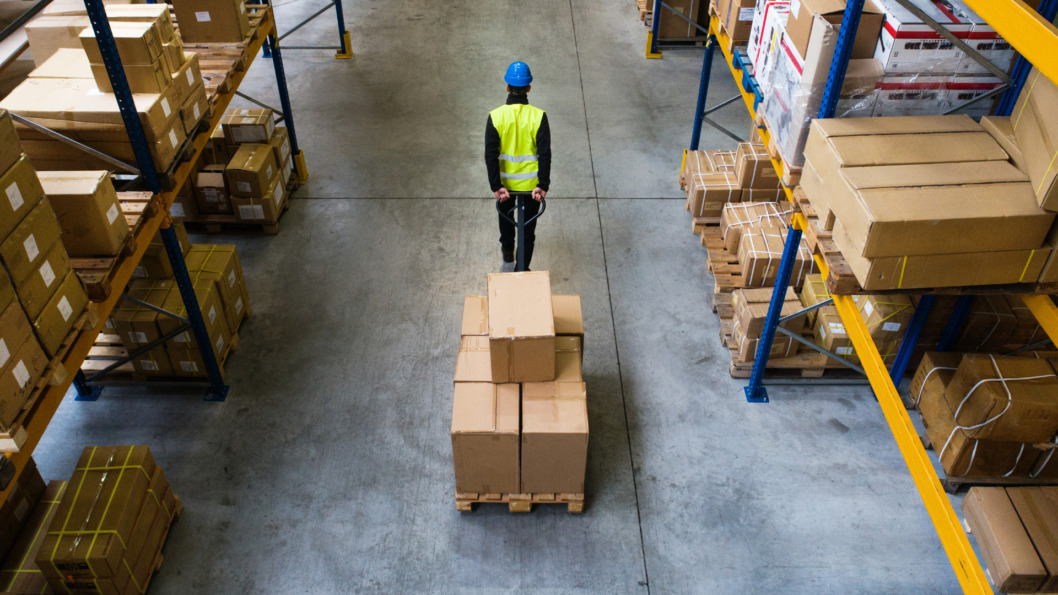
Fulfillment software helps business owners with some or all aspects of fulfilling customer orders, including the six essential aspects of fulfillment:
- Storefront Management
- Order Management
- Inventory Management
- Shipping Management
- Packaging
- Picking, Packing, and Labeling
This software will also help sellers to process orders via one of three main fulfillment methods:
- Self-Service: Self-Service is the “do it yourself” approach to fulfillment where a seller fulfills their own orders. This could be done in a warehouse with a team of workers or by an individual in their own home.
- 3rd Party Logistics (3PL): To fulfill via 3PL, sellers ship their products to the 3PL provider’s warehouse. The 3PL provider will then store this inventory until an order is placed. Once an order is placed, the 3PL will then pick, pack, and ship the order to the customer.
- Drop Shipping: Drop shipping is similar to a 3PL, except that sellers do not own the items they sell. When an order is placed, the drop shipper is notified and will then fulfill that order with items from their warehouse, shipping the order out directly to the customer.
By utilizing fulfillment software, you can save time and money on your fulfillment process, allowing you to focus on the aspects of your business that you love.
What to Look for In Fulfillment Software
While fulfillment software can offer a wide range of useful services, order management tools and smart shipping are two essential aspects a fulfillment software should provide.
Order Management Tools
Order management tools help simplify many aspects of your orders and integrate directly into your storefront or marketplace. Order management software addresses a number of fulfillment pain points, such as syncing inventory across multiple sales channels, viewing all orders in a single dashboard, stock level alerts to ensure inventory availability, and helping create custom orders.
Smart Shipping
When it comes to shipping and packaging, fulfillment software should recommend the best shipping rates and shipping packaging. These recommendations will help make the picking, packing, and labeling process more efficient.
Keeping the above points in mind, here are the 7 top fulfillment software options available for e-commerce sellers today:
7 Best Fulfillment Softwares
1. Soapbox
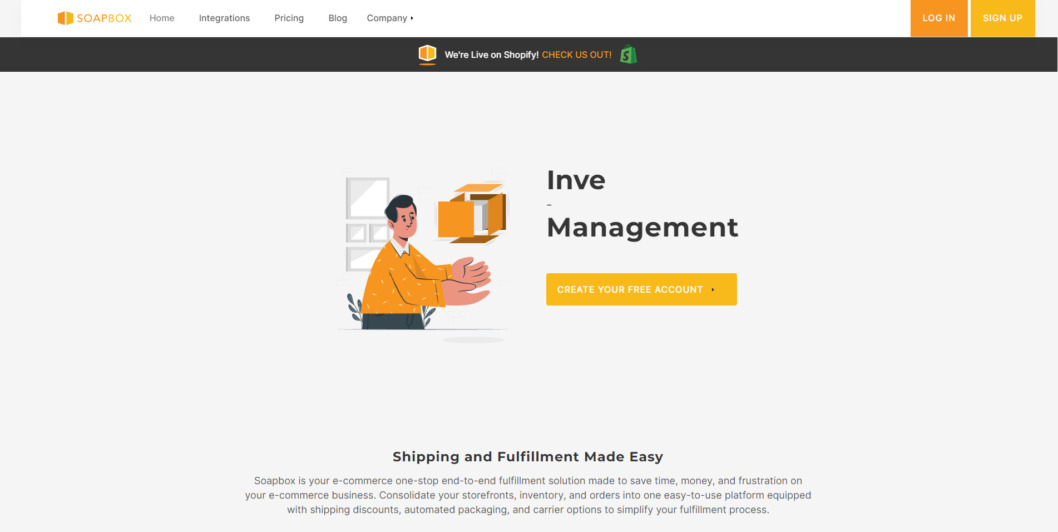
Soapbox is an all-in-one software that makes e-commerce fulfillment easy and efficient, at scale. Whether you’re a small business owner or a large corporation, Soapbox has tools to simplify your fulfillment.
Top Features
- Add and sync storefronts and marketplaces or input custom orders under a single-view dashboard.
- Automatically recommends the best shipping packaging for your orders based on the packaging you have available.
- Print your pick list, pack list, and purchase and print your labels in one convenient place.
- View, split, and fulfill orders from all your storefronts and marketplaces.
- Simplified product, inventory management, and reconciliation across your stores with restock alerts.
- Automatically shops and selects the most cost-effective shipping carrier for every order.
- Top-notch customer service including Slack channel communication.
Subscription Plans
- Free Plan
- Basic Plan: $10/month
- Growth Plan: $25/month
- Commercial Plan: $45/month
- Mainstream Plan: $300/month
- Mid-Market Plan: $1,000/month
- Enterprise Plan: $3,000/month
- Worldwide Plan: contact Soapbox for pricing
For additional plans and services, reach out to Soapbox for a custom quote.
2. Fulfillrite
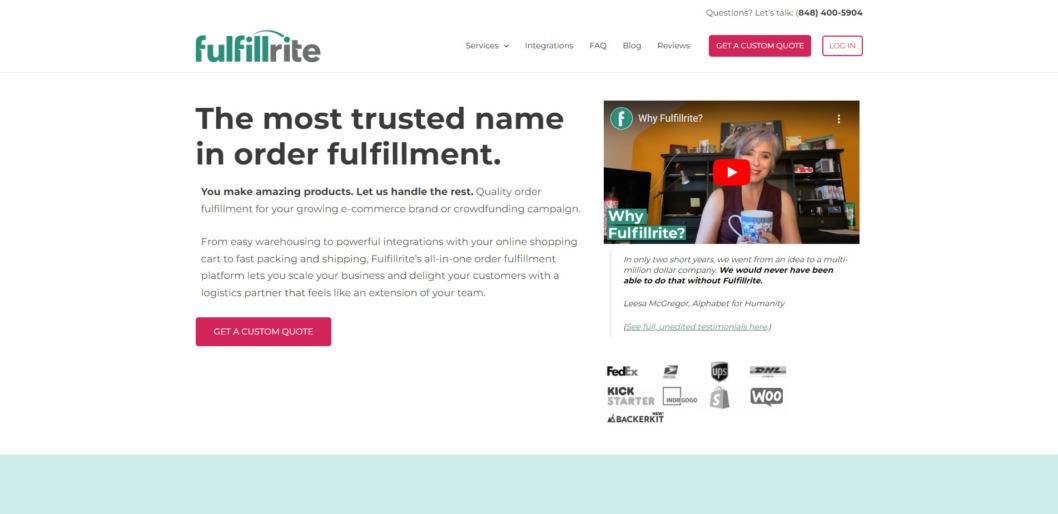
Fulfillrite offers order fulfillment for your e-commerce brand or crowdfunding campaign. This all-in-one order fulfillment platform allows you to scale your business with a logistics partner that feels like an extension of your team.
Top Features
- Integrate Fulfillrite with your Shopify store to fulfill orders on autopilot.
- Several e-commerce fulfillment features, including real-time inventory tracking, remote order and inventory management, and seamless shopping cart integrations.
- Fulfillrite preps items for Amazon FBA.
- If you’re a subscription box service, Fulfillrite can customize your packaging.
- When customers return items, Fulfillrite can help repackage and refurbish them so that they can be resold.
- Crowdfunding fulfillment specialists and software allow for quick turnaround time on large, crowdfunded orders.
Subscription Plans
For plans and services, reach out to Fulfillrite for a custom quote.
3. inFlow
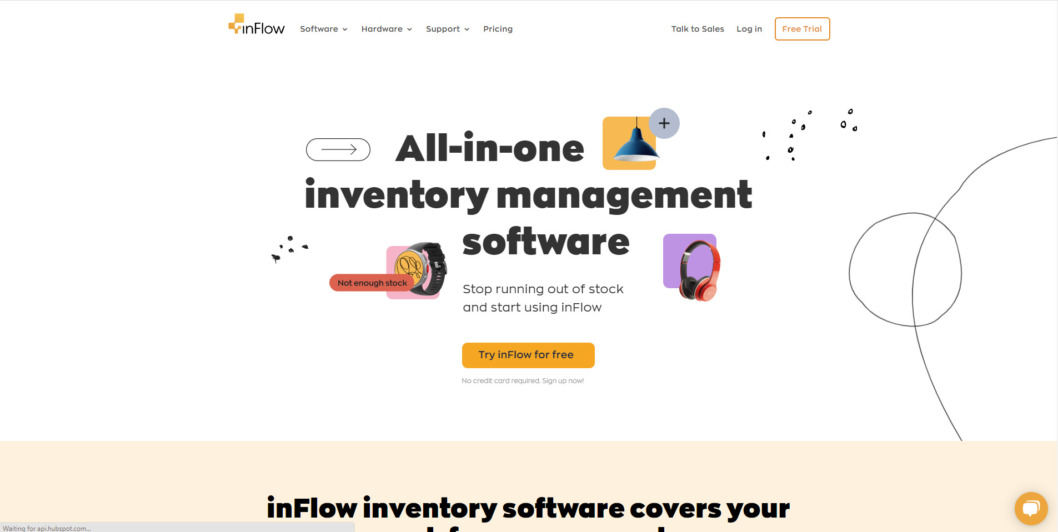
When it comes to managing inventory and orders, inFlow has got your back. This all-in-one software is designed to simplify the pieces of inventory management such as keeping track of current inventory, how much additional inventory to order, fulfilling customer orders, and more.
Top Features
- All-in-one barcode software allows small businesses to create and optimize a barcode system.
- Sales and invoicing software allow you to sell, ship, and invoice in one place.
- inFlow’s Showroom B2B portal allows you to create custom, online product catalogs.
- Purchase order software keeps track of each inventory item throughout its sales journey.
- 38 sales, purchasing, and inventory reports help sellers make educated business decisions.
- inFlow integrates with a number of platforms. If the desired integration is not available, the software’s API feature allows developers to read and write their own data.
- Use your smartphone to manage orders, products, fulfillment, and even act as a barcode scanner.
Subscription Plans
- Entrepreneur Plan: $99/month or $948/year
- Small Business Plan: $279/month or $2,628/year
- Mid-Size Plan: $549/month or $5,268/year
For additional plans and services, reach out to inFlow for a custom quote.
4. ShipStation
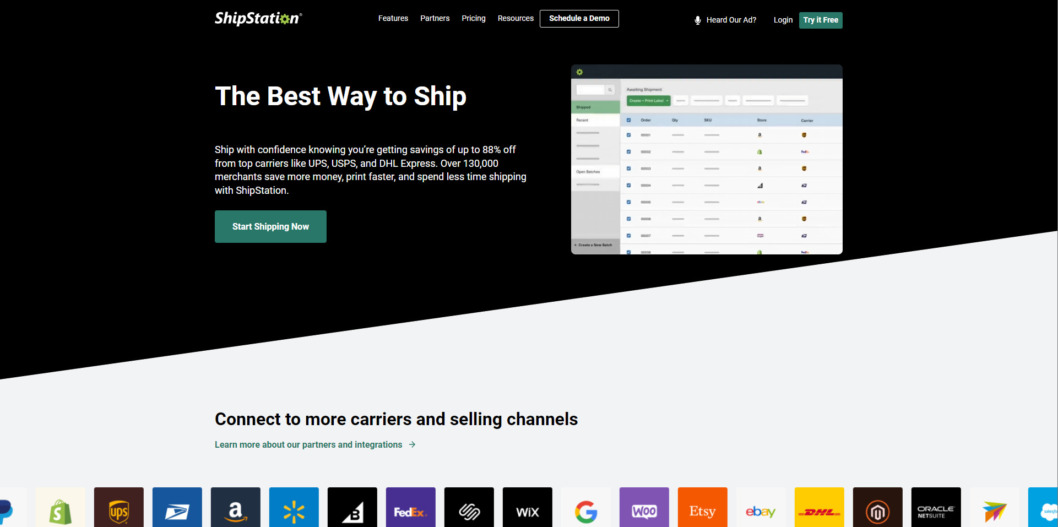
ShipStation can help you sync, manage, and ship your orders efficiently. With direct integrations to over 70 selling channels plus automation rules and filters, you can save time managing all of your orders.
Top Features
- Integrate shopping carts, order management systems, and more from your storefronts and marketplaces.
- Manage inventory remotely, viewing stock levels, setting inventory alerts, and allocating stock.
- Customize shipping labels, return portal, and tracking page with your branding.
- Generate discounted shipping labels.
- 400+ available partner integrations.
- Import orders, manage shipping, print labels, and receive instantly updated tracking for orders.
Subscription Plans
- Starter Plan: $9.99/month
- Bronze Plan: $29.99/month
- Silver Plan: $49.99/month
- Gold Plan: $69.99/month
- Platinum Plan: $99.99/month
- Enterprise Plan: $159.99/month
For additional plans and services, reach out to ShipStation for a custom quote.
5. Easyship
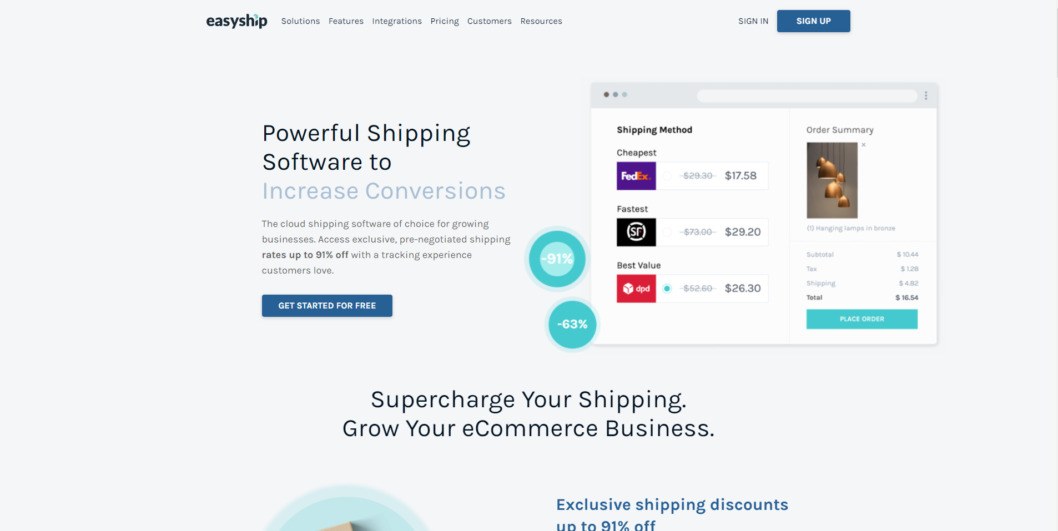
Easyship’s goal is just as its name says—to make your shipping process easy. This cloud-based fulfillment software provides solutions for e-commerce sellers, crowdfunding campaigns, and even developers.
Top Features
- Save up to 91% on 250+ couriers.
- Integrates with a number of storefronts, marketplaces, and fulfillment softwares.
- Easyship provides one tool to manage and automate your shipping needs, including comparing shipping quotes, generating labels, scheduling pickups, and monitoring finances.
- Access to Easyship’s global network of warehouses.
- Optimized store checkout allows customers to choose recommended shipping options.
- Easyship’s Branding Suite will notify customers with shipping updates as well as add your logos and advertising material to emails, landing pages, and packing slips.
Subscription Plans
- Free Plan
- Plus Plan: $29/month
- Premier Plan: $69/month
For additional plans and services, reach out to Easyship for a custom quote.
6. Zoho Inventory
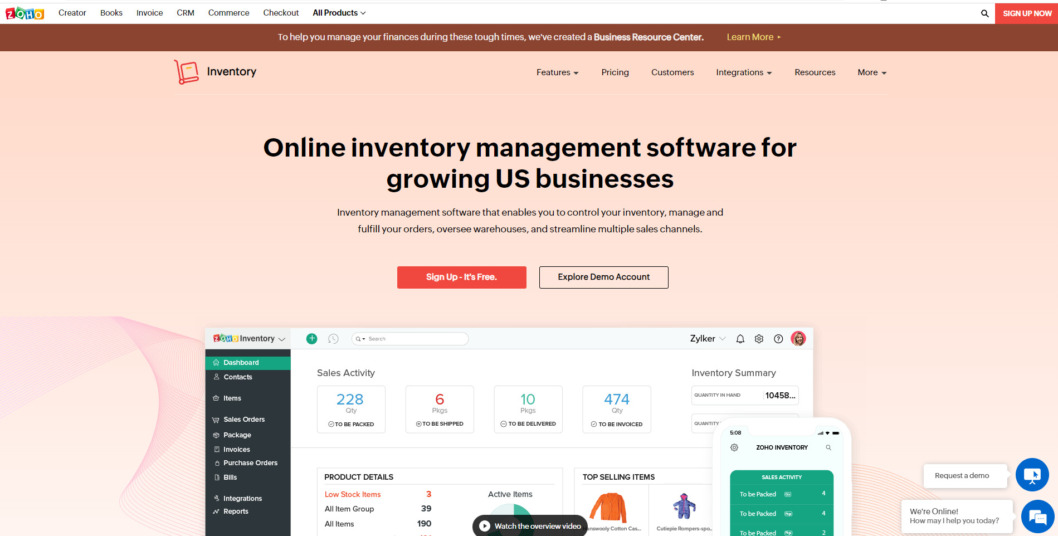
Zoho Inventory is an online inventory management software for growing US businesses. This software enables sellers to control inventory, manage orders, and streamline multiple sales channels.
Top Features
- Item management allows users to track, manage, and customize items from a single application.
- Customer lifecycle removes the stress of having to fill in information at every step of the fulfillment process.
- Manage back orders, drop shipments, vendor price lists, purchase orders, and billing solutions all in one place.
- Post-Shipment, EDI, marketplace, shopping cart integrations, accounting solutions, and CRMs can help expand your business.
- Automation features include barcode scanning, email and field updates, webhooks, and custom functions.
- SKU generator, reorder points feature, and reporting and analytics tools all help to keep your business up to speed with the latest industry trends.
Subscription Plans
- Free Plan
- Standard Plan: $79/month or $708/year
- Professional Plan: $129/month or $1,188/year
- Premium Plan: $199/month or $1,908/year
- Elite Plan: $299/month or $2,868/year
- Ultimate Plan: $399/month or $3,948/year
7. Multiorders
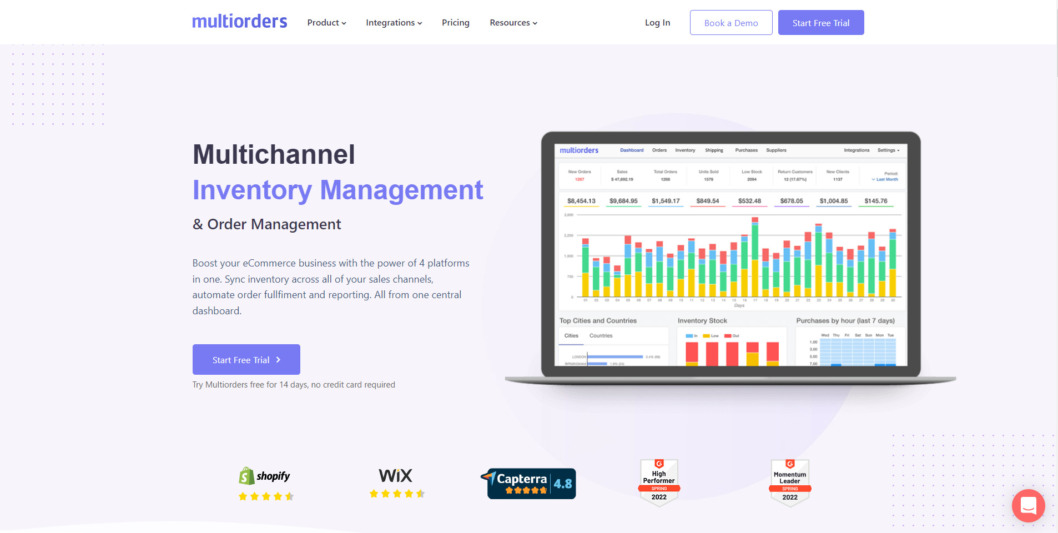
Multiorder’s inventory and order management allows your e-commerce business to have the power of four platforms in one. Sync inventory and automate order fulfillment and reporting from a single dashboard.
Top Features
- Inventory software helps multi-channel e-commerce sellers create bundles, manage variations, tag and categorize products, and more.
- Insights and reports provide full visibility of your inventory.
- The order management system allows for multichannel orders, merging of orders, and manual orders.
- Multi-Carrier shipping management software provides a number of features, including discounted shipping rates, expedited shipping processes, and bulk printing.
- E-Commerce analytics and reports provide full visibility of your inventory, shipment monitoring, and an overview of all of your order statuses.
- Data provides insights into inventory levels, sales across all stores, best-selling products, and total shipping costs.
Subscription Plans
- Pro 500 Plan: $49/month or $490/year
- Pro 1K Plan: $99/month or $990/year
- Pro 2K Plan: $149/month or $1,490/year
- Pro 5K Plan: $249/month or $2,490/year
How to Know Which Software Is Right for You
With all of these choices, how will you know which software is right for you? Here are some points to keep in mind as you’re weighing your options:
Quality Customer Service
It is crucial to find software with exceptional customer service. How does this software address problems when they arise? What is this software’s preferred method(s) of communication? What is their average response time?
Additionally, if there is a method of communication that you prefer, like text messages or a messaging app like Slack, see if this software can accommodate this. Reading reviews can also help to shed some light on how responsive the team will truly be.
Pain Points
What aspects of your business are the most challenging? Walk through every step of your current fulfillment process, taking note of every change you would like to make along the way. Once you’ve compiled this list, decide which points are deal breakers and which you are willing to compromise on. Finally, consider any new aspects you would like to add to your fulfillment process.
Fulfillment Type
Consider how you’re fulfilling your orders now, as well as how you’d like to fulfill them moving forward. Are you looking to fulfill via self-service, drop shipping, or 3PL? Additionally, are you looking to ship domestically or internationally? Most software has a specialization, so knowing this will help you to narrow down your options.
Customization Requirements
Do you need to have fulfillment software or services customized for your brand, or can you use a ready-made solution? Explore what features most ready-made solutions offer, and if there are features missing that you feel you need, explore what customization offers are out there as well. While many softwares offer customization, even this can have its limitations. If you are looking for custom software, speak to a few different providers to weigh your options.
Costs
Finally, consider the costs associated with the fulfillment softwares you’re looking into. Be wary of anyone charging significantly less or more than similar softwares. These costs should all be in the same ballpark as one another, so if one is drastically higher or lower than the others, this could be a red flag.

Lauren Moore is Digital Media Content Manager at Soapbox. She creates a wide range of e-commerce content regarding fulfillment education, small business spotlights, and industry news.
See how Soapbox software can help you grow your e-commerce brand by creating a free account. You can also reach out to us at support@soap-bx.com with any software questions.
According to a PwC poll, 30% of consumers desire to try new brands. It reminds businesses to focus on retaining their current customers and enticing new ones by providing original and differentiated products and services.
In our fast-paced world, establishing brand loyalty is crucial for the growth and prosperity of any e-commerce enterprise. Especially now that customers have vast arrays of options and the competition is intense.
But how can you build and maintain brand loyalty in a constantly shifting market?
This article will show ten strategies to keep customers loyal to your brand and propel your e-com biz to success. These tactics will enable you to develop a foundation of devoted customers and find long-term success, regardless of your online store experience.
Provide Exceptional Customer Service

Exceptional customer service fosters brand loyalty. It’s a vital aspect that helps develop a loyal clientele making them spend more on your product or service. But what precisely qualifies as excellent customer service?
To begin with, it involves actively listening to and addressing the needs and apprehensions of your clients. It’s critical to answer quickly and courteously to any queries customers may have, whether related to a problem with their order or concern regarding your product or service.
Allowing clients to contact you through various methods is one of the best approaches to providing outstanding customer service. Nowadays, it can be done through social media platforms effortlessly, but helping through phone calls, emails, and live chats adds more value to your business.
In the eCommerce world, AI chatbots have become a massive trend. By leveraging this tool, you can offer exceptional customer service by providing instant responses and personalized recommendations. To implement a chatbot, you can find Java, Ruby, and Python developers for hire, ensuring a seamless integration that enhances the overall user experience.
Allowing your employees the freedom to provide extraordinary service can lead to the creation of above-and-beyond customer service. Encourage them to pay attention to clients’ issues, develop unique solutions, and then check in to ensure the problem has been fixed.
Helping your consumers requires effort, commitment, and a sincere desire. While it may require dedication and commitment, creating a foundation of long-term customers can have significant payoffs.
Deliver a Consistent Brand Experience

To develop and maintain brand loyalty, you have to be consistent. Wherever your brand is encountered, it should be recognizable and trustworthy to your customers. Delivering a consistent brand experience across all channels, including your website, social media accounts, packaging, and shipping, is necessary.
So how do you guarantee a unified brand experience?
First, set your brand identity, including your brand values, mission statement, and visual identity. Ensure that everyone on your team knows these concepts and how to apply them consistently across all platforms.
Next, ensure your tone of voice and messaging are the same across all media. It must be unified via email, social media, or your website.
Finally, ensure your branding is consistent outside of the digital realm. Your packaging, shipping supplies, and in-person customer interactions are included. No matter where they come across it, your brand should be recognizable to your customers.
Building trust and familiarity with your customers through a consistent brand experience will help maintain their loyalty. The secret to long-term success in e-com is having devoted customers.
Create a Strong Brand Identity

Building brand loyalty in the e-commerce era requires a strong brand identity. Your brand’s identity comprises its mission statement, core values, and visual representation, and it should be uniform across all channels.
You can start by defining your brand values and the guiding concepts to help your company stand out. Ensure everything you do, from your website copy to social media posts, reflects these principles.
Make a mission statement summarizing your brand’s purpose and objectives next. This assertion should be clear, memorable, and the foundation for all you do.
Craft a visual identity that accurately represents your brand’s mission and values. Your brand’s logo, color scheme, and typography are integral components in visually representing your brand.
A well-crafted brand identity helps distinguish your business from competitors. It attracts customers who connect with your values and mission. The secret to long-term success in e-commerce is having devoted clients. Spend the effort necessary to create a solid brand identity that accurately portrays your company.
Offer Competitive Pricing

Price is usually the decisive factor for many buyers in online shopping. Offering competitive pricing is therefore crucial for fostering and maintaining brand loyalty.
It doesn’t necessarily imply that you must offer the lowest pricing; instead, you should follow what customers reasonably anticipate paying for your goods or services.
You can also look for pricing patterns and trends and use this knowledge to guide your pricing choices. Keep in mind that in addition to considering your expenditures and desired profit margins, your prices should also consider what your target market is ready to pay.
In addition to providing competitive pricing, consider additional pricing tactics that can promote and maintain brand loyalty. For instance, offering discounts and other incentives to loyal consumers can encourage their continued patronage.
You can create a dedicated customer base that trusts your brand by strategically pricing your goods and services. In the end, maintaining competitive prices is just one aspect of developing customer loyalty.
Personalize the Customer Experience

Building brand loyalty in the e-commerce industry can be easier by personalizing the customer experience. Personalizing customer interactions can demonstrate a commitment to meeting their unique needs and building long-term relationships.
Here are some ways to provide a personalized customer experience:
Gather information such as their demographics, purchasing, and browsing histories. Utilize this information to adapt your messaging and product recommendations to each customer individually.
Knowing where to optimize your user journeys is also incredibly important. You won’t find much ROI personalizing a section of your user journey that doesn’t have any issues or customer drop-outs. Instead, you want to focus on the areas that customers are consistently dropping out of. This is where you’ll find the most gains.
Deliver individualized help and communication. It can include tailored interactions with chatbots or emails, product recommendations, or packing and shipping choices. But remember that personalization goes beyond simply utilizing a customer’s name in your email.
Be sure that your efforts to personalize the consumer experience are sincere and meaningful and improve it. You will then establish closer relationships with your clients and entice them to use your services repeatedly.
Invest time in understanding your customer’s needs and preferences to create personalized experiences that set your brand apart.
Provide High-Quality Products

Offering superior quality products can help differentiate your business from competitors and build a robust and loyal customer base. Customers seek assurance and satisfaction in their purchases and therefore require goods of impeccable quality that align with their expectations.
To do this:
- Use premium materials to create durable items.
- Ensure that all your products are constantly dependable and well-made.
- Include detailed product descriptions and photographs depicting the goods you’re selling.
Offering top-notch goods will help win clients’ trust. Customers are more inclined to suggest your company to others and keep doing business with you when they feel confident in your offerings.
Producing high-quality goods demands investment in raw materials, production techniques, and quality control procedures; therefore, it can be more complex, but the reward is worth it. You’ll establish a reputation for excellence and prepare clients to spend more on superior goods.
Engage Customers through Social Media

Social networking is a potent tool for attracting customers today and fostering brand loyalty. You can share your brand’s story on social networking websites to connect with customers and excite them.
To properly engage with customers on social media, publish user-generated content. It includes testimonials, videos, audio, images, and even polls. Use appropriate hashtags and tags to broaden your audience and inspire your followers to interact with your brand.
Offering special offers and promotions to your followers is another approach to attracting customers on social media. They can be exclusive discounts, freebies, or first access to new products. Making your followers feel like members of a select group will entice them to shop with you repeatedly.
Social media interaction with customers involves much more than simply broadcasting your brand’s message; it requires attentive listening, social media moderation, and a genuine desire to understand their needs. Always watch your social media accounts, and answer comments and questions quickly.
Be imaginative in your approach, offer exciting information, and build a sense of community among your fans.
Encourage Customer Reviews and Feedback

Actively encourage reviews and comments from your customers. Their opinions and evaluations offer insightful information about what’s working (and what isn’t) in your company and assist other customers in making informed purchasing decisions.
You may strengthen and increase the loyalty of your customer base by paying attention to consumer feedback and adjusting your goods and services but make sure it’s easy for them to do this.
On your website and email correspondence, provide clear calls to action urging visitors to submit reviews or offer feedback. You can also reward customers for ratings by giving them discounts or freebies.
Ignoring reviews and feedback, positive or negative, is not an option for businesses that value customer relationships. Customers are more inclined to stick with your company and refer you to others if they feel like their opinions are being acknowledged.
Use comments and reviews as a tool for ongoing improvement. Then make adjustments to your business based on feedback. Consistently engaging with customer reviews and feedback can help your brand establish itself as a customer-focused business that prioritizes meeting customers’ needs.
Reward Loyal Customers

Cherish your loyal customers with special discounts, gifts, and other benefits. One good strategy is implementing a loyalty program where customers receive points for each transaction. You can offer them the opportunity to exchange their points for deals or free goods.
Offering special discounts or promotions to clients who have patronized your store for a specific amount of time or have made a certain number of purchases is another method to thank devoted customers. You can generate excitement and brand loyalty by giving your clients the impression that they are part of a select group.
Rewards for recommending your company to their friends and relatives is another good strategy. You can encourage word-of-mouth referrals and build a strong network of devoted customers by providing a discount or freebie to both the referrer and the new customer.
Make sure that your rewards program is easy to comprehend. How your program works should be simple to read, especially on your websites, emails, or social media accounts. Add a way for customers to monitor their progress. Spend time establishing a rewards program that benefits your company and customers.
Provide Fast and Efficient Shipping

Every e-commerce company needs quick and efficient shipping. Nobody wants to wait weeks for a product to arrive, so ensuring your shipping procedure is as streamlined and effective as possible is crucial.
Working with dependable shipping companies and fulfillment services that provide quick delivery times and real-time tracking is one approach to ensure prompt and effective shipping. Give your customers the flexibility to choose their preferred shipping speed by offering various shipping options, including regular and expedited shipping.
Offering free shipping on orders exceeding a specific quantity is an additional method to help you win customer loyalty. Your company will be chosen over rivals who don’t offer free shipping.
Keeping your customers updated on their shipping progress is beneficial throughout the shipping process. Customers’ worry will be reduced, and their excitement about their purchase will be maintained by sending frequent updates via email or text.
To strike the right balance between speed and cost in shipping, consider offering a range of options to customers. While some may be willing to pay for overnight delivery, others prefer a more affordable standard option.
Conclusion
For your e-commerce business to thrive, cultivating brand loyalty is a critical strategy. You can build a compelling, distinctive brand that stands out from the competition by putting the ten ideas we’ve listed in this post into practice.
Building brand loyalty requires outstanding customer service, a consistent brand experience, and a strong brand identity. Different ways to differentiate your company from the competition include competitive prices, a customized customer experience, and high-quality goods.
Other crucial techniques include engaging customers on social media, encouraging reviews and comments, and rewarding devoted customers.
Finally, fast and effective shipping is a must in building a seamless and delightful buying experience that keeps customers pleased and satisfied.
Establishing and maintaining brand loyalty necessitates a comprehensive strategy covering every part of your company. By concentrating on these methods, you can build a distinctive and appealing brand that attracts customers and keeps them returning for more, resulting in long-term growth and success.
 Will Schneider is the founder of WarehousingAndFulfillment.com, a company that operates as a match-making service for the fulfillment industry. Prior to starting WarehousingAndFulfillment.com, Mr. Schneider gained extensive experience in the logistics industry running two private warehousing and fulfillment companies, and served as the Vice President of netQuote, a real-time quoting service for the insurance industry. In addition to writing informative posts about outsourced fulfillment and shipping services, he is also passionate about helping businesses find the right solutions to improve their overall operations. When not working, Will enjoys coaching youth basketball.
What happens if your products are really successful?
Let’s say there’s huge demand for your eCom products. But you just don’t have the capital to fill that demand.
What do you do?
Turns out, there’s a service called inventory financing that can sometimes help in situations like this. That’s why I’ve brought on David Koifman, the VP of Sales at Kickfurther, a company that specializes in inventory financing.
We’re going to cut right to the interview in just a minute. But real quick – my name is Brandon, this video is brought to you by Fulfillrite. We ship orders for eCommerce and crowdfunding. Link below for more details. Quotes are free!
One last quick note – we edited with a light touch on this interview because we wanted to keep it simple, a little lo-fi, and honest, just like two professionals on a Zoom call.
Alright, let’s cut to the interview!
Raw Transcript
This transcript is AI-generated and may contain minor inaccuracies.
00:00.00
Brandon Rollins
Right? So David first of all, thank you so much for coming on. Absolutely so to start us off can you briefly explain to me what kick further is and what the company does.
00:02.66
David Koifman
Thanks for having me Brandon. It’s awesome to be here with you.
00:15.53
David Koifman
Kickfrither is an inventory financing platform. We’ve been around nine years now and our goal is to provide business owners who either produce or purchase physical goods and then sell them later at a profit to have access to the capital. To pay for the the goods as they produce them essentially every single business that is growing fast the faster they’re growing the more they feel this cash flow pinch exhibits a tightness when they have to pay for stuff that they plan on selling but it takes so much time. From the moment that they have to issue the payment to their manufacturers or their raw materials producers until the point in time where those materials turn into finished goods and then get sent to a buyer and then sometimes even get paid for by the buyer months later based on payment terms. So. There’s a variety of a variety of different timelines that ah can occur from point a to point b and we’ve developed a program that is custom built for every customer’s unique timeline case. To provide them the capital to pay for the stuff and not require their payments until the stuff gets turned into cash on the other side.
01:33.19
Brandon Rollins
So It’s interesting because it sounds like what you guys do essentially is if a company is doing really well. They’ve got a product that is just going to be a smash success and you know this and you have the data to prove this. You just make sure that they are not. Limited by the amount of capital they have available to them. Um, in order to meet the demand. That’s there.
01:54.75
David Koifman
Exactly imagine you have an opportunity to produce an order for somebody like target for the first time ever and so you’ve been selling your product on shopify through your own website and it’s taken off and the sales are increasing and every time you place an order with your. Manufacturers you’re paying a little bit more because the order quantitynt is increasing a little bit but now Target comes to you and they say hey I’m going to place an order that exceeds everything you’ve done in the last twelve months so all of a sudden you have to double your biggest previous order ever. How are you going to pay for that right? and some businesses actually have to say no to those opportunities. Because they don’t have the cash available and so there’s a lot of different ways to access cash and I think we’ll be discussing that in more detail today inventory financing is the method that we’ve developed that intends to align most closely with the cash flows of this type of business.
02:47.48
Brandon Rollins
And that makes a lot of sense because it would be terrible to be in a company’s situation like that and say well we’re five hundred bucks short we cannot produce this massive run for target that’s no fun for anybody not for the business certainly not even for Target. Um, but you had mentioned ah just a second ago inventory financing. So for those who are unfamiliar with the concept. Can you explain how that works.
03:12.70
David Koifman
Inventory financing is not ah, a new concept. It’s been around for I would say over 100 years and it’s been tackled from a number of different angles. Um, it’s interesting because. Inventory is the collateral in all of the deals that do inventory financing. We operate a unique agreement based on consignment where we’re actually purchasing inventory on behalf of the business and then they’re selling it on our behalf on consignment. Which is it’s kind of like if you think of a consignment store where you bring them a couch and then they sell it for you and then you take in the proceeds minus their fee. That’s how our deals work. So.
03:49.69
Brandon Rollins
Um, a.
03:56.27
David Koifman
Inventory is collateral. You know as opposed to other financing methods where you have like your entire business as collateral for say a bank loan or a line of credit or for say accounts receivable financing where the accounts receivable is the collateral. And that would be actually applicable in our previous target example where target place is in order. Let’s say for a 100000 worth of goods you deliver those goods to them and then they say cool. Thanks, we’ll pay you in sixty days and a an accounts receiveable financing program at that point would say all right. They’re gonna pay you a hundred k in sixty days how about we’ll pay you ninety now and then we’ll get paid by then sixty days from now we’ll take our fee and then we’ll give you the balance. So. That’s that’s how accounts receivable financing works and that’s been around for for ages. The difference now is that so many businesses are selling through marketplaces and through their ecommerce website and you have no accounts received wool because you’re not delivering a big order to somebody who’s paying you at a later point in time.
04:54.21
Brandon Rollins
Um, a.
05:06.95
David Koifman
So you have these multiple channels for delivering product to customers and they all have different terms like if you sell up 1 widget on your website. You’re getting paid for it instantaneously some some buyers buy on 10 day terms some buyers buy on 30 day terms some buyers buy on 60 day terms.
05:24.00
Brandon Rollins
Is it.
05:26.27
David Koifman
The funny thing is those buyers are actually financing their own inventory by giving the terms to begin with right because they don’t have the cash to be paying everybody upfront for stuff what they’re doing is they’re taking the stuff they’re selling it. They’re turning it into cash and then they’re buying it from you. Right? So That’s kind of their their own little version internal version of and inventory financing that just is an industry standard for all big retail.
05:52.52
Brandon Rollins
And you’re just kind of opening that up to a larger E-commerce market.
05:57.89
David Koifman
Yeah, we’re we’re trying to target Multi-channel or any individual channel and and sort of giving them the same treatment but hyper focused on solving their unique problem or their combination of channels.
06:01.81
Brandon Rollins
And.
06:15.78
David Koifman
As a whole.
06:15.89
Brandon Rollins
Now How does this compare in terms of advantages and disadvantages to something more like what’s the word I’m looking for like business loans or credit lines.
06:28.45
David Koifman
It depends on who the provider is I would say you know I’m trying to be educational here. So I’m not just going to say take further is the best for everything um a bank will give a line of credit. Or a small business loan that will be the lowest rate you can access outside of friends and family. That’s your number 1 choice the problem with that is that often. They decline businesses that are in high early stage growth because they’re looking for a longer track record or they’ll provide a limit that. Is nowhere near what you’re looking for so we look at it as part of the capital stack and so you have a number of different places where you get your money. One of them might be your own personal bank account. You know you, you might be looking at line of credit or a loan from a bank. Um, you might be looking at. Raising an equity round to bring cash into the business inventory financing is something to definitely consider as part of that Nix then you have revenue financing you have accounts receable financing purchase order financing. These are all different programs different products to look at.
07:39.20
Brandon Rollins
Now that makes sense now because the banks generally they’re going to be ones looking for just something that’s been around for a while. That’s that’s kind of how they like to roll they like to minimize their risk. Um, but I’m assuming that you probably still have some qualifications in place that kick further requires Before. You’re able to provide inventory financing is that is that fair to say.
08:00.37
David Koifman
Yeah, it’s it’s funny. The name kickrither came from like ah essentially a playoff of kickstarter. So kickstarter is the first production run right? You have a great idea. You’ve developed a prototype and.
08:06.94
Brandon Rollins
Are.
08:15.10
David Koifman
You’ve contacted a manufacturer about producing your first major production run and now you go to kickstarter to finance your first production run where a community of participants who is interested in buying the product is also financing their own unit of products and so you gather that money together. Pay your manufacturer and then you’ll fulfill the order to all the customers now what happens next you want to make another run and you want to start selling it on Amazon how are you going to pay for that production run because each customer isn’t always willing to wait a year for their one widget to arrive.
08:41.27
Brandon Rollins
Is in.
08:53.38
David Koifman
So that’s kind of the genesis of the platform is what happens next and the idea is you’ve worked out the kinks you’ve produced your stuff once or a handful of times and demonstrated your ability to manufacture quality control sell deliver product take in revenues. And run your business and so for that reason we require four hundred k in trailing twelve months sales in order to qualify for inventory financing with kick further.
09:22.28
Brandon Rollins
Okay, yeah, that makes sense. Um, can you also help by let me let me let you do this one again. That’s a beauty of editing isn’t it. Um, yeah, that makes a lot of sense so far.
09:30.48
David Koifman
Soon.
09:37.30
Brandon Rollins
So kind of on my related note can you break down the costs that are associated with inventory financing.
09:41.47
David Koifman
We look at it on a cost per and month basis. So essentially you are looking at the amount of time between when you need to pay your manufacturers and when you expect the cash to start coming back in.
09:45.30
Brandon Rollins
See.
09:57.69
David Koifman
Ah, from the sales of that particular inventory run. That’s when you start making payments and then once you’ve seen 80 to 100% of the cash come in from those sales. That’s when you expect to stop making payments. So every deal has a unique duration based on your projections as a business owner.
10:00.47
Brandon Rollins
It.
10:16.22
David Koifman
Um, and the total duration multiplied by the rate per month is what your cost is going to be and I would say as a rough estimate one to two and a half percent a month is sort of the range and where you fall within that range is based on the risk of your business. We look at data.
10:26.31
Brandon Rollins
And.
10:34.99
David Koifman
That comes from bank accounts accounting platform and sales platform.
10:40.72
Brandon Rollins
Now Let’s say somebody does it secure inventory financing. How is that going to affect their cash flow in their working capital.
10:51.53
David Koifman
The idea is to streamline the cash flow right? So you you want you don’t want to have lumpiness in your cash flow where all your money is coming in when you sell the product and the rest of the time you’re just spending here. You’re getting access to money to buy product.
10:54.46
Brandon Rollins
Me.
11:10.10
David Koifman
Before you actually sell the product. It’s also freeing up cash for whatever other needs. The business has. For example, if you need to spend on equipment or marketing or.
11:24.57
Brandon Rollins
No.
11:26.62
David Koifman
Some sort of R and D this sort of smooths out your cash flows so you have access to capital more frequently than just when your product is selling.
11:33.23
Brandon Rollins
That makes perfect sense. So have you observed any trends or shifts and demand for inventory financing in the last five years particularly because ecommerce has changed so much.
11:48.99
David Koifman
Yeah I mean 5 years is ah is a big period in time and I’ve actually been with kick further that entire time. Um, it’s interesting. How things have changed with the relationship with China and also the pandemic. It’s it’s really just driven businesses.
11:50.32
Brandon Rollins
You.
12:05.23
David Koifman
To want to buy more less frequently. So they’re placing bigger orders maybe instead of 4 times a year three times a year or twice a year and there’s a couple things that they’re they’re essentially trying to address risk and costs so risk.
12:09.52
Brandon Rollins
Um, even.
12:14.53
Brandon Rollins
Is it.
12:24.34
David Koifman
Comes in some sort of delays in fulfillment or logistics where you know they experience that containers were sitting in port for a while or waiting to go out to sea and they were unable to get their inventory on time. So ah, and especially when you have multiple orders that are sort of. Staggered throughout that delay process. It becomes even more painful. So it’s important to get larger quantities of inventory in-house so you can be more resilient to those sort of events and the other thing is if you place bigger orders. Then one you can save on logistics costs so you can maybe fill a container or have multiple containers and 2 probably most importantly, you can get discounts from your manufacturer because you’re placing larger orders and so that’s really the best way to drive down costs and a third thing is. A lot of people will get terms from their manufacturers and essentially that means the manufacturer is offering them some sort of inventory financing and most of them are not in the business of finance and do this just so they can close more deals. So if you bring them an opportunity to maybe reduce their margin a little bit but not deal with having.
13:23.49
Brandon Rollins
Is it.
13:30.37
Brandon Rollins
Um, yeah.
13:36.44
David Koifman
Ah, payments do after you sell your inventory or after you receive it. They would definitely offer you Not definitely start that one over.
13:42.37
Brandon Rollins
Um, if.
13:49.73
David Koifman
They are often likely to offer you a discount in favor of the terms that they’re currently offering you.
13:52.46
Brandon Rollins
And that just makes a lot of sense because if you do financing on a regular basis. You have a pretty good idea of like when you’re going to get paid Back. You get a you you get a good sense of that I imagine after a while manufacturer they just specialize in manufacturing. Like sure they they know what they’re doing with billing but um, they might charge a higher percentage than your rates just for being able to send that stuff out in advance and have it on Net thirty Net Sixty Net ninety or whatever they need to do just convince people to buy the bigger loan.
14:23.70
David Koifman
They would need to because they’re almost certainly less sophisticated and evaluating business risk so they need to cover their losses more conservatively.
14:30.93
Brandon Rollins
Um, you know.
14:37.46
Brandon Rollins
That makes a lot of sense. Um, so with that in mind where can people learn more about kick further link in the description.
14:44.93
David Koifman
Kickferther.com is a great place also feel free to email me directly David at Kickfrither.com and our our team is great at answering questions. You know, many businesses do come to us a little bit before they’re qualified. We’re happy to be a resource. Ah, we have a number of partnerships that may help businesses grow faster and also can give you guidance for when you are ready to engage with us. Um, that’s it for that question.
15:07.54
Brandon Rollins
The.
15:15.38
Brandon Rollins
Yeah, absolutely and also in addition to that I’m going to include the kick further social media down below so you can also check that out if you would like to follow kick further on well on whichever channels you’re on all right? Well thank you very much for your time.
15:28.60
David Koifman
Cool.
15:34.13
Brandon Rollins
We really appreciate it all right.
15:34.37
David Koifman
Thanks Brandon that was a great chat.
Final Thoughts
Thanks for watching this interview. I appreciate it and I know David at Kickfurther does too!
Details on both our companies are in the description.
And just in case you missed the name earlier, my name is Brandon, here on behalf of Fulfillrite. If you need help shipping your orders, go to fulfillrite.com and request a quote. We’ve shipped for thousands of eCommerce companies before and we’re happy to help you too. The quote doesn’t cost a thing, so if nothing else, you get some good information about pricing. Link in the description.
If you enjoyed this video, please take a moment to like and subscribe. Don’t forget to slap some postage on that bell so we can express ship new videos to you as soon as they drop. And last but not least, if you have any questions, leave a comment below. I will personally answer as many as I can.
Thanks for watching!
Hey there. It’s Joe Slack from the Board Game Design Course. The Fulfullrite team kindly allowed me to write another guest post here and today I wanted to talk about what to do with the extra games that you’ll inevitably have left after your Kickstarter campaign. I hope you get some helpful ideas from this article!
One of the toughest things to figure out after my first successful Kickstarter campaign, Relics of Rajavihara, was exactly how many copies of my games I wanted to have made and what to do with them afterward. After accounting for all orders from Kickstarter, retail store orders, and late pledges/upgrades in my Gamefound pledge manager, I estimated I would need to order a little over 1,700 copies.
The number wasn’t exact, as I needed to account for possible loss or damage. So, I added a buffer of about 5%, which might be on the high side (some recommend about 2% extra), but this also gave me the flexibility and some extra copies on hand when some retail stores sold out quickly and wanted to re-order, as well as for reviewers requesting a copy.
But did I want to print 1,800 copies to have some extras available, or go up to 2,000 copies? 2,500 copies? More?

This was a tough decision to make. It was made even harder by the fact that I didn’t know what I would do with those extra copies and how I would sell them.
It’s a difficult number to get right. On the one hand, it would be great to have extra copies available if stores wanted to re-stock your game or new customers are asking for it. But on the other hand, you don’t want to end up paying for storage every month for pallets of games that aren’t selling.
I eventually decided on 2,500 copies. This would give me plenty of copies for backers, as well as any other later orders, plus I would have some on hand to help fulfill my next campaign, which was for the expansion, Montalo’s Revenge. This follow-up campaign included the option for backers to get the original game as well.
This worked out well, especially since my manufacturer offers up to 1 year of free storage (this is rare, but much appreciated!) and my next campaign did even better. In fact, I had a lot of backers returning for the expansion, plus many new backers who pledged for both the base game and expansion.
But if you’ve run a successful Kickstarter campaign, what are your other options to sell any extra copies you got printed?
Retail
It can be incredibly hard for a new creator or publisher to get their game into retail outside of any one-off orders you get from retail stores backing your crowdfunding campaign.
It would be a TON of work to contact or visit a bunch of independent game stores, just to potentially sell a few copies here or there. It can be done, but it will take a lot of time, effort, and travel. You’re way more likely to get someone’s ear by visiting their store and demoing your game than by cold emailing a store, to which you will likely get a rejection email or no response at all. But it’s still a lot of work.
That’s why most publishers looking to get their games into stores work through a distributor.
Distributors
Distributors are the middlemen/middlewomen between publishers and retail stores. If you can arrange a deal with a distributor, they will take your game and shop it around to retail stores for you.
Retailers will essentially be able to look at a distributor’s catalogue and order whatever games they would like to stock on their shelves. This allows them to get a few of this game, a dozen of that game, etc., all in one shipment rather than getting them from each individual publisher (which saves a lot on shipping as well).
However, getting in with a distributor isn’t easy for a new creator or publisher. They often like to see a catalogue of games from a publisher rather than just one before they will consider you. There are exceptions, of course, especially if your game did extremely well and there is a lot of demand for it. But this is definitely an exception.

If you go to a distributor trying to unload a few hundred games you can’t sell, they’re not likely to be interested. They get asked this often. If you were in their shoes, how excited would you be about trying to sell a bunch of games that others are just trying to unload?
Still, there are some distributors that are worth checking out who may agree to sell your games for you. Traditionally, they would buy your games at 40% of MSRP and then sell them to retail stores. In some cases though, they may work off of commissions with similar rates. This is the difference between being paid up front (more risk to distributors) or after copies sell (less risk to distributors).
Here are some distributors that you can contact to see if they are a good match:
- Bridge Distribution (I’m currently in talks with them for my games)
- Funagain Logistics/Hitpoint Sales
- Quartermaster Logistics/Cool Stuff Inc.
- PSI
Amazon/Cool Stuff Inc/other
Another option is selling your game yourself on Amazon or through a web store like Cool Stuff Inc.

The margins will be a lot better with this approach than distribution or direct to retail, however, the selling will be up to you. There are thousands of already popular games available for sale on these platforms, with tons of reviews and lots of sales, so how will anyone find yours?
You’ll have to find a way to advertise or otherwise direct people there so that they find your game. Otherwise, they may just sit there, racking up storage fees (which I understand Amazon will increase drastically if your product isn’t selling quickly).
Many fulfillment companies will also organize Fulfilled by Amazon (FBA) shipping for you, so if you are shipping your games to them to fulfill Kickstarter orders, you could also send them your extra copies to sell in this manner.
Selling them yourself
Another option is to sell your games yourself. There are a few different ways you can do this:
- Sell from your website
- Sell them at conventions (and other events)
- Sell them on future Kickstarter campaigns
From what I understand talking to other publishers, only a very small portion of sales come directly from their website. If they are a larger company and offer a pre-order for their next release, this can generate some decent sales, but outside of this, you won’t likely sell a ton of copies.
Plus, you’ll again have to do all the marketing to bring people to your site, which is a lot of work and is not in everyone’s skillset.
First, make sure you have a plan for order fulfillment. If you need a hand getting your games out to backers and you’re not interested in doing this yourself (I wouldn’t recommend doing this on your own unless you have few backers and/or a lot of time on your hands), Fulfillrite is a great option.
So, you might instead consider conventions or other events. You must note that getting a booth or even a table at a major convention can be very expensive. Plus, you have to travel to get there, be at your booth at all times and hire staff or volunteers to help demo and sell your game, and you’ll be on your feet all day. Being an independent publisher, you’ll also likely get an out of the way spot at the back of the hall.
Many medium and large publishers just aim to break even from these conventions. Of course, people will see your game there and even though they might not buy it on the spot, this could generate future sales.
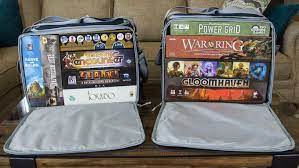
A smaller convention or another event, such as a local fair or flea market, might be another option. This would be much less expensive to attend, however, the latter events will not be your core audience. At the same time, you may be the only one there with a cool game to demo, so you would stand out. Still, selling hundreds of copies of your game could take many trips to many events.
If you run another Kickstarter campaign in the future, you could also offer your first game as an add-on or as part of a bundle. If your first game did well enough to warrant an expansion, offering the original game on this next campaign is a no-brainer, as many more people will discover your game that missed the original campaign. They will all need to purchase the base game before they would be able to play the original.
You could even leave your pledge manager open or re-open it later to take additional orders after you deliver all your games to your backers. You’d just need to have these games available for you or your fulfilment partner(s) to send out when they are ordered. Again, it would be up to you to drive traffic here so that more people discover your game.
Wrapping it up
How many extra copies you have printed is up to you. But you should have a plan for how you will sell those extra copies, as they won’t sell themselves. It might be interesting to test the waters and try selling your game through one or more of the approaches above with a small number of copies just to see what method would work best for you.
If you’re thinking about launching your game on Kickstarter sometime in the future, check out my free Kickstarter Success Checklist. It will give you step-by-step pre-launch steps, a list of important tasks to complete right after you hit launch, and tips on how to keep your campaign going strong.
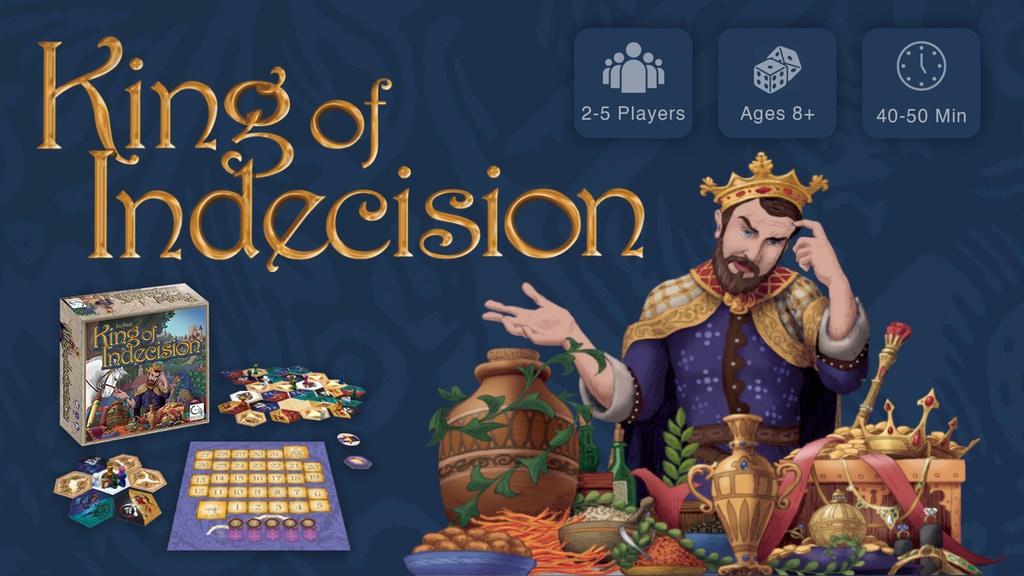
 Joe Slack is a board game designer, publisher, instructor, and the author of the #1 international best-selling book, The Board Game Designer’s Guide, along with 3 other books on game design. He has taught Game Design and Development at Wilfrid Laurier University and runs the Board Game Design Course, an online course for new game designers. Joe has 4 games published with other publishers (Zoo Year’s Eve, Kingdom’s Candy: Monsters, Four Word Thinking, and King of Indecision) and one self-published game (Relics of Rajavihara) and expansion (Montalo’s Revenge).
A lot of work goes into running a successful crowdfunding campaign, and although you might have reached your funding goal, you haven’t quite crossed the finish line – it’s now time to start fulfilling your rewards. This is where a pledge manager comes in handy.
Pledge managers are used by crowdfunding project creators to collect the vital information from their supporters needed to fulfill the rewards promised during their campaign. They provide surveys that backers can fill out to help track what they pledged, record their reward choices, and collect shipping and payment information.
A pledge manager is great for campaigns with:
- Physical rewards
- A high number of backers
- Numerous reward variants (size/color options)
- Add-ons
Here are five reasons why you need a pledge manager for your crowdfunding campaign:
1. Pledge managers will help you raise more funding.
Just because your campaign is over doesn’t mean you can’t raise more money. A good pledge manager will allow you to include add-ons and reward level upgrades in your backer survey, which can encourage backers to spend more and increase the average pledge value per backer. Allowing upgrades in your post-campaign survey gives backers an opportunity to change their minds on their pledges as the project gets closer to fulfillment.
2. Pledge managers allow you to correct shipping issues.
Calculating shipping costs can be a bit of a headache for any project creator, but a pledge manager will take care of any discrepancies with shipping costs. If a backer didn’t pay the correct amount of shipping with their pledge during the initial funding period, you can charge them the amount they owe or give them credit for the extra amount through your pledge manager. This can also be helpful if your backers have moved since pledging to your campaign.
3. Pledge managers give you a chance to recover failed pledges.
Failed pledges are common and happen for a variety of reasons: insufficient funds, credit card expiry, or fraud protection from the bank. This can be a problem because it means you may not collect as many funds as expected and even risk not having enough to fund the project, even though it’s been deemed “successful.” A pledge manager will ensure that all backers, including those with failed pledges, can be imported into your survey after the campaign ends. Backers with failed pledges are added with a pledge value of $0, but the reward tier they attempted to pledge to is saved. When it’s time to send your surveys, the backers with failed pledges will have another chance to pay for the reward they pledged to.
4. Pledge managers will help you build a mailing list for future projects.
With Kickbooster’s Pledge Manager, you will have the opportunity to give your backers the option to opt in to future email marketing communications. This is a great way to build your email list because you’re targeting a group of people who are already interested in your product and what you have to offer. Your backers are likely going to want to be contacted about other products and future crowdfunding projects they will likely be interested in.
5. Pledge managers make transitioning to eCommerce easier.
Most third-party pledge managers require creators to create every product for each reward level. If they decide to open an eCommerce store one day, they will have to go through the entire process of setting up products again. This can be a tedious process for creators who wish to continue selling their products after reward fulfillment is over.
Pledge managers like the one provided by Kickbooster integrate directly with your eCommerce store, pulling products from your store directly into your survey to configure. This means that each product only has to be created and configured once. When a survey is completed in Kickbooster’s Pledge Manager, an order will automatically be created in your eCommerce store, the same way a sale is when a customer makes a purchase directly through your store. This allows you to manage fulfillment in one place while also taking advantage of integrations for your eCommerce platforms, fulfillment centers, and order management systems.
This is a guest post by Kickbooster, a software company that provides solutions for crowdfunding creators. Services provided include both a pledge manager and a referral marketing system.
Learn more about Kickbooster’s Pledge Manager and how it can elevate your post-campaign experience here.
The eCommerce industry has witnessed unprecedented growth over the last decade. It is predicted that eCommerce retail sales will go up to 7.4 trillion dollars by 2025. With the boom in eCommerce sales, customer’s expectations have increased, and the rise of sustainable custom packaging plays a large part in that.
Gone are the days when customers were happy receiving their products in a traditional brown box. Customers expect their products to come in customized boxes that keep their products safe from any damages during shipping. Additionally, more eco-conscious customers expect their packaging to be recyclable.
Seventy-two percent of American consumers say their purchasing decision is influenced by packaging design. Furthermore, 61% of consumers say they are much more likely to repeat a purchase of a luxury product if it came in premium packaging. All these statistics show that customers love it when their purchased products come in packages that are customized. The majority of the brands are now including packaging options as a part of their marketing strategy
According to a recent study, the vast majority of Generation Z shoppers prefer to buy sustainable brands, and they are most willing to spend 10% more on sustainable products. As consumers become more conscious of sustainable practices, many companies are now making the switch to eco-friendly and sustainable options when it comes to packaging, to reduce their carbon footprint and also keep their customers happy.
Offering sustainable packaging has shown to be more environmentally friendly and more profitable for brands. Combining custom packaging with sustainable options is a great way to stand out in the market amidst the competition.
This article will explain custom and sustainable packaging and how it can benefit your business and make your customers happy.
Packaging is the first thing that grabs the attention of the customers when they get their product. Customization of the packaging adds great value to your product as well as to your brand, overall. This article will provide you with all the helpful information you need to know about custom packaging and how it can benefit your business.

What is Custom Packaging?
You may have read about custom packaging in numerous eCommerce newsletters and blogs but this article will break the specifics down for you. Custom packaging is the kind of packaging that is created specifically for your product so that it fits perfectly rather than traditional packaging where there is a one-size box that the product is put into.
A customized box in which the product is packaged in, prevents breakage and ensures that the product reaches the customer in the same condition it was in before it was shipped.
In custom packaging, the dimensions of the package that ensure the product fits perfectly are as important as the design of the product. The design can be customized by printing logos on the boxes, patterns, shapes, pictures, hashtags or anything else the company wants to include that speaks the brand’s language.
Custom packaging is a great marketing tool for your business as it sets your product apart from the competition in the market. In a world of standard, bland boxes, custom packaging design stands out.
Here are some of things to consider when choosing a custom package:
- Different Packaging Materials: It is important to ensure you get the best material that suits the design and item you have to ship. If you are looking for durable and strong materials, you can go for the kraft and cardboard packaging materials. You can opt for custom poly mailers for clothes. You can use custom inserts in your mailers for an extra touch of elegance and to ensure the safety of your items.
- Colors: Using a singular color scheme that best represents your brand for your custom packages can help create awareness for your brand. For example, you can recognize the Tiffany blue box instantly. That is the power of strong branding!
- Shape and Size: It is important to measure the right shape and size while choosing a custom package. This will prevent damage to the product and waste of packaging material.
- Themes: By choosing themes, color, and patterns, you can communicate your brand image to customers and can attract new customers to your business. For example, Starbucks used a red and green themed holiday cup design to bring some holiday joy to their customers.
What is Sustainable Packaging?
Eco-friendly packaging is the kind of packaging that reduces its environmental footprint. When David Attenborough issued a call to action to combat plastic waste in the second series of Planet Earth II, searches for “plastic recycling” saw a dramatic uplift of 55%. His call to action went far beyond internet searches, leading to more environmental documentaries and with the passage of time, with government initiatives, corporate pledges, and greener business initiatives, we are now witnessing an increased demand for eco-friendly packaging.
Customers are now more conscious about sustainable practices of brands they purchase from. Hence, implementing greener practices has now become the cornerstone for most businesses. Most brands seek out eco-friendly packaging to align with their sustainable business practices.
Eco-friendly packaging is implemented in a number of ways:
- Ingredients: Raw or recycled materials, sourced responsibly (FSC certified)
- Reusability: Creating a circular economy around the packaging, extending its life cycle and usability.
- Production process: Solar-powered plants at production site, reducing carbon footprint
- Shipping process: Ships in its own container (SIOC) (allows for less waste and a better unboxing experience)

Benefits of Custom Sustainable Packaging:
Custom packaging and sustainable packaging can go hand in hand when brands ensure that they source their boxes through companies that are FSC certified and use recyclable packaging materials in the manufacturing process. Here are some of the benefits of using customized packaging that is also eco-friendly:
Creates Brand Awareness
In custom packaging, you can use your brand’s logo, colors and themes to make your package more appealing to your customers. Custom packaging is a great way to make your brand stand out. By incorporating these branding elements into your packaging, you are automatically creating brand awareness. The instant your product arrives your customer will know what is inside the box just by looking at the packaging.
Custom Packaging is More Functional and Practical
Size matters! Custom packaging allows you to select the dimensions and sizes that are optimal for your product. Choosing the correct sizing for your package helps reduce waste as well as there is no extra packaging that needs to fill up the landfills.
Better For the Environment
Most custom packages are made using eco-friendly raw materials. These help in waste reduction. Most custom packaging boxes are recyclable or reusable.
Eco-friendly manufacturing companies also don’t use chemicals that are harmful to the environment while producing papers. They don’t cause any harm to the atmosphere and aquatic life.
Conclusion
Customized, environmentally friendly packaging has a key role in every business. It helps boost sales, make your branding stronger, and invite new customers.
Your customers will be excited when they open a well-designed custom box that is also great for the environment and less wasteful!
 This post is by Phil Akhzar, CEO & Founder of Arka, a custom packaging design company.
Hey there. It’s Joe Slack from the Board Game Design Course. The Fulfillrite team was kind enough to ask me to write a guest post on how to know your game is ready for Kickstarter. Of course, I was completely on board!
After having run 3 Kickstarter campaigns (2 successes following 1 failure) and having studied what it takes to be successful on Kickstarter, I wanted to share my top 3 signs that you’re ready to launch.
If you’re looking to self-publish your game, consider this a checklist of all the things you’ll want to have in place well before you hit that launch button.
#1: Your Board Game is Amazing
If your goal is to successfully Kickstart your game, the first thing you need to ensure is that your game is amazing and that people really enjoy playing it (and want to come back for more).
There is a lot of competition in the board game world, with thousands of games being launched on Kickstarter every year (4,490 in 2020 and 2,439 in the first half of 2021 alone!). So, your game has to stand out. It has to be interesting and innovative. It has to do something different than all the other games on the market.
Your game has to be amazing enough to make people want to back your campaign over all the others out there. People have a limited amount of disposable income and only so much they can allocate to board games, so your game has to really stand out. It’s not enough to have just a “good” game.
When you playtest your game with other designers and players, you’ll often receive a lot of feedback. Quite often it will be necessary criticism that you need to hear in order to identify problems with your game and make it the best it can be.

Often, other designers will give you feedback that would change the game more into the game that they would have designed or would have liked to play, so you have to watch for this.
But when players only have suggestions on how to make small changes that would make the game slightly different, but not necessarily better, take note of this. If this is the only feedback you’re consistently receiving and there are no major problems being identified and no suggestions for improving your game, this is a great sign.
But there are certainly other signs and signals that players give you that will boost your confidence as well.
“Can we play again?”
This is like music to a game designer’s ears.
While this won’t happen with every game, particularly longer games that you wouldn’t normally play multiple times in a row, with a shorter game, this is something you want to hear from your players. If one player has just tasted defeat, they may want a re-match. If it’s a co-op game and the players narrowly lost, they may want another chance at redemption.
If your game is a bit on the longer side, what you might hear instead is players discussing strategy and what they would do the next time they play. They’ve found some depth to your game and have indicated they are interested in playing again in the future.
Even better, if players finish playing your game and immediately ask when it will be available, this is a great sign. It’s even better if they say this while playing your game.
They’ve indicated they enjoyed your game and are interested in picking it up when it becomes available.
If your players are consistently asking when your game is coming out, it means there is some demand for it, which is always a great thing!
It’s an amazing feeling when someone is ready to pull out their credit card and buy your game right there on the spot.
If players are asking to buy your game right now, they are putting their money where their mouth is. They’re not just saying they like your game, they are ready to put down their hard-earned cash to get a copy so that they can share this with their friends and family.
If you’re hearing any of these types of comments consistently, you can be confident that there is definitely a demand for your game and that there is something really special about it. At this point, you’ll know that your game is getting close to the stage where you’ll be ready to launch your Kickstarter campaign.
After all, if your game isn’t amazing, then it’s going to be a tough sell.
#2: You Need an Audience
It is so critical to bring your own audience to your Kickstarter campaign. You can’t rely on the hope that “if you build it, they will come.”
Having an amazing game is a great first step, but nobody knows about it, you’re not likely to hit your funding goal. Even an “ok” game with great marketing will do better than an amazing game that nobody knows about. So, you need to build an audience.
The best way to do this is by getting anyone who is interested in your game to sign up to your email list. Whether you’re demoing your game at a convention, talking about it online, or wherever you can, you need to get people to go from interested to a subscriber. You also have to keep them engaged by sharing backstories, art, and interesting facts about your game or game design journey.
Some suggest that about 10-20% of your email subscribers will actually back your game. You want your game to fund quickly so that it gets more attention and draws more people in, so if you can build up your email list to the point where 10-20% of them would make up the funding goal, you’re in a really good position and can be more confident that your project will succeed.
Without a solid number of supporters, you’re not likely to fund (or at least not without a LOT of effort).
Download my free Kickstarter Success Checklist to ensure you’re ready to launch with success!
#3: You’ve Set Your Campaign up for Success
You have an amazing game.
You’ve built up a sizable audience of raving fans.
But you’re not quite there yet. You still need to put everything together so that your campaign page is ready, you can offer pledges and shipping that are accurate for your project, and you can transition to the next steps of manufacturing, shipping, and fulfillment once your campaign ends successfully.
Before the campaign, you’ll want to prepare several other things in advance. These include the following steps:
- Put together a project plan
- Find an artist and graphic designer, then commission some art for your game (or all of it if you’re able)
- Set up your landing page and email service provider
- Promote your game and collect email addresses
- Set up a Facebook group for your game (optional)
- Get manufacturing quotes and decide on a manufacturer
- Record your Kickstarter video or hire this out
- Get prototypes made
- Contact reviewers and influencers and get them to review and promote your game
- Start putting together your Kickstarter page and launch your notification page
- Research and determine your shipping and fulfilment partners
- Finalize your pledge levels, pricing, stretch goals, and funding level
- Determine your launch date and ensure it’s not coinciding with other big launches (and announce your launch date in this spreadsheet as well)
- Get feedback on your Kickstarter page and make improvements
- Run ads leading up to your campaign (optional)
I go even more in-depth on each of these steps in this article on the Board Game Design Course blog.
As you can see, there’s a lot of work that goes into launching a successful Kickstarter campaign. There are a whole lot of things you need to do that are way beyond game design and require a completely different set of skills.
But if you’re willing to put in the effort and ensure your game is ready before you hit launch, you too can have a successful Kickstarter campaign.
If you’re thinking about launching your game on Kickstarter sometime in the future, check out my free Kickstarter Success Checklist. It will give you step-by-step pre-launch steps, a list of important tasks to complete right after you hit launch, and tips on how to keep your campaign going strong.
Joe Slack is a board game designer, publisher, instructor, and the author of the #1 international best-selling book, The Board Game Designer’s Guide, along with 3 other books on game design. He has taught Game Design and Development at Wilfrid Laurier University and runs the Board Game Design Course, an online course for new game designers. Joe has 4 games published with other publishers (Zoo Year’s Eve, Kingdom’s Candy: Monsters, Four Word Thinking, and King of Indecision) and one self-published game (Relics of Rajavihara) and expansion (Montalo’s Revenge).
Brands and businesses are becoming more and more aware that their packaging serves a purpose beyond functionality; it is also a strategic and strong marketing tool for those who know how to wield it.
Packaging boxes are even more of a necessity in online/eCommerce businesses, with every order having to be shipped in them.
Forward-thinking businesses understand that customers’ buying behavior is influenced when a thing appeals to their emotions. And what better way to thrill customers than to cause them to fall in love even before they unbox their order?
Table of Contents
- Does Custom Packaging Really Matter?
- What are The Benefits of Premium Packaging?
- 5 Ways To Use Packaging To Increase Customer Retention and Revenue
Does Your Packaging Really Matter?
Let’s answer this way. If we’re given the option to choose between two packages, one, in a beautiful shiny paper box and another wrapped in a plain, dull-looking brown paper, which would you go for? The first, I guess.
This is because humans react to visual stimuli more than the other four senses. Science has shown that people are naturally drawn to aesthetically pleasing products and packages. In fact, customers feel valued when businesses go the extra mile to deliver.
It has also been proven in a study that dates back to 2013 that attractive packaging stimulates the reward-seeking areas of the human brain. And this area is what sponsors and triggers impulse buying.
If this is the case, attractive packaging is no longer an option but an essential marketing tool in the hands of eCommerce businesses. In essence, beyond the quality of your product, customers also appreciate businesses that pay huge attention to product presentation.
What are the Benefits of Premium Packaging?

Beyond monetary gain, premium packaging also purchases goodwill for a brand—something worth having. There are several benefits businesses, especially eCommerce businesses, stand to experience from offering premium packaging experience to their customers. Here are a few:
1. It Helps You Exceed Customers’ Expectations
By doing the unexpected extra when it comes to packaging, you ‘wow’ your customers on the first impression. And in selling, the first impression is as important as the last impression
Moreover, your packaging offering represents your brand’s promise to deliver a quality experience.
This implies that your customers will not necessarily return because your product was good, but because your packaging sells the message that you can always deliver premium value.
By exceeding your customers’ expectations, you easily set yourself above your competitors in the mind of your customers.
2. It Drives Sales
Packaging can influence sales both positively and negatively. Attractive packaging, for instance, has a positive effect on the customer’s perception of the business.
Also, the different elements of your design, such as the colors, imageries, etc. evoke strong emotional responses that can influence consumer buying behavior. Research has it that at least 1/3 of a consumer’s product decision-making results from personal preference as well as packaging.
Since humans are positively influenced by good visuals, premium packaging acts as a subtle advertising and marketing tool that helps to drive sales to the business. At least, about 52% of consumers will buy again if they are offered their orders with premium packaging.
3. It Promotes Your Brand
Your brand story, your brand identity, your brand values, and all it stands for reflects as a matter of fact in your packaging. This is especially true for eCommerce businesses.
According to a study conducted by Liam Curtley in Business 2 Community, it was discovered that the customer’s perception of a business’s packaging is always transferred to the product and the brand.
This means that a customer’s perception of your packaging is also indirectly transferred to the product and the brand.
So, if the customer considers your packaging to be drab, it’s almost impossible to convince him/her otherwise when it comes to how they perceive the product itself. It also goes on to make loud statements about how a brand perceives and values its customers.
More so, providing premium packaging is another way to garner word-of-mouth advertising, which we know is one of the most potent ways to sell a brand to the public.
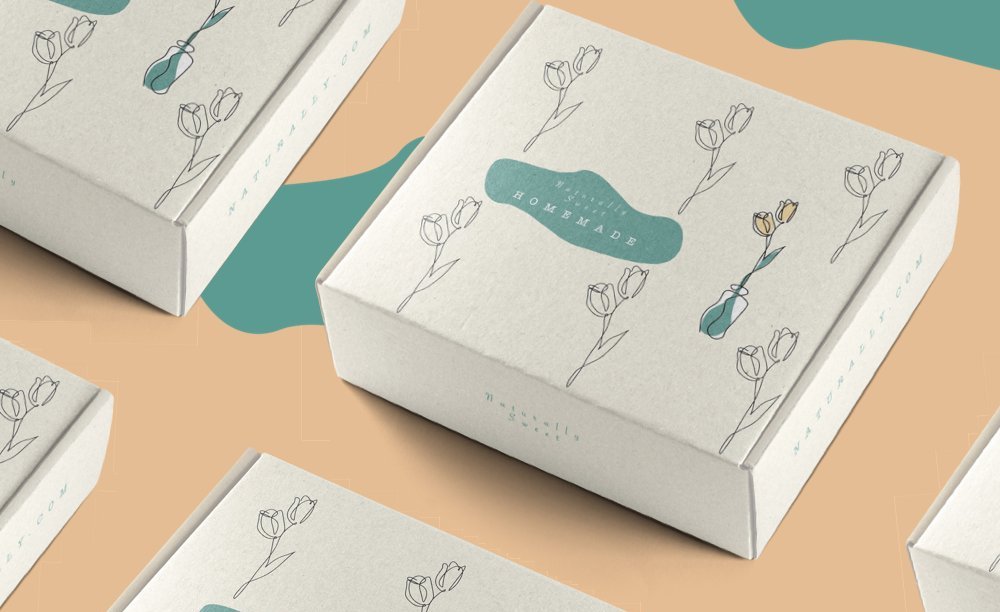
4. It Improves Customer Loyalty & Retention
Customers become loyal to a brand when the brand provides them with great value. And it is this type of customers that businesses need. This is because loyal customers provide lifelong value to the business, unlike a customer that buys once and never returns.
5. It Can Promote Visibility & Recognition
Product packaging is something that helps a business stand out from the mammoth crowd of other businesses.
The need for recognition, differentiation, and visibility is even more necessary for eCommerce stores where the market is saturated, and customer loyalty is hard to develop as opposed to the regular brick-and-clay store.
According to DotCom, about 40% of customers would share a picture of their online order if the packaging were attractive. At the same time, about 90% of them will reuse the branded box if they found it attractive.
All of these provide a way for the business to go visible, easily recognized, and viral online and offline, without having to spend extra on marketing.
5 Ways to Use Packaging To Increase Customer Retention and Revenue
Below are some strategies e-commerce businesses can adopt while trying to increase customer retention and revenue:
1. Custom Boxes

Custom boxes, as opposed to the regular shipping boxes, is something trending eCommerce stores such as Amazon are keying into.
This packaging strategy helps to create a strong and lasting impression in the minds of customers and, eventually, goes a long way into marketing and establishing such a brand.
According to a survey conducted by DotCom, it was discovered that there’s a strong correlation between premium packaging and customer loyalty. In fact, customers would most likely make repeat purchases if the seller packages the product attractively.
When customers become loyal to a brand, the problem of customer retention is halfway solved.
2. Give a Thank You Card
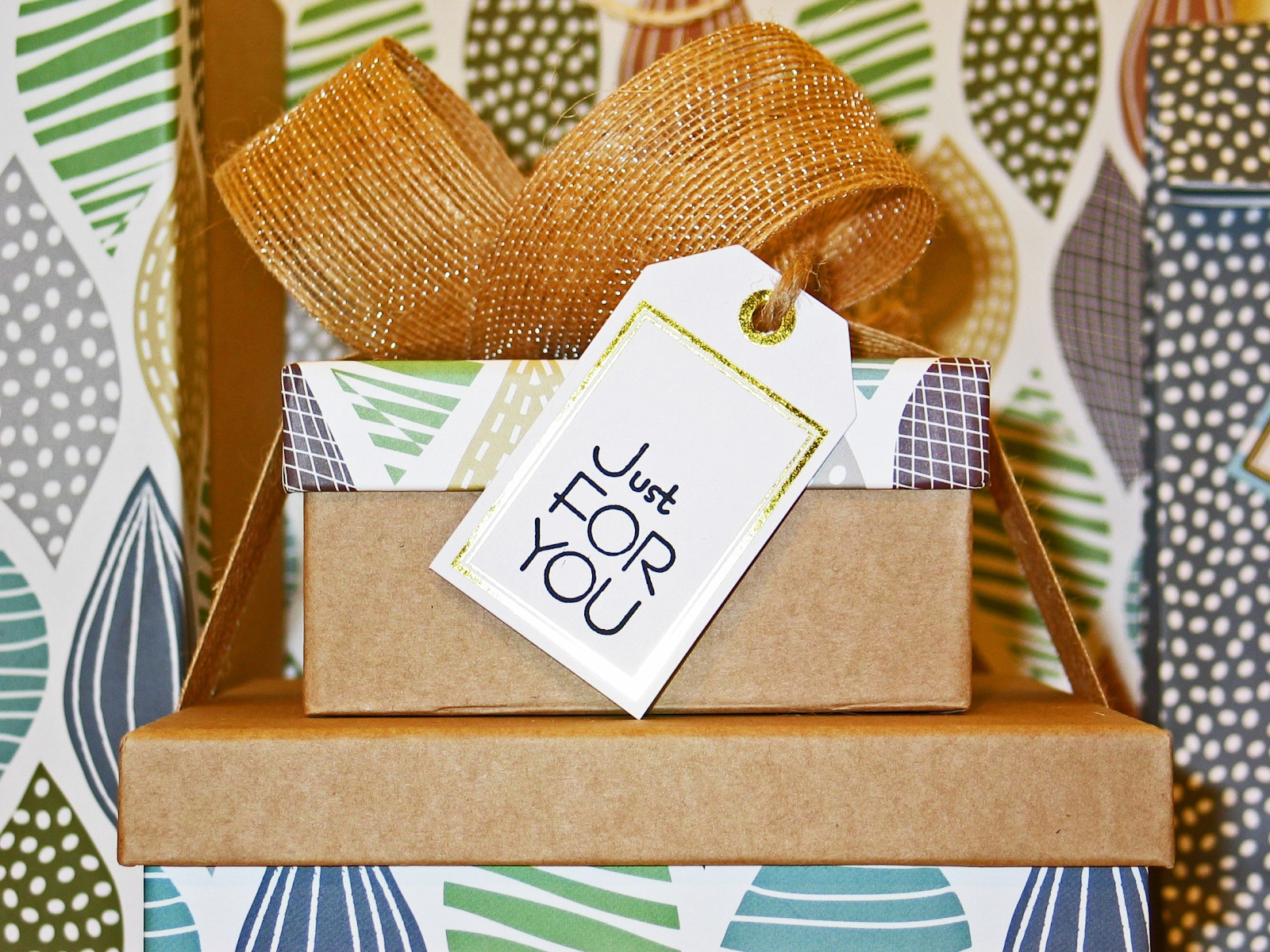
Leaving a handwritten thank you provides a personal brand feel for the customers. And it has been shown that customers appreciate brands that offer their services in a more personal way. When this happens, they are most likely going to go on to become repeat customers.
3. Give a Small Gift
Including a small gift in their shipment helps you exceed the customers’ expectations. It also helps to provide higher value for the customers. By doing this, customers are “wowed.” And as we know, when positive emotions are triggered, purchases are the resultant effect.
4. Discount Offers
Packaging inserts are additional items that online retailers include in their customers’ shipment. They come in different kinds. One very common insert is the discount offer. This has a good chance of convincing the customer to buy again.
5. Sample Products
Another popular packaging insert used by eCommerce businesses is this. This is one way to cross-sell other products without having to do much advertising easily. It also helps to improve the brand’s value-giving perception in the mind of the customers.
Conclusion
The success of any eCommerce business or any business, in particular, is depended on their ability to provide a satisfying and memorable experience for the customers. One of the ways they can achieve this is by offering premium packaging to them.
This trend has now gone beyond an option. It has become a necessity for any eCommerce business that wishes to thrive.
In the course of prepping this interview for you to read, I probably checked my phone five or six times. I’m not the only one: half of Americans spend five to six hours on their phone every day excluding work-related tasks. It’s a serious social problem, and the folks at Light Phone are working on a solution.
Light Phone is designed to be used as little as possible. It’s a simple idea: take all the good parts about a smartphone – phone calls and texts, the calculator, music and podcasts, alarms, and directions. Then strip away all the stuff that steals your attention. No social media, no browsing, no email, news, or ads. Everything that is and is not on Light Phone is deliberate.
It’s even designed to look and feel like a tool and not a toy. Instead of using a distracting and bright display, Light Phone uses sedate E-Ink for a display that’s easy the read at night and in broad daylight. Plus the battery lasts a long time, meaning you don’t even have to constantly think about charging it.
In this interview, we ask Co-Founder and CEO Kaiwei Tang to tell us about how he came up with the idea, how he turned it into a real product, and how he got people on board with the idea of a distraction-free phone.
What follows is a transcript of our conversation. It has been edited for clarity and brevity.

First, tell us a little bit about Light Phone.
Light Phone is a phone that is designed to be used as little as possible.
It doesn’t fight for the important things that we take for granted, our time and attention. The Light Phone offers utility and the peace of mind we’ve become accustomed to with our smartphones whilst eliminating the distractions, manipulation and stress of social media, news, or email. I don’t believe that the ever-increasing digital connection makes us happier.
It’s also a simple phone that is built around intention and purpose. It’s not a dumbphone. It offers modern tools such as calls, texts, directions, music, podcasts, hotspot, etc. through a completely customized and in-house designed typographic-based interface.
We spent years designing and developing Light Phone to produce a slim, credit card-sized phone with a matte black and white E-ink screen. The screen feels nothing like a smartphone, which is not an accident and it is perfect for viewing outdoors in direct sunlight. It’s a phone that isn’t interested in collecting and selling your data, ever.
We call it a phone for humans.
How did you first come up with the idea of the Light Phone?
My co-founder Joe Hollier and I were invited to a designer incubator hosted by Google in 2014. We were encouraged to build a mobile application, but we quickly realized that making another app is just the last thing this society needed from us. People are becoming increasingly frustrated and appalled at how much time their phones were sucking out of their lives and we wanted to create something that would give those people an alternative.
Almost every tech company were and still are, making apps that are “sticky” — they encourage users to stay for long periods of time. The reason is simple, the longer someone uses an app, the more revenue an app could make through advertising; however, the result is devastating to our attention and well-being.
As a reaction to the pernicious influence of time-grabbing apps & social media, we decided to create a product that would encourage users to take a break from the internet and their smartphone.

How did people initially react when you pitched the idea of creating a new smartphone?
The reactions were extremely polarized in 2014. People either loved it thinking that its radical approach could change their life for the better, or they could not see a reason to lower their screen time. Everyone had a strong opinion on the Light Phone, which continues to this day.
Our users often told us that having a Light Phone in public sparked some really great conversations between them and other people. They chatted about why they chose to “Go Light”, they discussed their relationship with technology, what problems they have experienced with social media and apps as well as what phone features are critical to them.
I think it’s really amazing that the Light Phone becomes a conversation piece and our users are making a conscious choice. Part of what we are trying to do is to be more intentional in terms of deciding what technology to use and how we design our tech tools.
How long did it take you to develop Light Phone II?
It took us almost 2 years from designing, developing to actually shipping Light Phone II. We customized almost every aspect of the phone to make sure the design aligns with our mission and the value of the company. It wasn’t a re-purpose of any existing phone on the market. It was a challenge for both us and our suppliers at the time, to work on such highly customized hardware and software. It is part of the reason the price of an unlocked LPII ($299) might seem relatively high if you compare it to any vintage feature phones or flip phones.
Customized hardware requires a lot MOQ (minimum order quantity) on almost every component inside the phone. We are not a big technology company like Apple or Samsung, we can’t afford to order any part in hundreds of thousands to get lower costs. This is something we have been trying to be transparent about and communicate with our customers as well. It is the reality of a small start-up but hopefully as we continue to grow we can offer a more affordable option.
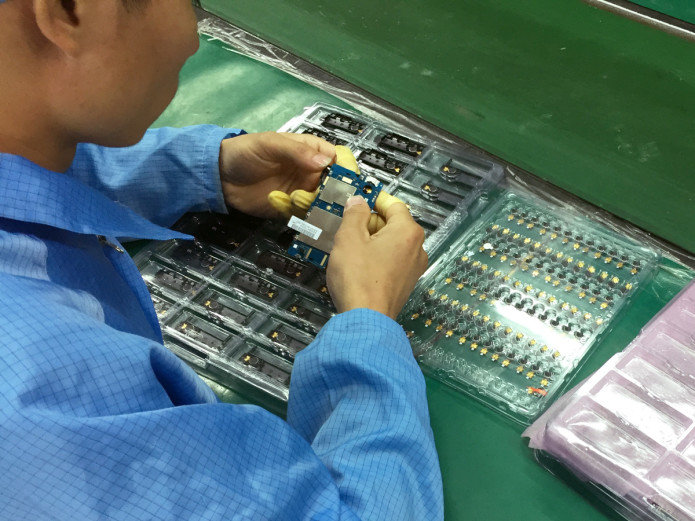
What was the first prototype like?
The first prototype of Light Phone II is a 3D printed solid block I did in our co-working space. We were trying to get a look and feel on different sizes and thicknesses. It’s a non-functional mock. I also bought many used vintage phones, broke them apart, and then reassembled them to create the first functional light phone from those scrapped components. It was like a scene out of Todd McLellan’s book, Things Come Apart.
Did you have to create your own e-Reader ink?
We worked with our manufacturing partner, E-ink Technology, to create a smaller size e-ink display that wasn’t available on the market. We also spent a year optimizing the performance and refresh rate of the display. E-ink displays are not often used on phones so there was lots of trial and error to get to where we are.
How did you secure funding?
Light Phone II IndieGoGo campaign in 2018 really kicked us off. We raised over $3.5 million via pre-orders from our wonderful backers who believe in us. The campaign also led to a good deal of press coverage here in the US and internationally. The media attention gave us and our prospective investors a really good indication of whether or not people want the product.
The last several years we received investment from mission-aligned angel investors and VCs such as Pinterest’s Ex-President Tim Kendall, Lyft Co-Founder John Zimmer, Twitter’s Co-Founder Biz Stone, Bullish VC, Able Partners, Hinge VC, White Bay Group, and many others.
We are really grateful for the support from our early backers and investors.
How were you able to market a product specifically made to avoid social media and similar distractions?
I honestly don’t think paid social media advertisement is or should be the only way to promote a product. It has definitely proven to be effective on many products but at the same time, social media and the majority of technology companies are basically profiting from our data, attention and time.
The last few years we have had a lot of customers help us spread the word to their friends and family based on their experience using Light Phones. We also received lots of press coverage organically.
I think a user’s endorsement is so powerful and it also makes the product really meaningful to others. Instead of spending millions on paid marketing, I think we prefer to spend our limited resources on making the experience better. That being said, hopefully more people can find out about Light Phone and join all our users “going Light.”
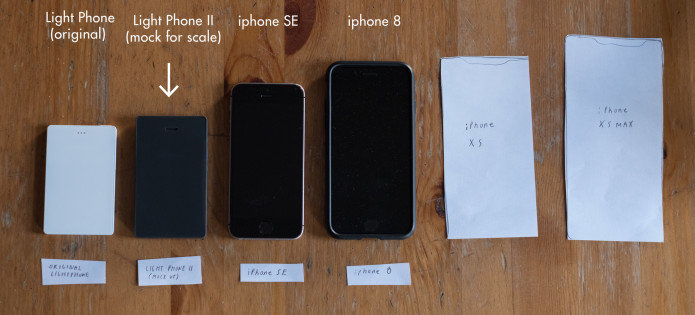
What was the mass manufacturing process like, especially with all the supply chain disruptions?
Recent supply chain disruptions did slow us down. We have many vendors that provide components of the phone and their factories are located in different regions of the world. Other than the shipping backlog that I think a lot of people heard about and were affected by, we have also had to contend with COVID lockdowns in local areas that disrupted our vendor’s shipment and schedule.
We tried our best to keep people posted about shipping irregularities and be transparent about the problems our suppliers had. Thankfully our customers are very understanding and trust we are doing all we can.
How do Light Phone users get cell service? Which networks are covered and how do they pay for the plan?
We have our own Light SIM card and service plan (optional). Our users can use the Light plan which is on AT&T network, or use their existing T-Mobile, Verizon, or AT&T SIM card.
Light dashboard is where Light Phone II users customize their phones, accounts, tools as well as payment.
Do you find yourself marketing more to smartphone users? Or traditional phone users who might want a little bit extra?
I do think all users have different needs and different senses of what makes an ‘essential tool’, which is why we are working on adding a few more utility tools so that more people feel comfortable to Go Light. Although, Light Phone will never have social media, browser or advertisements.
The last few years we have been focused on sharing the health benefits of going light that we have heard from our users i.e. less stress, less anxiety, becoming more productive, getting more time back, sleeping better, etc. We also have parents and schools who are interested in getting a Light Phone as their kid’s first phone.
We also created a campaign to interview our users so they can share their experiences firsthand.
Going Light with Desi from The Light Phone on Vimeo.
Are there any exciting future upgrades on the horizon?
At the moment, we offer phone, text, direction, music, podcast, hotspot, calculator, and an alarm clock on Light Phone II. We have plans to introduce other utility tools such as a calendar, meeting reminders, notepad, barcode reader, voice memo, two-factor authentication… We are also working on a feature that would enable users to use their existing smartphone number on Light Phone II.
Interested in ordering a Light Phone for yourself or a friend? Check out their website here to learn more.
Packaging is becoming an increasingly common and high-demand utility for businesses around the world. For an e-commerce business, the first direct touchpoint that your brand has with your customer is when they receive the package and unbox it. Studies related to the psychology of shopping show that, “packaging plays a major, if not dominant, role in purchasing decisions.”
Providing a fulfilling packaging experience to your customer still remains a relatively under-utilized marketing opportunity and if used properly, it can have a huge impact on positively affecting the sales of your product.
Investing in a good packaging supplier is the first step. This decision can have a tremendously positive effect on your sales as well as revenue. But making this selection can be a daunting task as various factors come into play here.
We have made this job easier for you by answering 5 important questions for selecting the right packaging supplier for your business.
1. Do they offer custom packaging?

Custom packaging is a leading industry trend in 2020 and it is here to stay. By incorporating custom packaging, you are enhancing your brand’s value by multifold. Through customized packaging, you can build an everlasting connection with your customers by ensuring that they have an unforgettable unboxing experience.
Custom packaging strengthens your company’s branding. When your product’s package has your company’s trademark color, design, and logo, your brand creates a stronger identity, and customers develop a great brand affinity. This can ultimately increase sales and revenue for your company.
What takes the cake in customized packaging is that it makes room for innovation and creativity that allows your brand to apply a personalized touch to your packages. These personalized touches enable your brand to establish an emotional connection with your customer and make them feel valued, when they unbox the product. That is why it is imperative that when you select a packaging company, ensure that they provide custom packaging services.
2. What quality of packaging products do they use?
The quality of the packaging is as important as the product itself. If the packaging is made of lower quality material, your product is more likely to get damaged during the shipping process.
It is necessary to make an informed choice when it comes to selecting shipping materials. Ensuring that the material is safe enough and ensures an effortless unboxing process with minimal waste is also essential.
There are three main types of packaging:
- Corrugated boxes
- Chipboard and paperboard boxes
- Polybags
To choose the best packaging for your business, it is crucial that you pin down and select the optimum packaging material that suits your particular product the best and then check if the packaging supplier you select offers that or not. Packaging can be very unique for different kinds of products that is why it is essential to know what kind works best for your product before making a decision.
3. Do they use sustainable and environmentally friendly products?

The sustainability of your packaging is just as important as what is inside the package. According to a recent survey on sustainable products and packaging, 80% of participants said they felt it was “important or extremely important” for companies to design environmentally conscious products.
As consumers are getting conscious about their carbon footprint, they are more like to support brands that share their values. At Arka, we are cognizant of this reality and our focus is on sustainably. We ensure environmentally friendly packaging through:
- Using sustainable packaging that can be repurposed
- Shipping items in bulk
- Offering carbon-neutral shipping by offsetting emissions
- Recycling on behalf of our suppliers and offer shipping-friendly items
- Reducing the size of your packaging
- Using compostable mailers
- Working with wholesalers to reduce individual shipments and limit return shipping
- Offering a returns program for your empty product containers
4. What is their pricing like?
Pricing is very important. Especially if you are on a budget. Look for packaging companies that provide the best offers. See if they sell in large or bulk quantities. Instead of using standardized box sizes, evaluate the sizes of your products, and ensure that the company you are selecting offers boxes of different sizes. This way, you won’t have to pay for the dimensional volume rate.
Furthermore, another great trick to save money on the packaging is by using custom stickers or custom tapes that have your company’s logo or trademark design printed on them.
Check if the company which you have selected offers these services. This way, you will be able to keep your costs low while also providing your customers with a great packaging experience that they deserve.
5. How is their customer service?
Good customer service is critical across all industries but when it comes to selecting the right packaging supplier, it is vital that you go with a company that has good customer service. If there is a shipment that is lost or an order that has to be refunded, a smart and skilled customer representative will cater to your company’s packaging needs instantaneously.
It is always a great idea to do a thorough background check of the kind of customer service that the packaging supplier that you are selecting offers and then make the decision based on that.
Conclusion
Packaging has numerous benefits for your company, your customers, and even for the environment, as light packaging reduces the carbon footprint. That is why if you already haven’t selected a packaging supplier, now is a great time to start and these helpful tips will make your decision-making process easier.
For more information, check out this free of cost course on the packaging. The course is taught by Philip Akhzar, CEO of Arka. It helps you navigate through the nuts and bolts of the packaging industry and also allows you to learn the best practices about packaging your product.
Happy customers mean a happy business. It seems overly simplistic, doesn’t it? But unhappy customers often abandon their relationship with a company they’ve had a bad experience with. For many eCommerce companies, a product being out-of-stock is enough to drive customers away. That’s very costly, but also preventable.
eCommerce SMBs typically use spreadsheets, emails, and free tracking tools stitched together to manage their inventory and keep their supply chain intact. This is cost-effective in the early days, but can be ineffective as the business grows and operational complexity increases.
Accurate inventory management allows eCommerce brands and retailers to fulfill orders accurately and on-time. And as they outgrow their small warehouse space and move into larger 3PL facilities, so does their need to effectively manage inventory and customer relationships.
The Benefits of Effective Inventory Management
“Good enough” has gotten you this far, but it won’t propel you into the future. With a better inventory management system in place, you open yourself up to continued growth.
That growth comes from realizing five key benefits.
1: Increased Accuracy
Inventory management is a constant tightrope walk, with having too much of a product on one side and too little on the other. The first means paying for storage on products that aren’t selling while the second means missing out on sales when items are unavailable to customers.
Accurate inventory management means:
- Not overstocking items, reducing the potential for holding on to too many products, tying up your cashflow
- Not understocking items, having enough on hand to fulfill customer demand
You can reinvest cash from reduced storage costs and increased sales into your business. Losses due to damage or theft can also be accounted for.
2: Increased Customer Satisfaction
Marketing generates leads and attracts customers. Therefore, inventory management is responsible for making sure their experience creates loyalty and advocacy.
Inventory management impacts customer satisfaction by:
- Providing real-time inventory counts, avoiding overselling out-of-stock items and identifying overstocked items that could be discounted to spur sales
- Identifying high-demand items that should be reordered quickly to meet customer expectations and increased sales
Meeting customer expectations through effective inventory management is the first step to creating customer satisfaction. That results in increased sales, repeat business and a positive reputation that helps attract new customers.
3: Increased Efficiency
The spreadsheets and paper forms used by early-stage eCommerce businesses have two things in common: they’re time-intensive and prone to errors. As a result, both are inefficient and can negatively impact the chances for growth.
Advanced inventory management solutions increases efficiency by:
- Automating certain processes, including reducing inventory counts as soon as an order is fulfilled and calculating the value of both items on hand and what’s been sold
- Reducing time spent, especially as employees don’t have to manually count items and other labor-intensive tasks
Substantial resources become available when staff are no longer responsible for data entry and error reconciliation. You can redirect resources to other growth-oriented areas of the business.
4: Better Future Planning
Forecasting for the future and making strategic decisions is possible, but difficult, with manual inventory management solutions. The necessary data may be there, but pulling it out in a usable way takes time better spent on other activities.
Better inventory management brings the future into focus by:
- Predicting demand, showing which products need to have orders increased or decreased
- Identifying trends and patterns, including customer information and habits that may impact how marketing and promotions are run and targeted
With easy access to accurate and timely data owners can make informed decisions about the future. That’s a necessary part of growing the business instead of falling behind.
5: Growing the Business
It all comes down to this. Effective, advanced inventory management practices prime your business for growth by:
- Improving the accuracy of inventory counts by showing what’s available and what’s needed
- Increasing customer satisfaction by ensuring meeting expectations and filling orders
- Increasing efficiency by automating tasks and reducing time spent
- Providing the insights needed to accurately forecast future demand, challenges and more
An advanced inventory management solution acts as a single repository everyone in the company can access. It provides accurate, timely insights and data on all aspects, from sales and marketing channels to customer demographics and behaviors and everything in between.
Final Thoughts
It’s also crucial to partner with third-party logistics partners (3PL) that understand the importance of inventory management. A deeply experienced 3PL partner has the knowledge, experience, tools, and technological integrations with platforms (like TradeGecko) to simplify management of inventory, enhance warehouse efficiency, and customer happiness.
TradeGecko is a commerce operating platform that gives entrepreneurs, founders and independent brands the commerce superpowers they need to build an amazing business. TradeGecko integrates with Fulfillrite, so you can easily sync your data across your supply chain ecosystem.
For more information, please visit www.tradegecko.com
- Automating certain processes, including reducing inventory counts as soon as an order is fulfilled and calculating the value of both items on hand and what’s been sold.
- Reducing time spent, especially as employees don’t have to manually count items and other labor-intensive tasks.
For private label brands who understand the value of a strong product brand, there has never been a better time to leverage your product brand on Amazon.
Whether you’re an established Amazon business with great sales or an emerging seller just starting out, there’s one fact you cannot ignore: If you want enduring success in the ever-changing world of Amazon, you can’t ignore the importance of having a strong brand.
Just ask sellers who have seen reliable, consistent growth on Amazon how they achieved success. They’ll likely tell you that optimizing their listings, using the right keywords, and hiring a listing expert got them to the top, but it was their brand that helped them stay there.
Because when people form genuine relationships with your brand and connect emotionally to what you’re selling, they’re bound to become loyal customers. And because once you’ve done all you can to maneuver Amazon’s algorithms, get to the top of Amazon’s rankings, and control who sees your product, when, and how often, one simple fact remains: Products don’t sell. Brands do.
Once you have a brand and not just a product, the opportunity you have to leverage Amazon’s platform to build your brand and compete with large, established brands is staggering. Just consider the following statistics:
– 80% of shoppers use Amazon to discover new products or brands
– 53.4% of shoppers are more willing to buy a brand they’re not familiar with on Amazon than they would be on any other store.
That means that if you’re a small brand looking for big sales and long-term growth in the ever-changing, ever-profitable Amazon ecosystem, now’s the time to leverage Amazon’s platform to build your brand. And you won’t even need a 100K+ marketing budget to do it.
Wondering how, specifically, a solid product brand will help you reach your goals? Here are 6 reasons.
1. A strong brand allows YOU to control buyer perception.
Your business isn’t what you say it is—it’s what they say it is. With a strong brand, people will have fewer misconceptions about who you are, what you represent, and the unique benefit your products offer them. A clearly defined brand identity ensures you’re seen the way YOU want to be.
2. You can charge a premium.
Weak brands often end up stuck in un-winnable price wars. But while they’re competing on pennies, they’re losing dollars. With a good brand that customers connect to, your perceived value will be higher, and you can charge more. In short, give customers a great experience, and you beat the competition, at any price.
3. You’ll attract more of the right customers.
As the playing field becomes more saturated, those without strong brands increasingly struggle to acquire new customers. But successful brands understand that customers buy products based on emotion, not just logic. If you understand who your target customer is and arm yourself with a powerful brand that resonates with them, you’ll stand out from competitors and get more new customers in the door.
4. You’ll be more memorable.
In today’s noisy marketplace, dull, weak brands lack that X-factor blend into the background. A strong, consistent brand, however, sticks in the mind and makes a lasting first impression, so you’ll be at the top of their mind next time they need your product.
5. You’ll build loyalty—and profits to match.
Without a strong brand, you need to constantly pour money into your marketing to stay in front of customers. With customer acquisition costs constantly on the rise, you’re likely hurting not just your margins, but also your long-term growth. Strong brands engender loyalty, and loyal customers are by far your most profitable. When they like and trust you, they’ll keep coming back again and again—and tell their friends about you, too.
6. You’ll gain independence and opportunities for growth.
Leaving your business’s success in the hands of a third party may be stunting your growth—and leaving your business vulnerable. With strong, healthy brand, you don’t need to be dependent on an overcrowded third-party platform. You can build a thriving business and customer base on your terms, and ultimately extend your opportunities way beyond Amazon.
The Bottom Line for Amazon Sellers
Ultimately, Amazon sellers are in need of a paradigm shift: rather than consider themselves Amazon sellers, they should consider themselves a brand; and Amazon as their primary distribution channel. In this model, every customer touchpoint, rather than being just another step in the sale, becomes another opportunity to communicate their brand message/story and cultivate more loyalty toward their brand.
When you focus on building your brand the right way, you can be sure that you’ll not only grow your sales in the short term, but you’ll be setting up your business to succeed far into the future.
Want to learn how to implement some of these branding techniques into your current Amazon business? Check out Meny Hoffman’s free guide, “7 Simple Ways to Build Your Product Brand on Amazon.” The guide offers practical tools and tips for leveraging your product brand on Amazon’s platform, so you can stand out and sell more.
Ready to dig deeper? Schedule a free 30-minute “Brand Audit” with Meny Hoffman.
Meny Hoffman is the CEO of Ptex Group, an award-winning marketing, branding, and business solutions agency headquartered in Brooklyn, NY. A lifelong entrepreneur, he is passionate about collaborating with growing businesses to create winning strategies that allow them to lead and flourish. Meny is also the founder of the LTB (Let’s Talk Business) platform, which offers business education to entrepreneurs and businesspeople looking to learn, grow, and lead. He is a proud husband and father of seven.
- Allows you to control buyer perception
- You can charge a premium
- You’ll attract more of the right customers
- You’ll be more memorable
- You’ll build loyalty – and profits to match
- You’ll gain independence and opportunities for growth